


Autonomic dysreflexia

What is autonomic dysreflexia?
AD is a nervous system response to noxious stimuli in people with a spinal cord injury.
Autonomic dysreflexia, also known as hyperreflexia, means an over-activity of the autonomic nervous system causing an abrupt onset of excessively high blood pressure. People at risk for this problem typically have injury levels at or above T6.
Autonomic dysreflexia (AD) can develop suddenly and is potentially life threatening and is considered a medical emergency. If not treated promptly and correctly, it may lead to seizures, stroke, and even death.
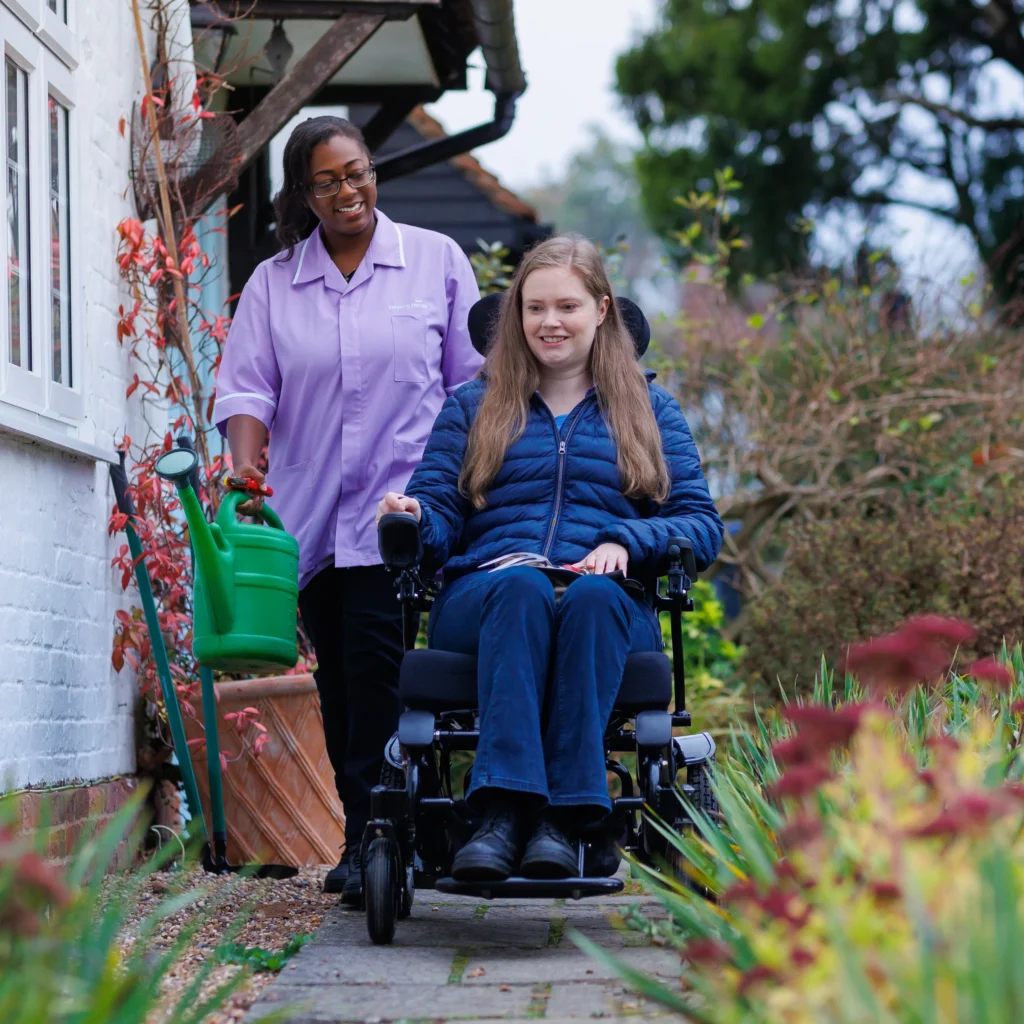
How does autonomic dysreflexia occur?
AD occurs when an irritating stimulus takes hold in the body below a spinal cord injury.
Autonomic dysreflexia happens when an irritating stimulus, such as an overfull bladder, is introduced to the body below the level of a spinal cord injury – causing nerve impulses to be sent to the spinal cord, where they travel upward until they are blocked by the lesion at the level of injury. Since the impulses cannot reach the brain, a reflex is activated that increases activity of the sympathetic portion of autonomic nervous system. This results in spasms and a narrowing of the blood vessels, causing a rise in blood pressure.

Carers trained to respond to an imminent attack
All of our carers receive expert nurse-led training that equips them to be able to spot the signs of an imminent AD attack – allowing them to provide swift and proper treatment that can help to prevent the most severe symptoms occurring.
Carers are able to support the customer by identifying and removing the cause where possible and administering any rescue medication such as GTN spray if needed. Our carers will work with our Clinical Lead Nurses to reduce the risks of AD as much as possible. This includes following a robust bladder and bowel management routine along with bespoke care planning and risk assessments.

Our customers love our carers because they are:
Dedicated and compassionate
At Helping Hands, we have a rigorous recruitment process which means we only hire truly compassionate carers who share our person-centred family values
Directly employed by us
We directly employ all of our carers, so we take full responsibility for managing their workload, maintaining their wellbeing and paying them
Expertly trained and fully vetted
Every carer is fully DBS-checked and receives our industry-renowned training which equips them to provide dedicated end-of-life care
Signs and symptoms of autonomic dysreflexia
There are a number of common signs of an imminent autonomic dysreflexia attack.
Although it is possible for AD to be asymptomatic, there are a number of signs and symptoms that may signal an imminent attack, which our carers are trained to recognise. These include:

Causes of autonomic dysreflexia
Carole Kerton-Church, Regional Clinical Lead at Helping Hands, comments:
“Autonomic Dysreflexia or AD affects people with a spinal cord injury which has occurred above the T6 vertebrae. It can be a life-threatening condition requiring urgent intervention as if left untreated it can result in stroke, seizures, or cardiac arrest – early recognition of the symptoms is vital.”

The most common stimuli for AD are related to:
Overfull bladder
A bladder being overfull due to a blocked catheter or overfull drainage bag
Bladder infection
Bladder stones, an infection or a bladder spasm which can occur during a routine catheter change
Constipation
Constipation, trapped gas, faecal impaction or even the stimulation from routine bowel management
Wounds
Open wounds, untreated wounds, pressure sores, sunburn, scalds and insect bites below the spinal cord injury
Medical complications
Ingrown toenails, menstruation, child birth, bone dislocations or fractures, deep vein thrombosis, and more
Medications
Medication such as nasal decongestants, misoprostol, sympathomimetics and stimulants
A fully regulated home care provider
Here at Helping Hands, our service is regulated by the Care Quality Commission (CQC) and the Care Inspectorate Wales (CIW).
This means we need to consistently meet high standards and are monitored by our regulators.


Why is being a regulated care provider important?
Independent inspections of our service, giving you peace of mind
Fully vetted, high-quality carers
Guaranteed training and development for our staff
How to arrange home care
We try to make arranging care simple and stress-free so that we can focus on what really matters: your care needs. Speak to our team today to begin your journey.
Speak to our team
Our friendly, knowledgeable team can answer your questions and talk you through your options. We are available 7 days a week.
Book a free care assessment
Your local Helping Hands care manager will visit you to understand your needs and preferences and discuss how we can help. We can visit you at home, in hospital or even a care home to carry out the care assessment.
Confirm your care package
We create a tailored care plan for you to review. Once you’ve agreed the plan, we can organise care in as little as 24 hours.
Autonomic dysreflexia FAQs
Autonomic dysreflexia affects people with spinal cord injuries at or above T6.
Autonomic dysreflexia is a potentially life-threatening condition in, characterized by a sudden and severe rise in blood pressure triggered by noxious stimuli below the injury.
It varies. Autonomic dysreflexia occurs in approximately 20% to 70% of individuals with spinal cord injuries, particularly those with injuries at or above the T6 level.
The signs and symptoms of autonomic dysreflexia are usually sudden and severe, such as severe headache, caused by a sudden increase in blood pressure. This needs addressing immediately otherwise serious complications like stroke or heart attack can occur. Other symptoms include:
Sweating and Flushing, Bradycardia, Goosebumps and Cold Skin, Nausea and Vomiting, Blurred Vision and Anxiety, and stuffy nose.
Autonomic dysreflexia, also known as hyperreflexia, means an over-activity of the autonomic nervous system causing an abrupt onset of excessively high blood pressure.
If not treated promptly and correctly, it may lead to seizures, stroke, and even death.
Blood pressure will be monitored in people suspected of having autonomic dysreflexia, and other symptoms looked for, especially in people with spinal cord injuries. An increase in systolic blood pressure greater than 20 to 30 mmHg from the patient’s baseline levels is a key indicator.
Autonomic dysreflexia should be treated immediately to reduce the risk of severe complications. The person should be sat upright so that blood can flow down to the legs, tight clothing and devices should be loosened or removed, and triggers removed. These include bowel impaction, skin irritations, ingrown toenails, and bladder distension. Blood pressure should also be checked every 5-10 minutes and if there is no improvement, emergency medical assistance should be sought.
While the prognosis for people experiencing autonomic dysreflexia is favourable, episodes will generally recur. These can be kept to a minimum through regular bowel and bladder care, and skin monitoring. Quality of life can be maintained proactively via education and management, along with close vigilance.
Page reviewed by Carmen Dussoye, Regional Clinical Lead, on May 6th 2026.
How we wrote this page
This page has been produced referencing key insights and data from external experts, trusted medical sources and our team of in-house specialists. We have worked hard to ensure that all information is as accurate as possible and reflects current consensus at the time of writing and reviewing.