


Diet for dementia

Does a good diet make a difference?
For someone living with dementia, a healthy, balanced diet is key.
Working on a person’s health and diet when they live with dementia should not be limited according to how the disease affects them. Diet and dementia symptoms should be monitored by carers to ensure that the person they’re caring for is getting all the nutrients they require.
Encouraging a person to eat, and to eat the right things, can be hard. However, a balanced diet and dementia symptoms should be seriously considered when a care plan is put together. The care plan should include a diet catered to the customer and how they eat their meals. Being aware of their eating environment can make a big impact on the person’s eating habits, helping them to feel more comfortable as they eat.
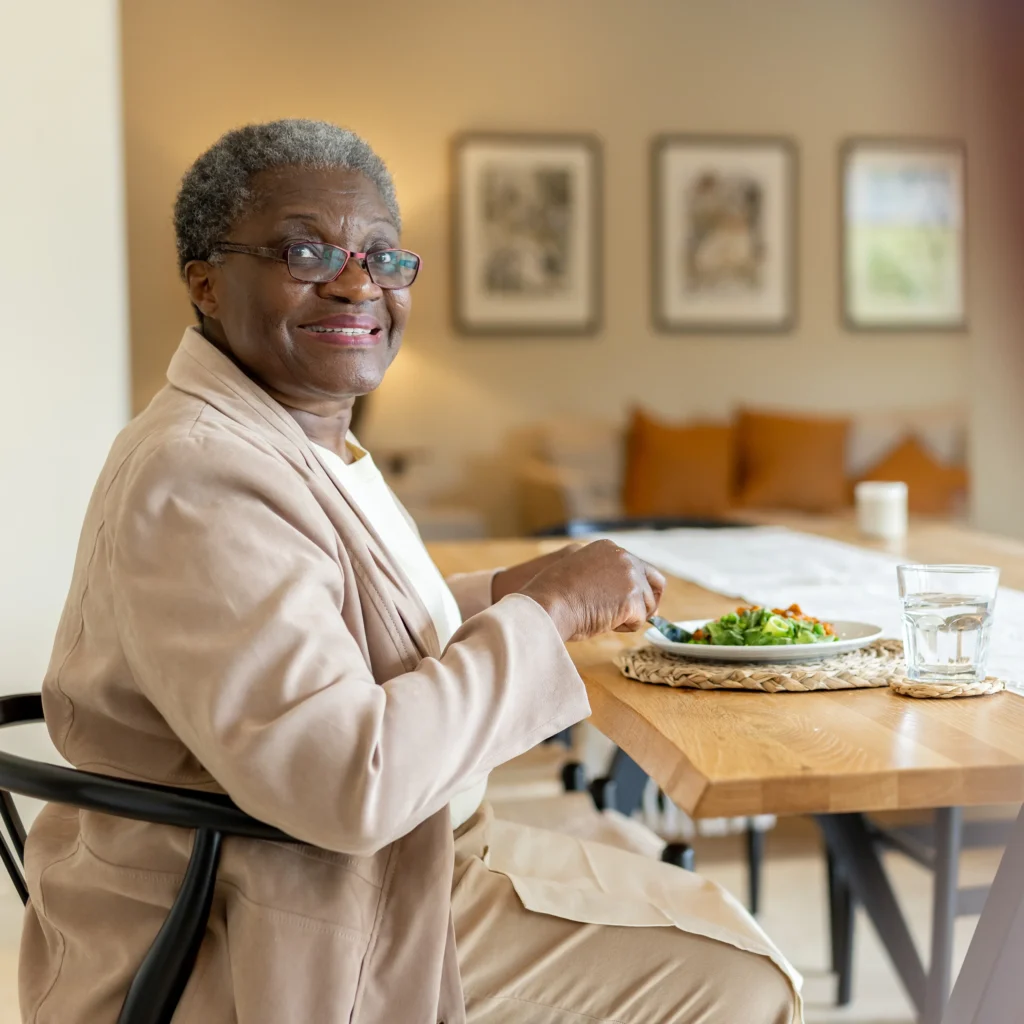
A high-protein diet
A high protein, high calorie diet is often recommended for people with dementia.
As poor food intake can result in significant weight loss, frailty and loss of mobility, it’s recommended that people with dementia follow a diet containing increased protein and calories. This can also help prevent cardiovascular diseases such as strokes and heart attacks.
Because of the importance of a controlled diet for dementia patients and the great difference it can make to our customers, where relevant, diet is included in the Helping Hands care plan, which is overseen by our in-house nutritionist.

Diet and dementia – nutritional and mealtime tips
There are a few techniques you can employ to help a loved one with dementia to eat regularly and healthily. Here are a few pointers to help improve your loved one’s nutritional intake if they’re living with dementia:
Have regular meals
Aim for regular meals at regular times to help the individual get into a routine
Avoid tea with meals
Avoid drinking tea with meals – the tannin in tea stops the absorption of iron in food
Eat little and often
If food intake is poor at mealtimes, aim to have a snack mid-morning, mid-afternoon and evening
Recognisable foods
Aim for foods that are obvious shapes and colours – for example, chicken and separately placed vegetables are more obvious than a plate of cottage pie and gravy
Allow time
Allow plenty of time for each meal – however if eating has stopped at 30 minutes, clear everything away – leaving cold or unappetising food can be distressing
Less refined sugars
Cut down on foods with refined sugars, and limit foods with high saturated fat and cholesterol – as well as meals that contain a lot of sodium and salt
Variety is the key to increasing food intake. People can eat 50% more if there is variety. Try using these principles with everyday meals: offer a variety of tastes, textures, colours and smells and serve the food on the right crockery and in a comfortable environment. We train our dementia carers to use these methods to great effect.
Caroline, Nutritionist

Dementia dining – how to create the right eating environment
Creating the right environment for eating is essential for anyone with dementia.
Extra noise, an uncomfortable chair and bad lighting are all obstacles which we can help them overcome. Here’s an essential guide to supporting your loved one with happy and nutritious mealtimes:
Cut up food
If the person struggles with crockery – cut the food up for them but encourage them to feed themselves with a fork or a spoon or even use their fingers
Use identifiable crockery
Use easily identifiable crockery and cutlery and use the same each day for each meal – aim to use a large plate – plain in colour and ideally with a coloured edge
Contrasting colours
The plate should be a contrasting colour to the table. Also, studies have shown that people eat more food if a white plate is used rather than a black plate.
Avoid distractions
Avoid any distractions – turn off the TV and any background music
Move the plate
Move your loved one’s plate so it is in their eyeline and easy to reach
Remind them to chew
People with advanced dementia may need reminding to chew and to swallow
Eat slowly
If you’re eating together, try to eat slowly so the person doesn’t feel pressured to eat fast
Check temperature
Someone with dementia is unable to gauge temperature, so make sure it is not too hot
Encourage them
The individual may not recognise or understand what hungry or thirsty is so always encourage them to eat
Find out more about dementia care
We try to make arranging care simple and stress-free so that we can focus on what really matters: your care needs. Speak to our team today to begin your journey.
Speak to our team
Our friendly, knowledgeable team can answer your questions and talk you through your options. We are available 7 days a week.
Book a free care assessment
Your local Helping Hands care manager will visit you to understand your needs and preferences and discuss how we can help. We can visit you at home, in hospital or even a care home to carry out the care assessment.
Confirm your care package
We create a tailored care plan for you to review. Once you’ve agreed the plan, we can organise care in as little as 24 hours.