


Breaking the silence on seasonal affective disorder (SAD)
What is seasonal affective disorder (SAD)?
If your mood changes with the seasons, this could be Seasonal Affective Disorder.
As we move into the darker and colder months of the year, many people find that January can be a particularly difficult month. In fact, the ‘January Blues’ has become such a recognised phenomenon in recent years that there is even a specific day of the month that is recognised as the one most likely to bring on feelings of depression or sluggishness, namely ‘Blue Monday’, the third Monday of the month.
However, many people in the scientific community mock the idea that one day of the year could be identified as more depressing than any other, instead claiming that January just naturally brings potentially lower moods. This could be for many reasons, such as post-Christmas blues after weeks of cheerful music and the anticipation of get-togethers, and the long, dark, cold days.

Why does mental wellbeing deteriorate in January?
There are a number of reasons why a loved one’s mental wellbeing may deteriorate in January.
Blue Monday was a term coined by a travel company in 2005 to pinpoint the day when people were feeling their lowest. Originally devised as a campaign strategy, it now represents reasons why people’s mental health is negatively affected at this time of year. As many as 80% of people have given up on New Year’s resolutions by Blue Monday, according to the University of Scranton in the USA – leading to feelings of despondency as if we have ‘failed’.
There are many other reasons for mental health to decline in January, and while they can affect people at any age, the following may particularly apply to seniors.
Empty house syndrome
Having a house full of visitors when you usually live alone can bring both joy and stress, however there’s no denying that having loved ones close and a house full of children’s laughter does most people’s mental health good. Suddenly having a silent house after weeks of family time, while initially a relief, may make the cold, dark days of January stretch ahead interminably.
Lack of activities
Many community activities take a break in January to give their helpers a well-earned break after all the festivities. Consequently, a group or day centre that you usually attend may be closed for a few weeks at the start of the year, leaving people who rely on it for their social connections at risk of becoming isolated. This can lead to depression caused by loneliness.
Increased health risks
The winter months have always brought the risk of colds and flu, plus the exacerbation of existing conditions such as arthritis, and other age-related frailties. Many people who have mobility difficulties are more anxious about going outdoors when it’s cold and damp due to the risk of slippery pavements and being exposed to more germs, so instead may decide to stay indoors.
Lack of daylight
It’s not just the cold that keeps people indoors during January, it’s also the dark nights that seem to go on endlessly. Despite the nights becoming shorter from the winter solstice on December 21st, it doesn’t immediately feel that way as the festive lights that are taken down in early January suddenly make everything seem so much darker.
Family pressures
While family members may not mean to put pressure on you, spending time together at Christmas may be the catalyst for adult children to encourage parents or grandparents to move nearer. They may only see you every few months and be struggling with feelings of guilt that they believe will be eased if you move nearer to them.
The struggles of others
You may live near friends or have someone who comes in to see you regularly, but what if they’re struggling with the winter blues too? Taking on the low mood of others is perfectly understandable when we’re close to others, but it won’t benefit you if you allow yourself to be affected by someone else’s mental health.
Why is the risk greater for people who live alone?
Living alone isn’t everyone’s choice and it suits some people better than others. Some people can’t imagine living with another person and really value their space, whilst for others it can cause a painful existence of loneliness and social isolation.
For example, losing a partner can be the hardest life event some people have to face and can leave them at risk of depression. Quite often it’s after the immediate shock has begun to ease that the lack of companionship becomes acute, usually after people have stopped calling every day and have drifted back into their own routines. According to AgeUK, one older person dies every seven minutes in cold weather due to the risks associated with inadequately heated homes and other vulnerabilities.
Mortality rates amongst the elderly are unfortunately higher in winter and if a person passes away around Christmas time it can be particularly difficult to cope while everyone around is enjoying the seasonal festivities. This can lead to people isolating themselves as they don’t want to be around people who are celebrating, either because it’s too hard for them or because they don’t want to ‘bring people down’.

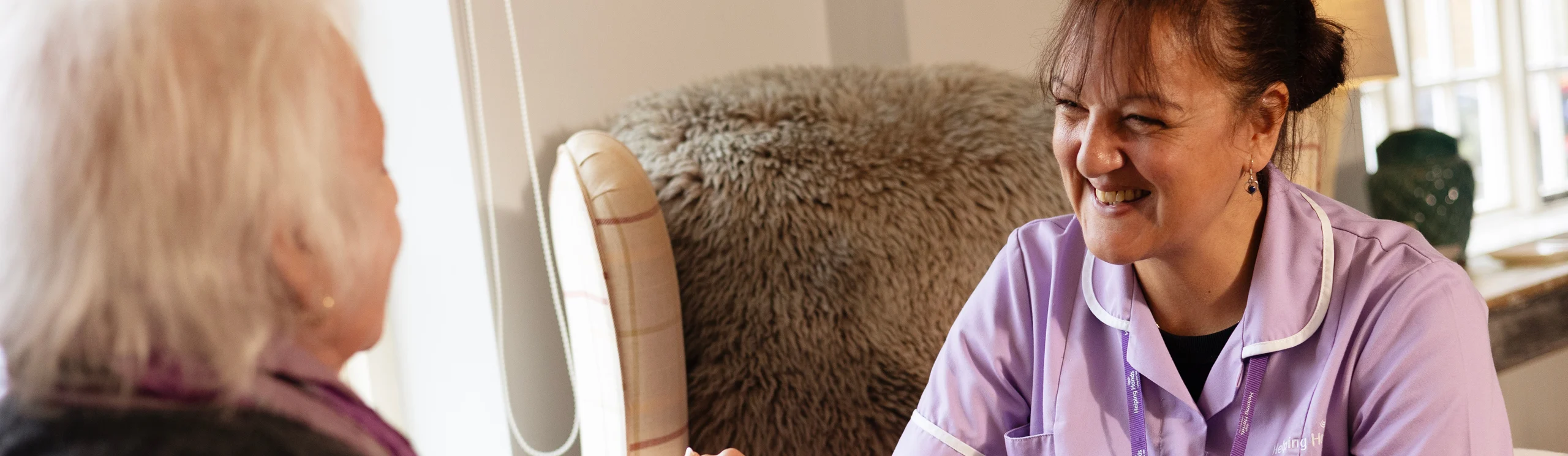
Our carers understand that sometimes you don’t want to be honest with those closest to you, instead ‘putting on a brave face’ so that they feel better. You can talk to our carers about how you really feel though, over a cup of tea at home or at your favourite café, helping you to combat those January blues.
A fully regulated home care provider
Here at Helping Hands, our service is regulated by the Care Quality Commission (CQC) and the Care Inspectorate Wales (CIW)
This means we need to consistently meet high standards and are monitored by our regulators.


Why is being a regulated care provider important?
Independent inspections of our service, giving you peace of mind
Fully vetted, high-quality carers
Guaranteed training and development for our staff
Seasonal Affective Disorder FAQs
Blue Monday was a term coined by a travel company in 2005 to pinpoint the winter’s day when people were feeling their lowest. Originally devised as a campaign strategy, it has nonetheless lodged in people’s consciousness, representing reasons why their mental health is negatively affected at this time of year.
Blue Monday is around the time when post-Christmas credit card bills begin dropping through letterboxes, so people who overspent in the run up to the festive season will often be feeling the pinch. This can have a negative impact on mental health as money worries account for a high percentage of depression and anxiety, according to the NHS.
A carer can help with empty house syndrome by providing you with a friendly face and a source of comfort and companionship. A Helping Hands carer can come to your home regularly, or even live-in – so the house will once again contain chatter, laughter, and positive energy.
Having a Helping Hands support assistant isn’t just for older people who need help at home. Our carers are there for the fun in life as well as the practical tasks and will help you to make the most of the local area, or further afield if you wish.
Many people would love a winter getaway to combat the January blues but are concerned they won’t manage alone, which is where the companionship offered by our carers is invaluable. You get to enjoy a few days in warmer climes with your carer by your side at all times; it’s a win-win!
Cold weather can cause people to remain in their homes. This may lead to the risk of social isolation and simple boredom, which themselves can lead to low mood and depression. January is typically the month when people stay in the most, which when contrasted with the number of events laid on in December makes it even more poignant.
Risks associated with snow and ice such as falling and breaking bones can mean that many seniors will instead choose to stay indoors until the weather improves, leaving them even more at risk of loneliness in January.
Naturally, there are concerns around safety and being out in the dark that make many older people feel vulnerable, so they instead choose to stay inside their home until the days begin to draw out again towards the spring. This is another way that our amazing carers can make all the difference; by coming to your home you don’t have to go out when it’s dark, they’ll be able to provide you with essential companionship.
Pressure from family to move nearer to them can cause anxiety and depression for some older people after the family has left in January because they may not want to leave their beloved home and may feel they will be forced into doing so. In addition, family members may have gone back to work and be missing the closeness they felt with their aged parents or grandparents, leading them to feel that living together may be the only option.
Sometimes it’s the smallest things that can make the biggest difference to a loved one. Perhaps they don’t need someone to help with daily tasks, but would just love to sit and have a chat?
The same is true of our carers – they’ll happily come to your home with your favourite biscuits, ready to natter about anything you wish, at days and times to suit you.
If you have concerns about someone’s safety or wellbeing, please contact your GP or NHS mental health services.
You can arrange care with Helping Hands today by giving our friendly customer support team a call, or using the contact form on our website.