Expert home care with Helping Hands

When is elderly home care typically required?
We offer personalised elderly care that adapts to your unique needs at home.
Elderly some care is often needed when a family member shows signs of struggling with daily tasks, experiences frequent health issues, or requires support to stay safe at home. It may become necessary after an illness, surgery, or a noticeable decline in mobility or memory. Our expert live-in care and visiting care can provide the right balance of independence and support, ensuring your parents receive the help they need while continuing to live comfortably in the home and community they love.
Physical signs that home care may be needed
Physical signs that your family member needs extra support can include:

Cognitive and memory changes to watch for
Forgetfulness
When your parent often forgets recent conversations, appointments, or where they placed things, it can be an early sign of memory decline or dementia, rather than simple forgetfulness.
Misplacing items
If your parent frequently loses keys, glasses, or other daily essentials and struggles to retrace their steps, it may indicate cognitive changes affecting memory and focus.
Difficulty with everyday tasks
Finding it more difficult to manage daily activities like housekeeping, including cooking, paying bills, cleaning, or following familiar steps, suggests challenges with focus, organisation, or problem-solving.
General confusion
Becoming disoriented about the day, time, or location can signal cognitive changes that affect awareness and the ability to navigate safely and confidently within the home.
Emotional and social indicators
Struggling with daily activities
Your parents may begin struggling with managing everyday tasks that once came very easily. For example, tasks such as housekeeping may become more challenging, or individuals may struggle with personal care like bathing and dressing properly, or moving safely around the home. These challenges can lead to frustration, reduced independence, and even health risks.
Safety concerns at home
Frequent falls, leaving electrical appliances on, or forgetting to lock doors may be signs that your parents need support. Safety hazards often increase with age, especially when mobility, vision, or memory begins to decline. A Helping Hands carer can help by providing expert elderly care to reduce these risks and help your parents to feel more secure and confident at home.
Social isolation
If your parent lives alone or has limited social contact, it’s common for them to feel lonely or isolated. A lack of companionship can affect both mental and physical well-being, leading to sadness, anxiety, or a loss of motivation. Having a dedicated carer from Helping Hands can make a real difference, offering emotional support and encouragement to stay active with hobbies or community activities.
Financial considerations
Financial planning is a crucial part of deciding which service could support you at home.
Our care plans can vary in cost depending on what service you choose, such as visiting care to support with daily tasks, to full-time live-in support for around-the-clock care. It’s essential to assess your parents’ income, savings, and other financial factors to determine what kind of care is appropriate. You can also explore whether they will qualify for government programmes, veterans’ benefits, NHS Continuing Healthcare, or Personal Independence Payment (PIP). You can view our prices on our costs and funding page, or contact us to discuss it further with our friendly team.

How to introduce the idea of home care to parents
Have an open and honest conversation
Begin by talking to your parents with empathy and understanding. Choose a calm moment to discuss how they’ve been feeling and any challenges they might be facing at home. Focus on their comfort and well-being rather than their limitations, making it clear that home care is about supporting their independence, not taking it away.
Discuss the benefits of home care
Explain how home care can make daily life easier and safer while allowing them to stay in the home they love. Highlight that carers provide help with tasks such as cleaning, cooking, or personal care, while also offering companionship. Sharing real examples or arranging an initial consultation with Helping Hands can help ease their concerns.
Include them in every discussion and decision
Include your parents in the planning process so they feel respected and in control. Discuss the type of care, schedule, and carer preferences together to ensure their needs and wishes are at the heart of every choice. By making it a shared decision, you’ll help them feel confident, comfortable, and positive about accepting support at home.
Expert home care with Helping Hands
Live-in care

- Round the clock 24/7 care
- Handpicked carers selected for their patience, kindness and empathy
- Peace of mind for families
Visiting care
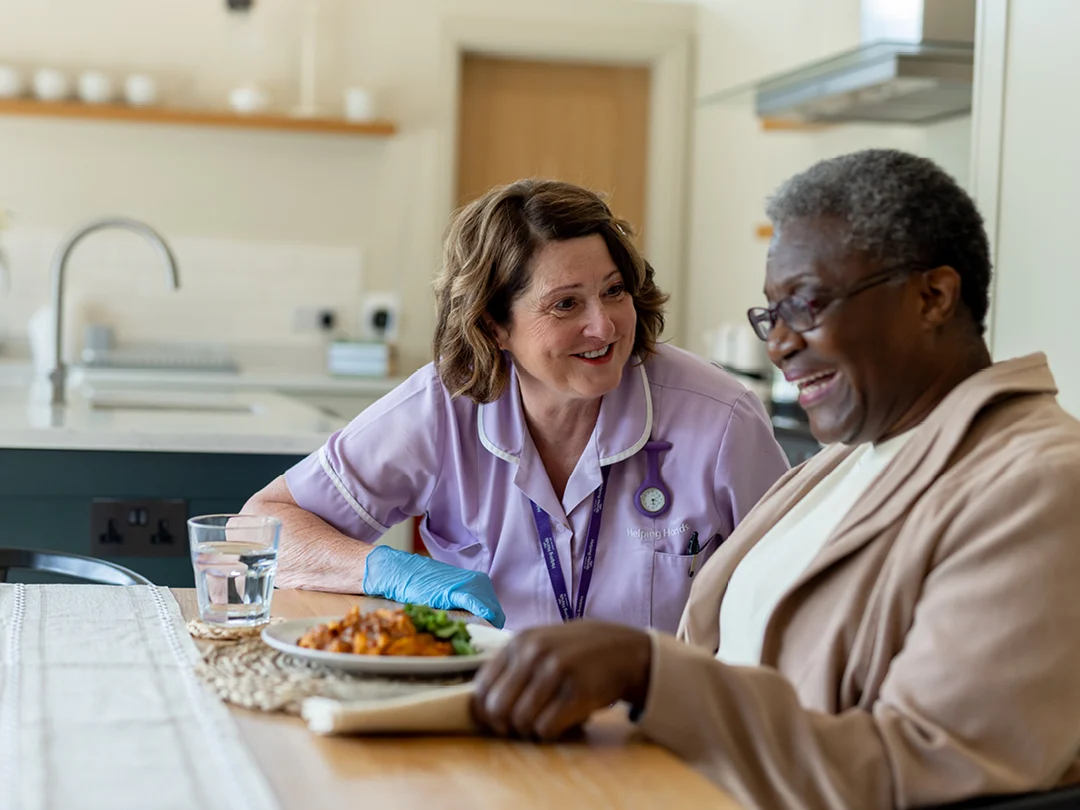
- Flexible care to suit your needs and routines
- Support with managing conditions or medications
- Companionship as well as care
Fully regulated home care provider
Being a fully regulated home care provider offers customers reassurance we’re meeting the highest quality standards, delivering nationally accredited training and have strong recruitment and vetting processes for carers. 97% of our branches have been rated Good or Outstanding by The Care Quality Commission or the Care Inspectorate Wales.
We are also a member of the Homecare Association, the membership body for homecare providers.