Supporting the elderly during World Alzheimer’s Month

What is World Alzheimer's Month?
World Alzheimer’s Month is an opportunity for people to learn about dementia, find out how they can raise awareness, get involved in campaigning, or volunteering their time. Becoming a Dementia Friend is also a great way to show your commitment to helping people with dementia live as well as possible, and for society to demonstrate a better understanding of dementia.
When is World Alzheimer’s Day?
September is World Alzheimer’s Month, and the 21st of September each year is World Alzheimer’s Day.
Why World Alzheimer's Month matters
Dementia is the UK’s biggest killer, yet according to the Alzheimer’s Society, it’s also “the UK’s forgotten crisis” and “isn’t the priority it needs to be”. World Alzheimer’s Day and the wider awareness month were created to help raise awareness and vital funds for the Alzheimer’s Society and other dementia charities.

Understanding Alzheimer’s and dementia
There are numerous types of dementia, caused by abnormal changes to the brain, which ultimately affect the person’s memory. Nerve cells in the brain become damaged meaning that chemical ‘messages’ cannot be sent between those cells. This subsequently affects all functions of the body.
What is Alzheimer's disease?
Alzheimer’s disease is a type of dementia. Dementia is an ‘umbrella term’ to describe a range of progressive conditions that affect the brain. One of the reasons it develops is because of the build-up in the brain of two substances called amyloid and tau.
Common early signs to look out for
Memory problems are the first signs you may notice, such as the person forgetting where they’ve put things around the house. They may also have difficulties in planning and forward thinking, may not be able to follow a conversation, or remember words.
How to support an elderly loved one living with Alzheimer’s
The best way to support an elderly loved one living with Alzheimer’s is to be patient with them. It’s important to speak calmly and try not to get frustrated. It can be difficult at times, especially if you’re juggling lots of aspects of your life, however getting angry or correcting them constantly could lead to bad feeling on both sides.
Spend time and stay connected
Witnessing the changes happening within someone living with dementia isn’t easy for loved ones. This isn’t a reason to stop visiting, though, as their emotional connection with you is never lost, even if the physical one deteriorates.
Reassuring communication
Reducing the amount of frustration for the person living with dementia is important. For instance, asking ‘where did you put the keys?’ when they’re already agitated will just make things worse, whereas calmly offering to help find them may be better.
A familiar and safe environment
Continuing to live in familiar surroundings means agitation and confusion associated with dementia may be reduced. Keeping changes to a minimum can help the person to feel more secure in their environment for longer.
Support daily routines
Having carers coming to their home will ensure that older people continue to live as independently as possible. Our carers can come to you on either a visiting or live-in care basis; they will follow your care plan and support your daily routines every day.
How to get involved in World Alzheimer’s Month
There are so many ways you can get involved in World Alzheimer’s Month. Raising awareness, raising funds, or organising an event can all be really worthwhile activities, which will support the people in your community — and across the nation — living with dementia.
Become a Dementia Friend
Becoming a Dementia Friend is a great way to learn more about what people living with dementia are experiencing on a daily basis and spreading awareness in your community. By wearing their badge, Dementia Friends show they understand.
Organise or join an awareness event
Signing petitions, lobbying MPs to change policy, attending local dementia events such as a Memory Walk, or organising your own activity can all help to raise awareness and make sure that the vital messages of dementia support cannot be ignored.
Raise vital funds or volunteer
Raising awareness, chatting to someone, or volunteering can all be as valuable as fundraising, and sometimes more so as it ensures that people around you on a local level have the opportunity to learn more about dementia and its impact.
Share your story online
Sharing your fundraising or awareness story with the Alzheimer’s Society means that your achievement gets the recognition it deserves, your story can inspire others, and you raise essential awareness of dementia and how it affects people’s everyday lives.
Where to find further help and support
There are many organisations in the UK, on both a local and national level, dedicated to raising awareness of dementia and supporting people living with the different types. Organisations such as the Alzheimer’s Society and Dementia UK are great sources of information and support, and both have information lines where your questions can be answered. You can also speak to knowledgeable healthcare professionals and dementia specialist Admiral nurses. Many local events take place throughout the UK for people living with dementia, such as Singing for the Brain, and dementia coffee mornings. Look for events in your area here.
Frequently asked questions
Being diagnosed with dementia will raise a lot of questions for both the person and their loved ones. These questions may be around future care needs, how quickly their symptoms will progress, or how they will manage. Seeking advice from healthcare professionals may help you to make some plans, but it’s important to take your time talking to your loved ones and working out how your future support will look. We support many customers living with dementia and provide help for them that also enables their loved ones to take a step back and focus on valuable time together, rather than providing practical care.
Alzheimer care at home with Helping Hands
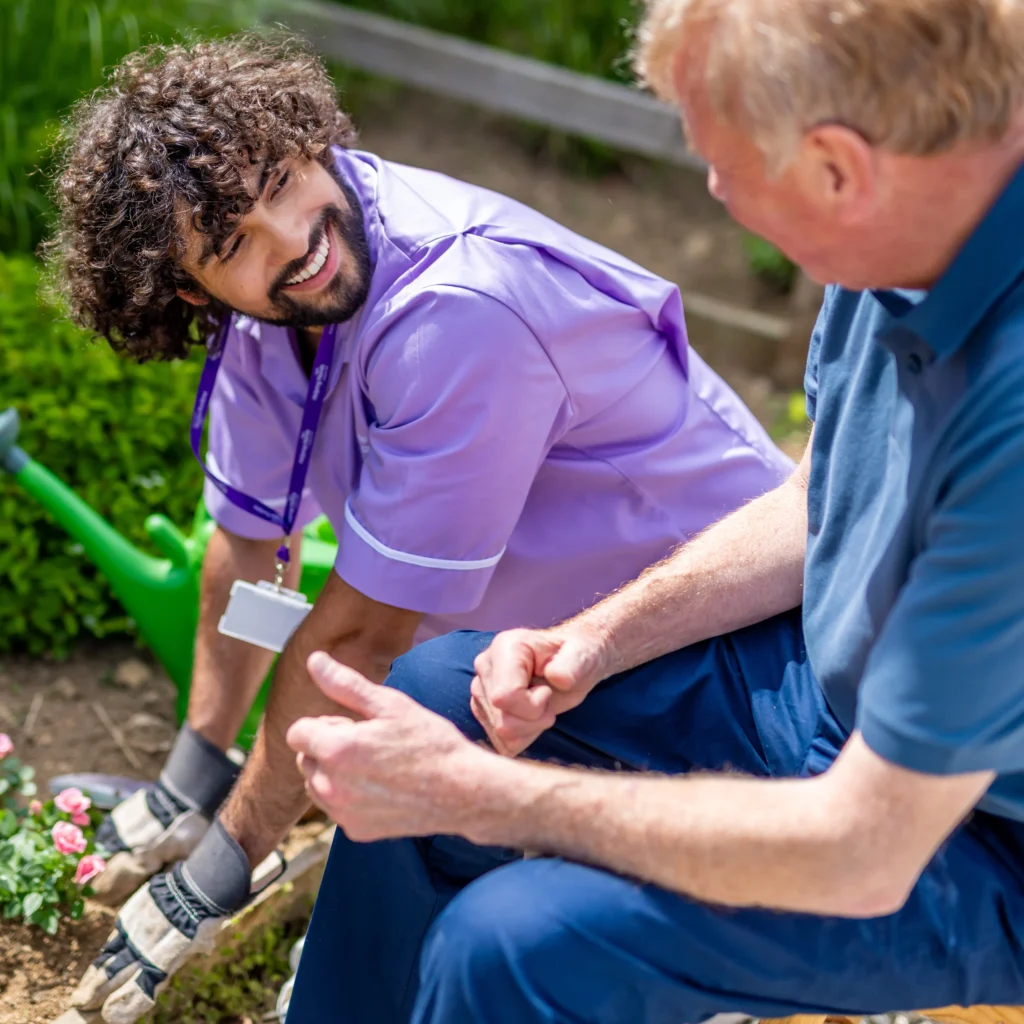
Receiving Alzheimer’s support on either a visiting or live-in care basis from Helping Hands means constant reassurance for you and your loved ones. Dementia is a progressive condition which means that it will continue to get worse, but that doesn’t mean you have to leave the home you love. We support so many people living with dementia in the comfort and familiarity of their own homes, providing regular calls or around-the-clock care that enables you to remain as independent as possible. All of our care is fully regulated by the Care Quality Commission and the Care Inspectorate Wales, meaning you and your loved ones will always be confident that you’re in the very best hands.