We would love to chat so please request a callback from our expert team.  Alternatively, our lines are open Mon-Fri 8am-7pm, Sat-Sun 9am-5.30pm.

Why do elderly people get dizzy?
Why do elderly people get dizzy?

What is dizziness?

Dizziness is feeling woozy, disoriented or as if you're about to fall over.

The NHS describes dizziness as feeling lightheaded or off-balance, and that it’s very common and usually not serious. Symptoms include feeling giddy, faint or the feeling of spinning (vertigo). Dizziness usually goes away on its own, but you can do certain things to eliminate the feeling. This includes lying down, moving slowly and carefully, getting plenty of rest, drinking plenty of fluids and avoiding substances like coffee, cigarettes, alcohol and drugs. Make sure to not bend or get up suddenly, or do anything dangerous like driving, climbing ladders or using heavy machinery.
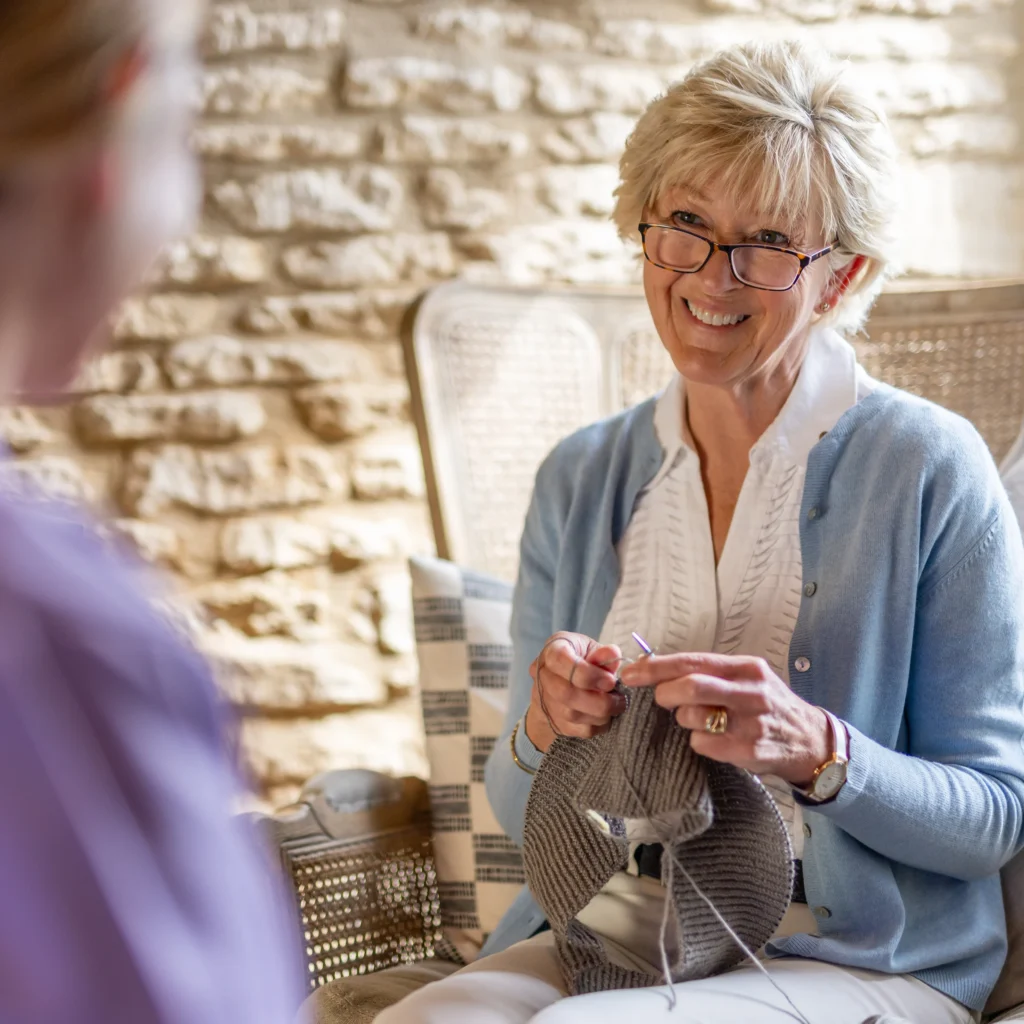
An older woman with short blonde hair and glasses smiles while knitting a grey garment, sitting on a wicker chair indoors and talking to another person whose back is facing the camera.

Causes of dizziness in the elderly

Causes of elderly people experiencing dizziness include:
  • Prescription drugs
  • BPPV
  • Low iron
  • Dehydration
  • Poor circulation
  • Abnormal blood pressure
  • Cardiovascular disease
  • Low blood sugar
  • Neurological disorders
  • Cataracts
  • Ear diseases
  • Anxiety
  • Migraine
  • An older man with glasses and a younger woman sit on a sofa, smiling and laughing together while looking at a tablet device. The atmosphere is warm and friendly.
    Call us now to arrange elderly care
    Request a callback

    How Helping Hands can help with elderly care

    At Helping Hands, we pride ourselves on our ability to be adaptable to your elderly care needs. We can offer care on a live-in, visiting or respite basis.
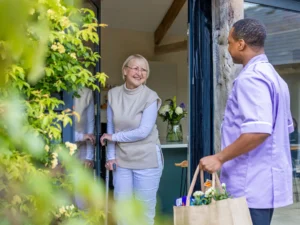
    A smiling elderly woman opens her front door to a carer who stands outside, holding a shopping bag filled with food and flowers. The scene is bright and welcoming, with greenery visible in the foreground.
    Visiting care
    Visiting care begins from just 30 minutes a week and our carers can come to your home at various points of the day.
    Prices start from £32.40 per hour for one-to-one elderly home care. Costs are flexible for visits lasting 30, 45 or 60 minutes.
    Prices depend on your location and specific care needs, with differences for overnight care and support provided during weekends and bank holidays.
    Each care visit comes with a call-out fee of £4.50 per visit. This additional fee is to ensure your carer’s travel costs are covered.
    Two women stand by an open car boot. One woman, smiling, lifts reusable shopping bags filled with groceries whilst the other woman watches. They appear to be unloading after shopping.
    Live-in care
    Live-in care offers around-the-clock support for all your needs, including elderly care.
    A live-in carer can support you with elderly care by offering clinical support and supervision.
    Live-in care can be cost effective for couples, allowing them to stay in the home and the community that they know and love.
    From your very first day of care, your local care team will be alongside you every step of the way to provide assistance and help with any queries and concerns.

    A fully regulated home care provider ​

    Here at Helping Hands, our service is regulated by the Care Quality Commission (CQC) and the Care Inspectorate Wales (CIW)​

    This means we need to consistently meet high standards and are monitored by our regulators.​

    ​Why is being a regulated care provider important?​

    Independent inspections of our service, giving you peace of mind​
    Fully vetted, high-quality carers
    Guaranteed training and development for our staff