


End of life care

What is end of life care?
End-of-life care provides the holistic support that is needed at the end of someone’s life.
End-of-life care is a type of palliative care that is reserved for the final weeks and days of a person’s life. It focuses on helping the person to spend the time they have left in comfort and dignity, allowing them to pass in the most peaceful way possible.
While some people spend their final days in a hospital, hospice or nursing home, end-of-life care at home has become a preferred option for those who wish to spend their last moments within their own home, and surrounded by their loved ones.
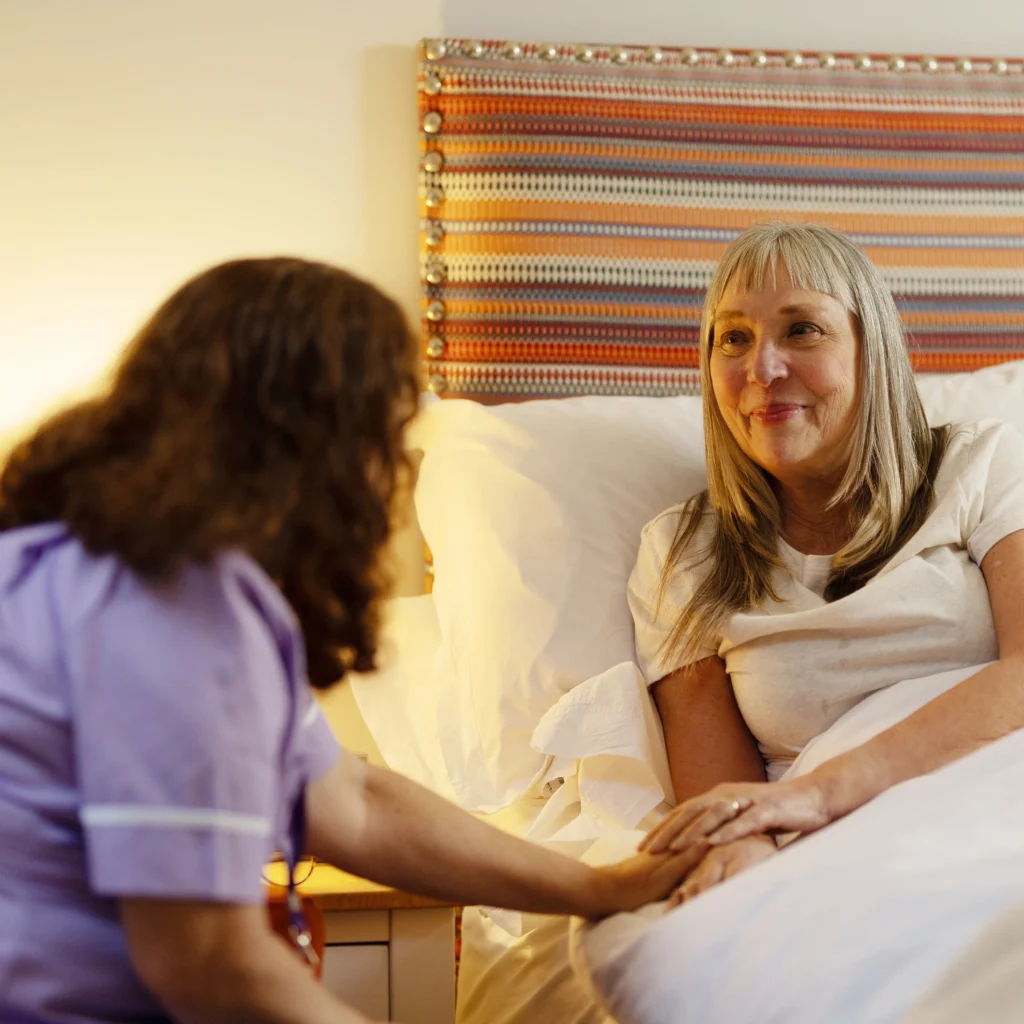
Dedicated end of life care when you need it most
End-of-life care gives your loved one dignity, peacefulness and comfort in their final days.
End-of-life care at home allows you – or a loved one – to remain in the place you feel most comfortable and safe as you approach the end of your life.
After a terminal diagnosis, change can be disruptive and unbalancing, as can the process of settling into a completely new environment such as a hospice or hospital. Fully-managed end-of-life home care lets you or a family member stay at home, surrounded by loved ones and special comforts, while receiving care that focuses on managing symptoms and minimising pain levels.
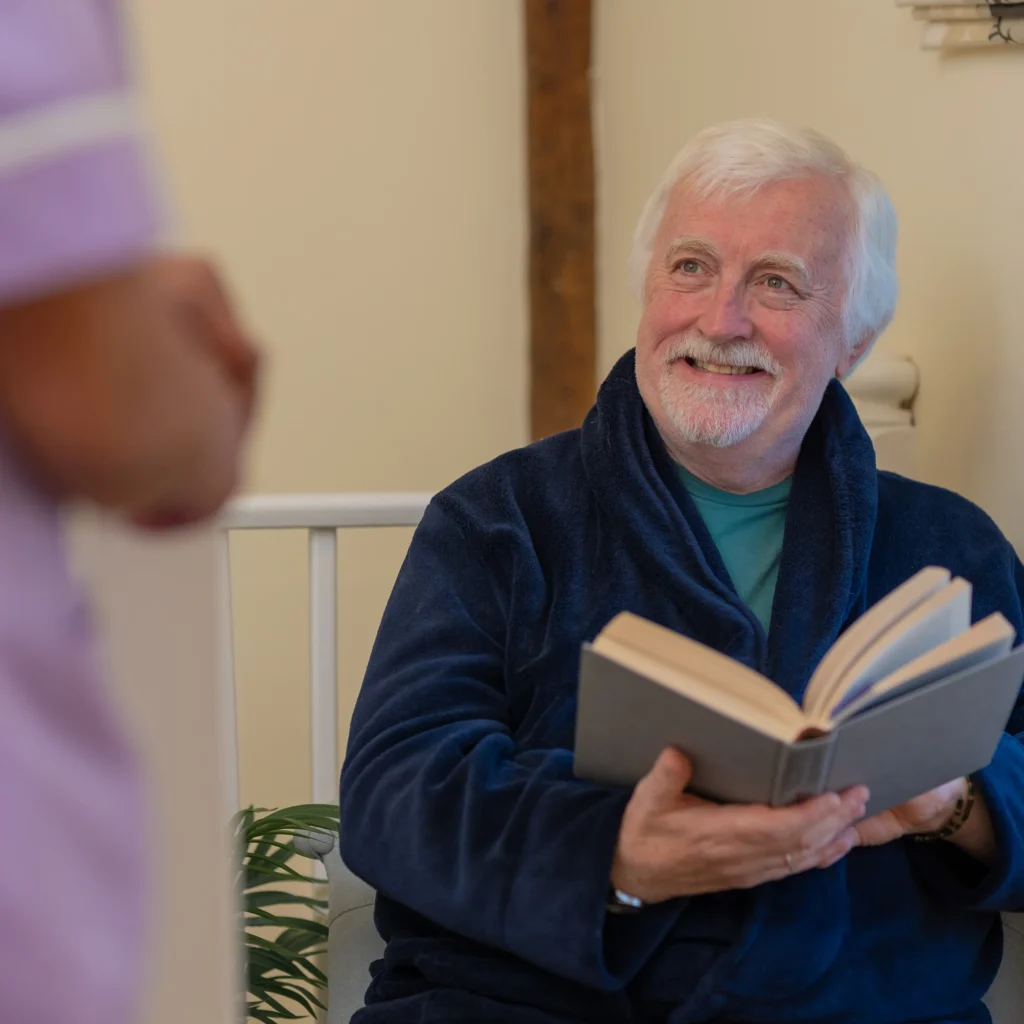
Helping Hands carers looked after our mother for over four years until she sadly died. Our live-in carer became part of the family and cared for our mother at home right to the end of her life.
Christine, Trustpilot review
How can an end of life carer help you?
A fully trained carer can offer regular support with many tasks to make you or a loved one
At Helping Hands, we focus on promoting independence and respecting your dignity and privacy. Your local care manager will work with you to understand what your specific needs are and the different ways your chosen carer can support you, such as:
Personal care
Supporting with bathing, showering and continence, including changing continence pads or using a commode
Mobility support
Such as help moving position in bed and help with standing or sitting – and using hoists when required
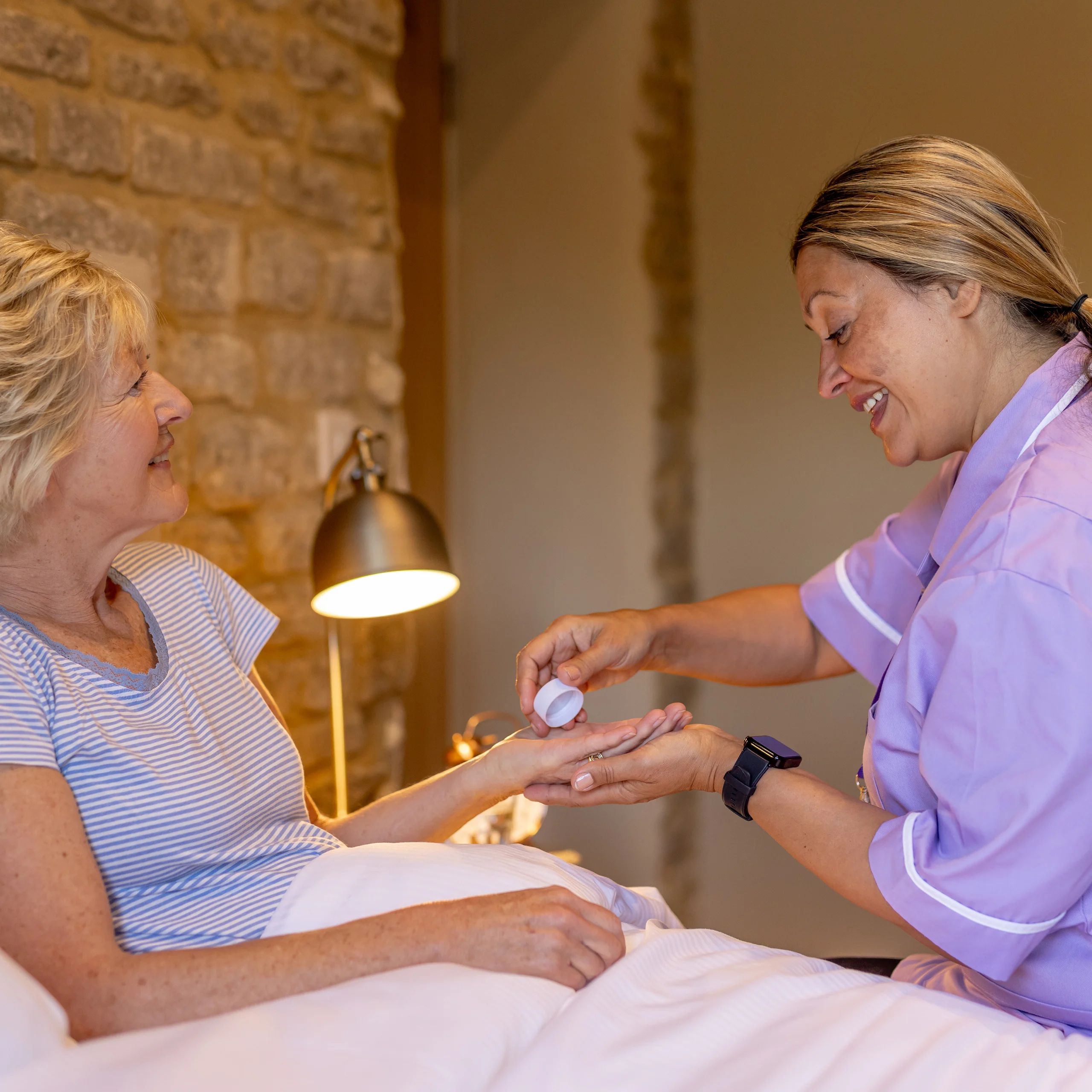
Administering medication
Administering or prompting medication, collecting prescriptions for you and supporting with pain management
Housekeeping assistance
Changing bedding and undertaking housekeeping duties including cleaning, vacuuming and much much more
Complex care
Complex care such as support with catheters, stomas and PEG feeding, and other condition-specific support
Preparing meals and drinks
Preparing meals, snacks and drinks to taste and dietary requirements at the times of day that are convenient for you
What are the options for end of life care?
With Helping Hands, there are many options for bespoke end-of-life support at home.
There are a number of ways your loved one can receive end-of-life care at home. Most importantly, a care package is created that is completely unique to you or your loved one’s needs, with an expertly trained carer who you feel most comfortable with. On calling our team, one of our home care specialists will talk you through the options for your family and can even arrange a face-to-face meeting with your local Helping Hands care manager.

Our most popular care options are:
Live-in care for end of life
A live-in carer will stay at home with you, being on hand to provide the support that is needed when it’s needed most. Your care manager will work with you to carefully choose one of our fully trained carers, finding the person who is the right fit for your family. This carer will offer continuous support and be someone that you and your family get to know.
Home visits at set times
Your local Helping Hands branch provides visits for set times each day or week, from as little as 30 minutes. Among many other things, visiting care offers a very useful sitting service if a family member needs a few hours to rest themselves. Other families use it for extra support with chores or cooking meals so they can spend more time together in those precious final moments.
Overnight end-of-life care at home
If your loved one needs constant support overnight, maybe with medication, pain management or going to the toilet, you can also arrange overnight care. It’s a valuable service allowing you, or another caregiver, to have a much-needed rest yourself so you can be fresh for the next day. This care can come in the form of either waking or sleeping night support.
Emergency care at home
Support needs can change suddenly. At Helping Hands, we offer a fast and responsive service so you can get the right support in place in an emergency.
With a nationwide team of CQC-registered care managers, clinical nurse trainers and an extensive team of fully trained carers, experienced in end-of-life carer, we can offer the support that’s needed at the last minutes.
My uncle passed away peacefully with the family and Helping Hands carer at his side. In my experience as a nurse I am aware that many people would not have had this option.
The Thompson family, Customer
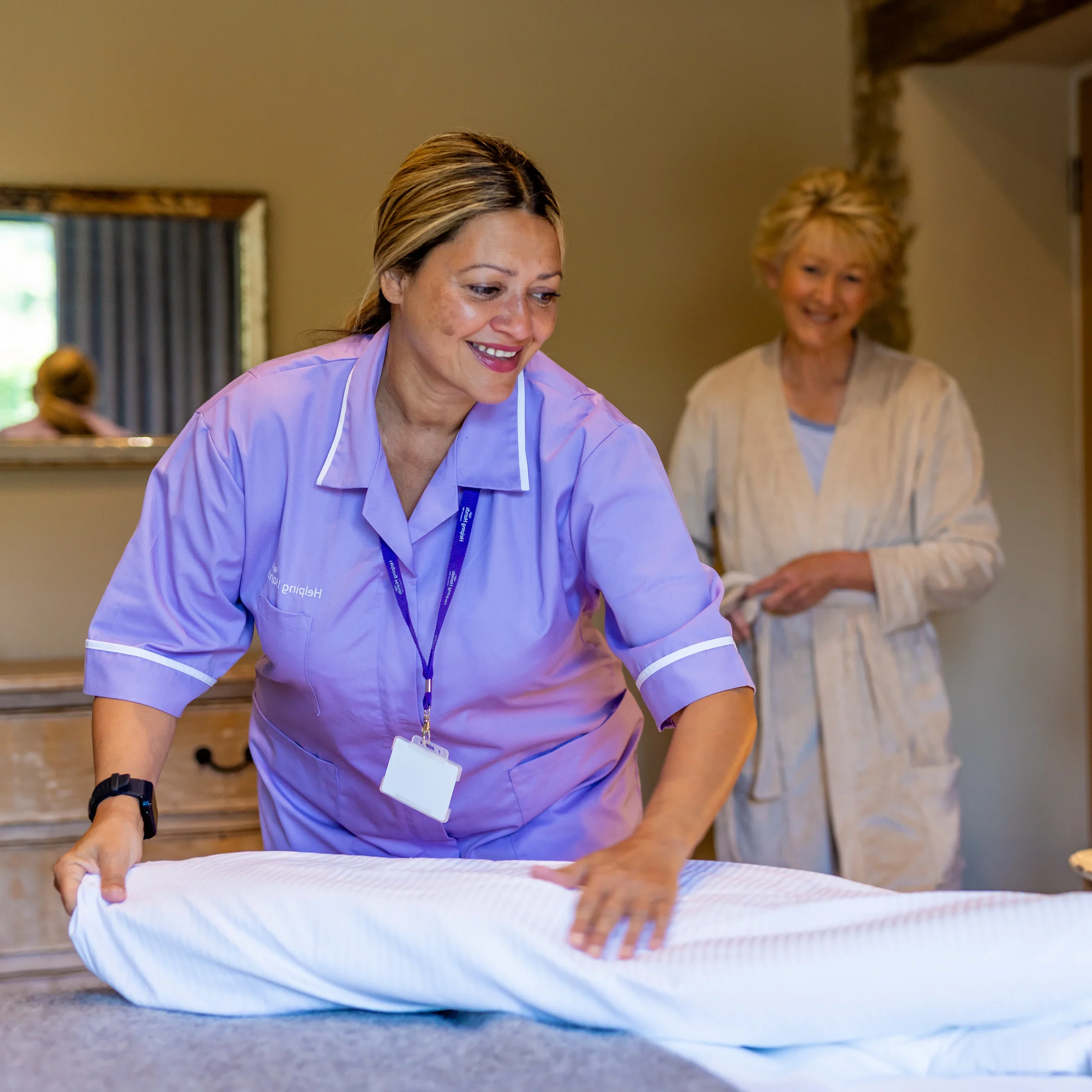
Taking care of the people that care for you
Our wonderful carers are the reason we’re trusted by so many families to provide care and companionship to people who need support.
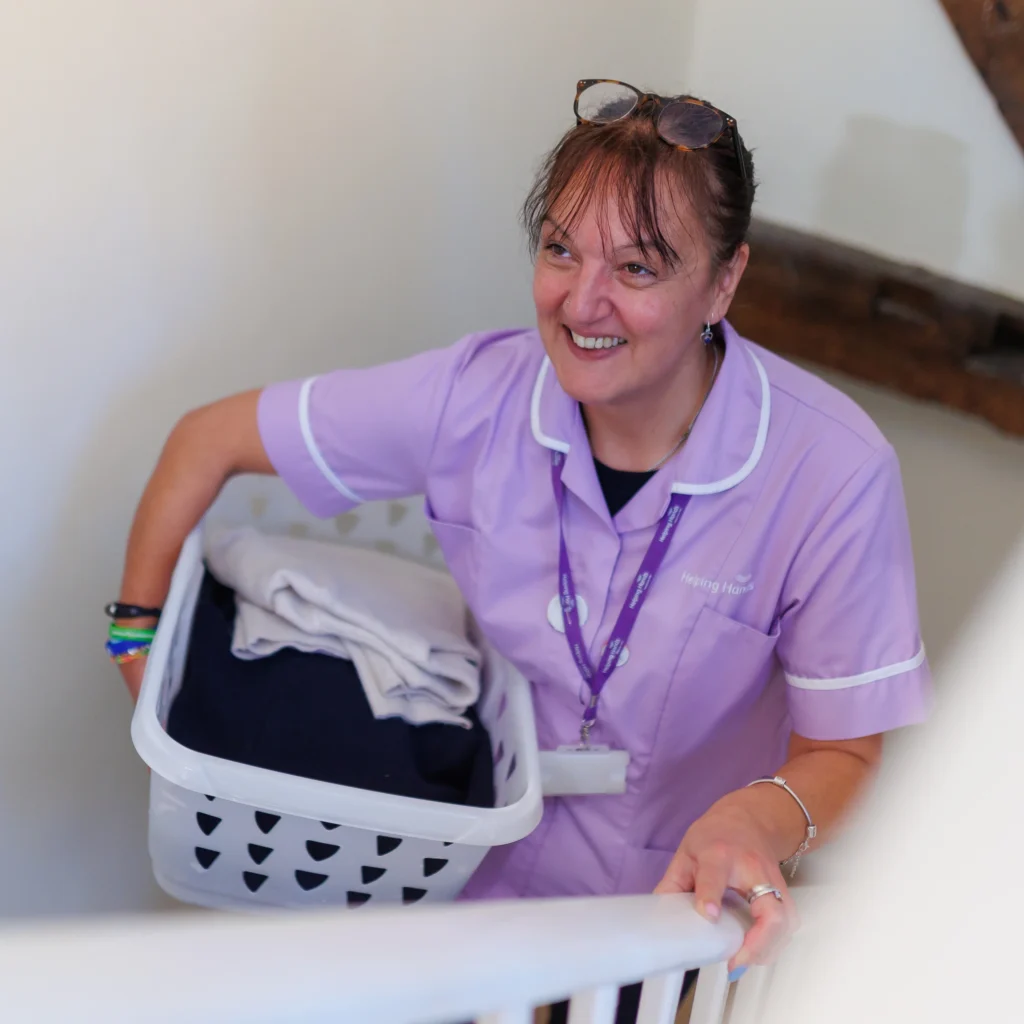
We directly employ every one of our carers and regularly train, support and reward them so they can continue to deliver the best care.
Why choose care at home over residential care?
At Helping Hands, the reason we’re home care specialists is because we passionately believe that home is the best place in which to receive care. There are numerous advantages to end-of-life care at home over residential care, such as:
You can remain in the comfort of your own home
You have full control over your meal times and preferences
One-to-one, 24-hour care from your own dedicated carer
You can continue with your preferred lifestyle and routines
Your friends and family can visit as much as they like
How to arrange end of life care
We know that arranging care can be a daunting process, which is why we focus on making it incredibly straightforward to organise support with us. Call our team today to begin your journey.
Speak to our team
Our friendly, knowledgeable team can answer your questions and talk you through your options. We are available 7 days a week.
Book a free care assessment
Your local Helping Hands care manager will visit you to understand your needs and preferences and discuss how we can help. We can visit you at home, in hospital or even a care home to carry out the care assessment.
Confirm your care package
We create a tailored care plan for you to review. Once you’ve agreed the plan, we can organise care in as little as 24 hours.
A fully regulated home care provider
Here at Helping Hands, our service is regulated by the Care Quality Commission (CQC) and the Care Inspectorate Wales (CIW)
This means we need to consistently meet high standards and are monitored by our regulators.
Why is being a regulated care provider important?
Independent inspections of our service, giving you peace of mind
Fully vetted, high-quality carers
Guaranteed training and development for our staff
Page reviewed by Rebecca Bennett, Regional Clinical Lead, on July 25, 2024.
How we wrote this page
This page has been produced referencing key insights and data from external experts, trusted medical sources and our team of in-house specialists. We have worked hard to ensure that all information is as accurate as possible and reflects current consensus at the time of writing and reviewing.