


Dementia care

What is dementia care?
Dementia care is all about giving you the support you need to carry on living at home.
Dementia care is condition-led care that’s designed to support you or your loved one as you face the challenges presented by your dementia. At Helping Hands, we provide dedicated dementia care to people in the comfortable, familiar surroundings of their own homes. Our carers are experienced in caring for those with dementia and can help create a routine that helps you to live your life comfortably and as independently as possible.

Dementia home care can support you with:
Condition-led care
Every case of dementia is unique. Our dementia care always offers your loved one a care plan that is designed around their condition and lifestyle.
Responsive support
Our dementia care is responsive and can be adapted as your needs change, which is essential when supporting a complex medical condition.
Fall prevention and management
We’ll work with you and your loved one to ensure your home is accessible and free of trip hazards, and that they’re confident moving around.
A familiar environment
Staying at home for care means your loved one can manage and adapt to their symptoms in a familiar environment where they’re comfortable and secure.
Experienced carers
Your loved one will get dedicated support from carers who are fully trained and equipped for caring for customers with dementia.
Emotional support
A significant part of our holistic approach to dementia care is ensuring that both your loved one and the family are emotionally supported.
What is dementia?
Dementia is an umbrella term for a range of progressive conditions that affect the brain.
There are numerous types of dementia; conditions grouped under the generalised term “dementia” are caused by abnormal changes to the brain and normally affect the person’s memory. The brain is made up of billions of neurons (nerve cells) that communicate with each other through chemical signals. If a person has dementia, these neurones are damaged, meaning these messages cannot be sent efficiently, which in turn affects all functions of the body.

Can a dementia patient be cared for at home?
Dementia care can be provided at home from either a visiting carer or a live-in carer.
When it comes to dementia care at home, you need to know your loved one is going to be fully supported at all times. We offer flexible, person-centred dementia support on both a visiting care and live-in care basis. Here’s an idea of what each type of care involves:

Visiting care

Live-in care
How our dementia care has helped customers
We love sharing stories from our customers about how our care is supporting them.
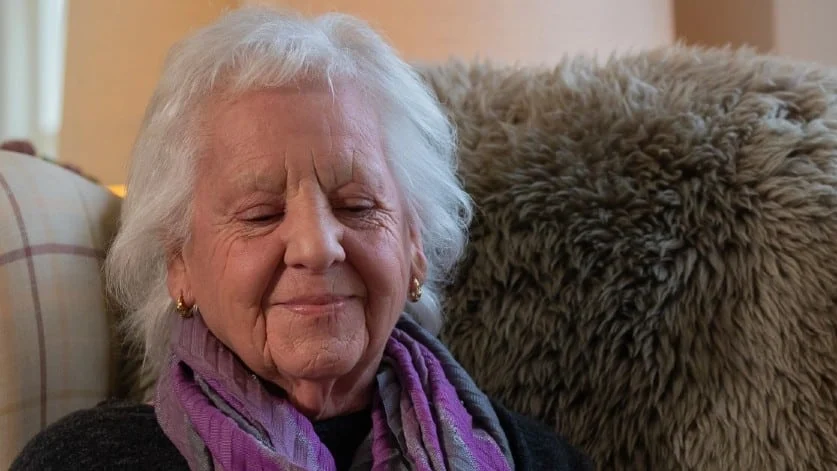
Find out how two of our customers, Janet and Molly, have been able to enjoy the life they deserve thanks to the dementia support they receive from their Helping Hands carers.

Janet
Dementia care customer
Kally
Dementia family member
Why trust Helping Hands for dementia home care?
You can trust our dementia care to provide flexible, person-centred support for your family member.
When choosing a dementia care provider, it’s only natural you want to ensure your loved one is getting the very best support. Whether that’s helping your home to be more dementia-friendly or helping to create a healthy routine for you, we’ve got you. Our private carers all have the experience, skillset and knowledge to look after a loved one with dementia and Alzheimer’s, and we’re proud that we make a difference in the lives of our customers.
We try to match our carers to your personality and preferences so they can be the perfect helping hand your family needs.

How can dementia care support your loved one?
Whatever your needs, our compassionate and attentive carers can support you in your home.
Whether you just need someone to check on your loved one first thing in the morning and help with personal care, prepping breakfast, or continuous live-in care to ensure they’re safe in the night, you can be assured that our fully-trained carers will be on hand whenever you need them.

Personal care
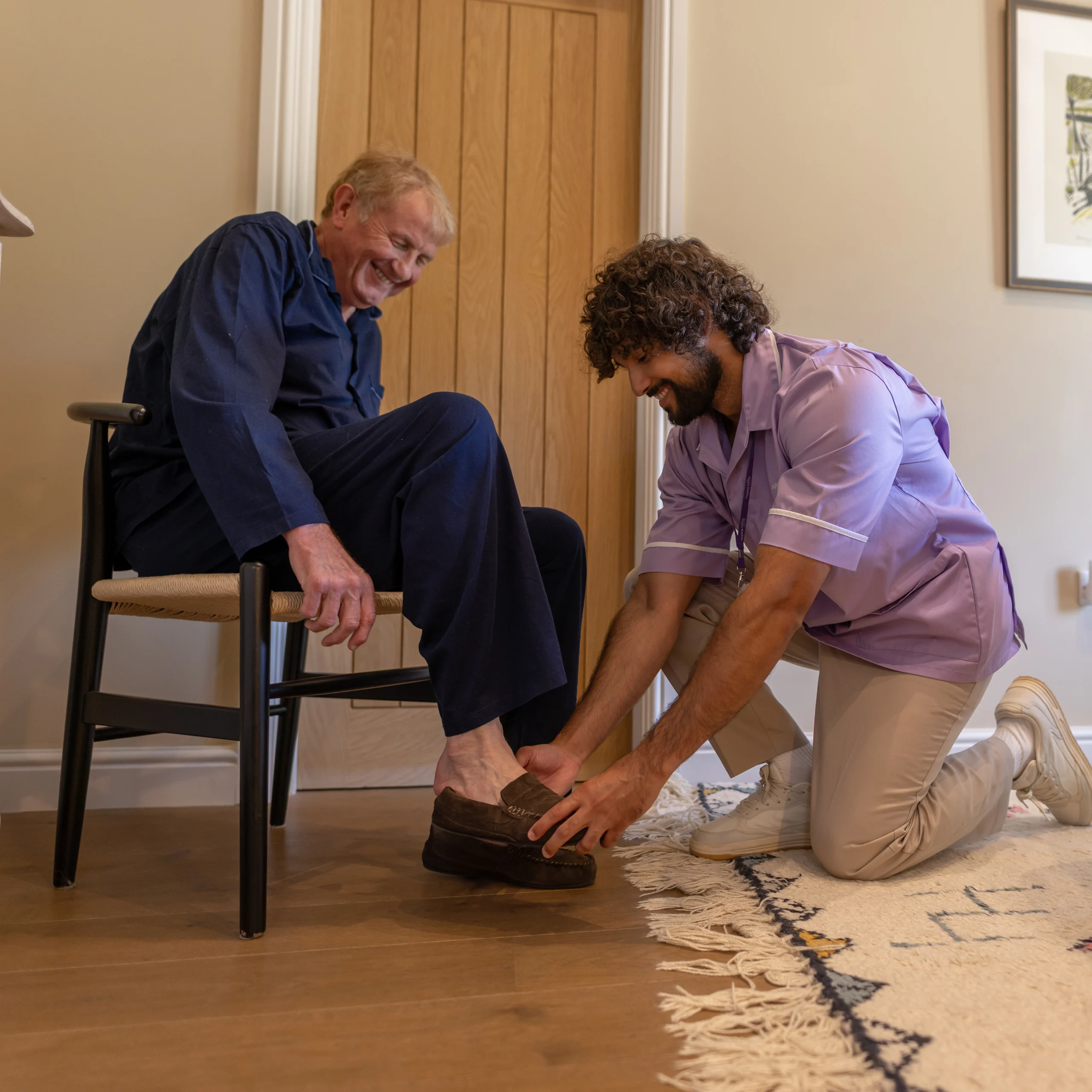
As part of your care plan, your carer can provide discreet, dignified personal care – assisting with bathing, dressing and toileting.
Preparing meals
Staying at home for care means you can ask your carer to prepare your favourite meals and snacks at the times that you’re used to.
Assisting with housework
Our carers can help out with cleaning, vacuuming, tidying, doing the laundry, ironing, and just about everything else.
Mobility support
All of our carers receive expert mobility training so that they can provide safe, secure mobility assistance around the home.
Looking after pets
With help from your carer, there’s no need to worry about your furry friend continuing to get the food and exercise they need.
Friendly companionship
All of our carers have been recruited for their approachable personalities and make for great companions as well as helpers.
Encouraging good health for a better life
Our dementia care focuses on helping our customers to stay fit and healthy for longer, allowing them to enjoy a better quality of life.
If your loved one isn’t eating properly or has an unhealthy diet, they can be susceptible to illnesses which can increase the effects of dementia and cause further confusion and agitation. Encouraging a person with dementia to exercise may be difficult at times, but the benefits are worth it. The NHS recommend some easy exercises with your loved one if they have not been very active previously:
Chest stretch
Sit upright, pull your back from the chair and push your shoulders back. Extend your arms to the side and push your chest out until you feel a stretch.
Upper-body twist
Cross your arms on your chest and reach for your shoulders. Turn your upper body to the left without moving your hips. Repeat five times for each side.
Hip marching
Hold on to the sides of the chair and lift your left leg up as high up as is comfortable, keeping the knee bent. Do five of these lifts with each leg.
Ankle stretch
Straighten and lift your leg until it’s off the floor. Point your toes away and then back towards you. Try doing two sets of five stretches with each foot.
Very friendly, helpful and experienced. They are a lifeline for my Mum who has Alzheimer’s. I would recommend them with no reservations to anyone seeking care for those in need.
Andrew, Trustpilot review
An alternative to residential care
Finding the right dementia care option for your loved one can take time, but one thing is for certain: if they want to remain at home, they can. Elderly care from Helping Hands serves as a viable alternative to residential care, and here’s why:
You can remain in the comfort of your own home
You have full control over your meal times and preferences
One-to-one, 24-hour care from your own dedicated carer
You can continue with your preferred lifestyle and routines
Your friends and family can visit as much as they like
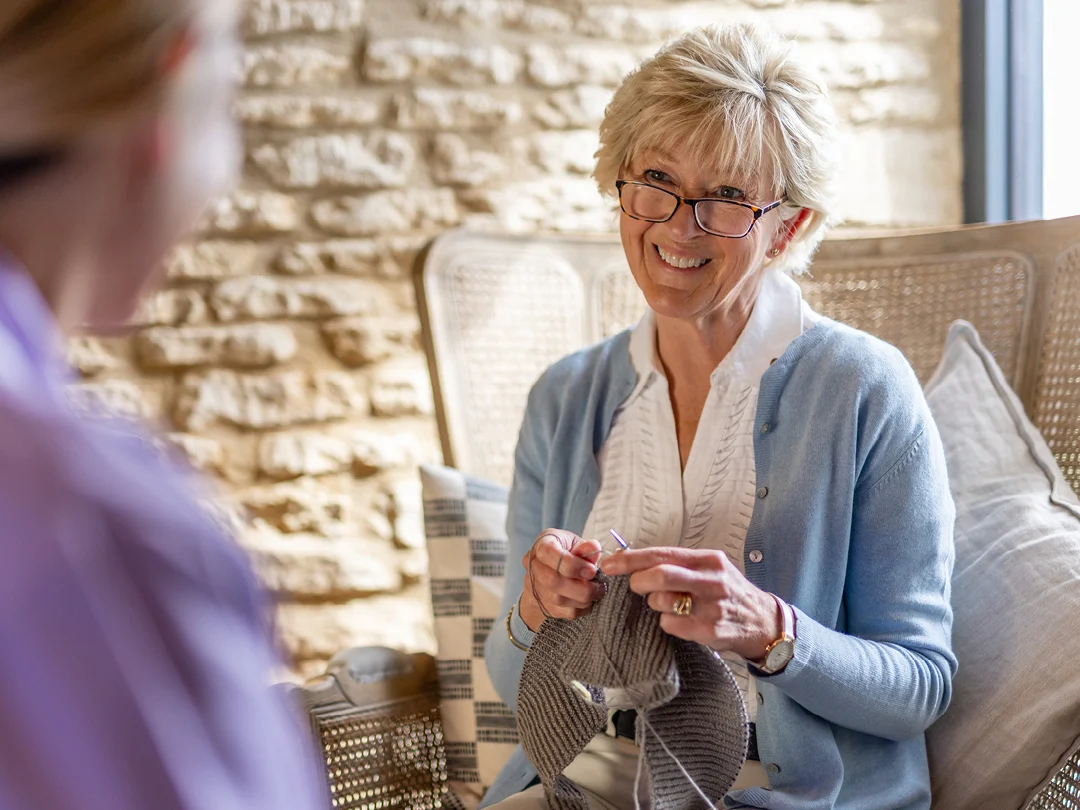
Care that facilitates hobbies and interests
A dementia diagnosis does not mean that someone automatically loses all interest in their hobbies. However, they may need some help with facilitating these.
Your loved one could enjoy reading a daily newspaper but find it difficult to go down to their local shop, or maybe they enjoy spending time in the garden but aren’t mobile enough to be able to get out of their home by themselves. A carer can help them to live a fulfilling life as independently as possible through maintaining their favourite hobbies and routines.

Over the years, we’ve helped our customers with:
Seeing family and friends
Our carers can help your loved one either visit friends and family, or host them – whether it’s just for a cup of tea or for an event such as a birthday
Gardening, cooking and crafts
Whether your loved one is green-fingered, artistic, musical or just likes being creative, our carers will always support them to maintain their hobbies
Attending church
A carer can help with supporting existing relationships and encouraging the person with dementia to join social groups, religious activities or hobbies
Trips and outings
With the support of an accompanying carer, we’ve helped countless customers to enjoy a day at the seaside or a visit to a local National Trust property
Popping to the shops
A carer can help your loved one do the weekly shop, as well as popping out to collect newspapers, magazines and other things for them to enjoy
…and so much more
We’ve helped our dementia customers to maintain countless hobbies and interests – from walking the dog to attending live sports fixtures
Additional pages we think you’ll find useful
How is dementia diagnosed?
Read about how to get a dementia diagnosis for yourself or a loved one.
How dementia affects day to day living
How does dementia affect daily life?
What is dementia care?
Go into more depth on what is involved in a dementia care plan.
Types of dementia
Find out more about the different types of dementia and their effects.
How are Parkinson’s and dementia related?
ow to define these two diseases.
What does dementia feel like?
What are some of the common symptoms that point to dementia?
How can you care for a loved one with dementia?
We’ve put together a dementia Life Story Book with Dementia UK to help you capture your loved one’s memories and reminisce with them – taking a trip down memory lane.
You may find that your loved one is having difficulty recalling past memories, family members or life events. To support them you can help communicate with them through their identity – like their background, hobbies, interests and who is important to them.
As their condition deteriorates and they progress through the stages of dementia, your loved one may need an increased amount of support. However, through still involving them in their everyday tasks, you will allow them to feel useful and may alleviate any negative feelings regarding their self-worth.
See our guide on dementia care and nutritional guide for more expert tips on supporting a loved one at ho1me. Also explore our helpful guide to the golden rules of dementia care.
Very friendly, helpful and experienced. They are a lifeline for my Mum who has Alzheimer’s. I would recommend them with no reservations to anyone seeking care for those in need.
Andrew, Trustpilot review
A fully regulated home care provider
Here at Helping Hands, our service is regulated by the Care Quality Commission (CQC) and the Care Inspectorate Wales (CIW)
This means we need to consistently meet high standards and are monitored by our regulators.


Why is being a regulated care provider important?
Independent inspections of our service, giving you peace of mind
Fully vetted, high-quality carers
Guaranteed training and development for our staff
Dementia care at home within 24 hours
We try to make arranging care simple and stress-free so that we can focus on what really matters: your care needs. Speak to our team today to begin your journey and we’ll aim to be at your door within as little as 24 hours.
Speak to our team
Our friendly, knowledgeable team can answer your questions and talk you through your options. We are available 7 days a week.
Book a free care assessment
Your local Helping Hands care manager will visit you to understand your needs and preferences and discuss how we can help. We can visit you at home, in hospital or even a care home to carry out the care assessment.
Confirm your care package
We create a tailored care plan for you to review. Once you’ve agreed the plan, we can organise care in as little as 24 hours.
Dementia care FAQs
Dementia care refers to a specialised package of care provided to people diagnosed with dementia who can no longer live safely or independently at home. This care is delivered by trained professionals who understand the unique challenges of dementia. The goal of dementia care is to promote both the psychological and physical well-being of the person, ensuring comfort, safety, and a higher quality of life.
Commonly known as “The 7 Stages Of Alzheimer’s”, this framework is used to measure the effects of dementia on an individual. These are as follows:
1. No impairment – Dementia isn’t detectable and there are no memory problems
2. Very mild decline – The individual may experience very minor memory problems
3. Mild decline – Cognitive problems are noticeable
4. Moderate decline – Clear cut symptoms of dementia are apparent
5. Moderately severe decline – Additional assistance is required with most day-to-day tasks
6. Severe decline – The individual requires constant supervision and professional care
7. Very severe decline – The individual loses the ability to communicate or respond to their environment
Try to understand how they feel – this is likely to be a highly confusing and upsetting time for them. Ask questions to fully understand their circumstance and offer the support they require.
Contact a member of our dedicated team to discuss the best package of dementia care for you or your loved one today.
Page reviewed by Carole Kerton-Church, Regional Clinical Lead, on July 25, 2024.
How we wrote this page
This page has been produced referencing key insights and data from external experts, trusted medical sources and our team of in-house specialists. We have worked hard to ensure that all information is as accurate as possible and reflects current consensus at the time of writing and reviewing.