


Palliative care training

Palliative care training
We’re committed to ensuring you’re supported by exceptional, compassionate carers.
Providing compassionate, bespoke care is at the centre of our palliative care, and we pride ourselves on working with you to choose the right carers for you.
During this often upsetting time, there is so much that you and your family are getting to grips, so that it’s important you have stable, reliable support right from the outset. That’s why we ensure that our carers that provide palliative care have the correct training and understanding of both the physical and emotional care required, as well as being able to support our customers’ loved ones.
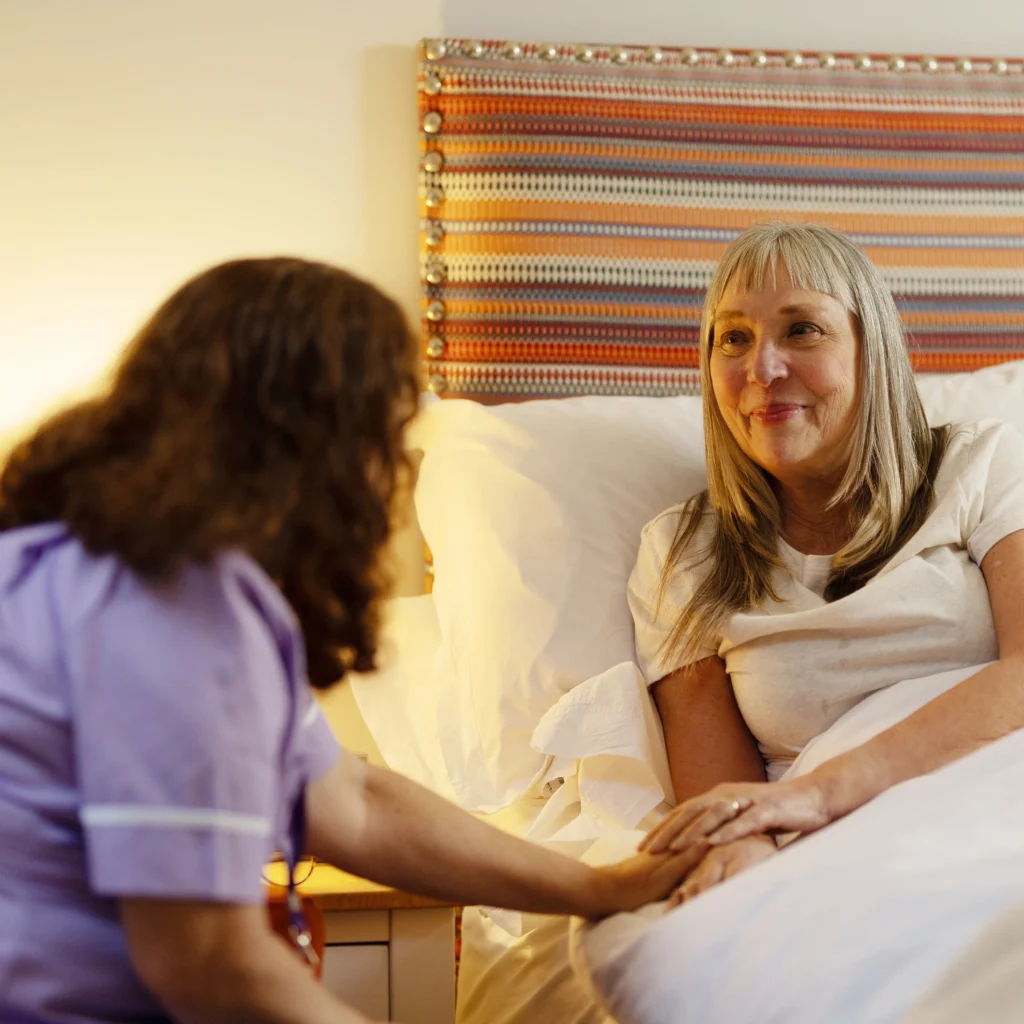
The palliative care training process
We select specific carers to undertake expert palliative and end-of-life care.
All of our carers have an understanding of palliative care, but we work with care managers to identify carers who may have previous experience of delivering different types of palliative care or have an aptitude for providing this type of care. Once selected, they will undertake a more advanced theoretical palliative and end-of-life training programme.
Palliative care training for Helping Hands carers is underpinned by the Five Priorities for Care as identified by the National Institute for Health and Care Excellence (NICE).
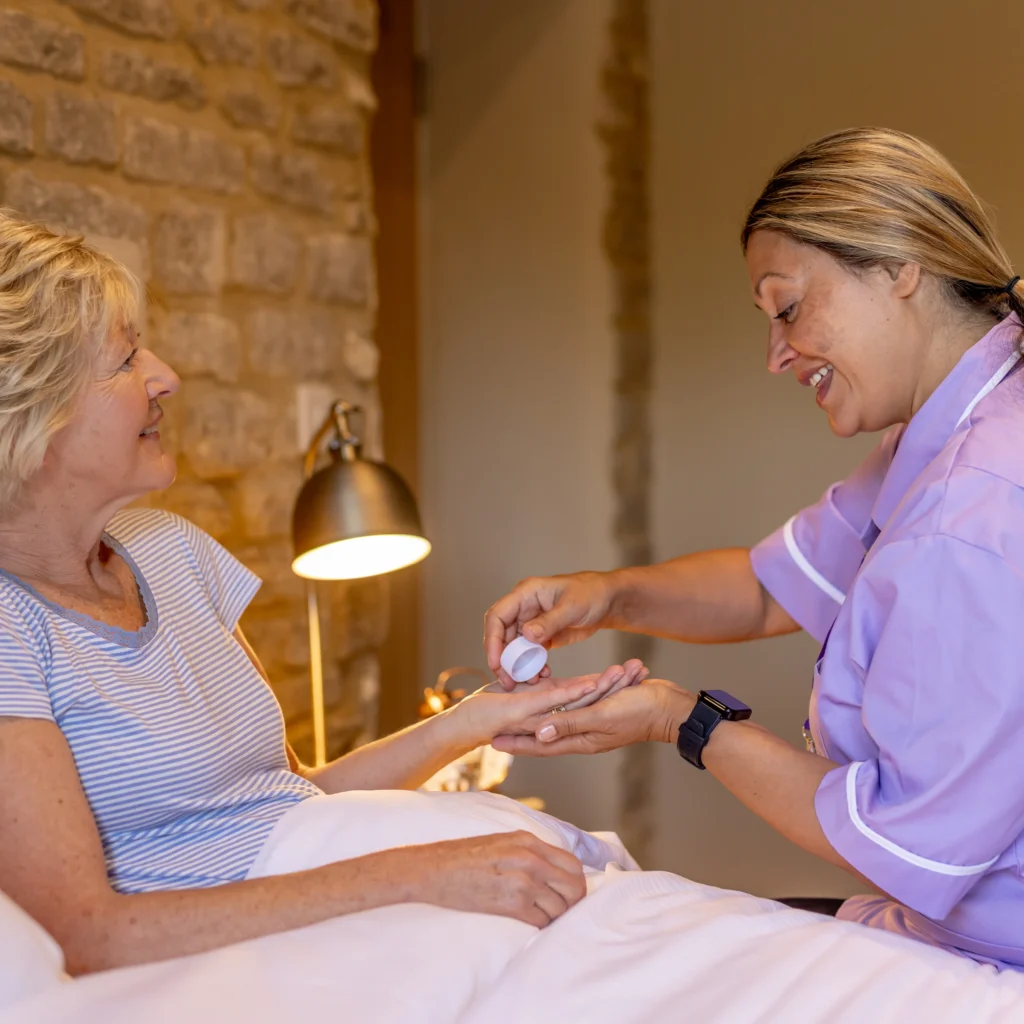
Our initial training covers the following objectives:
Understanding unique needs
Understanding the difference between palliative and end-of-life care, and the different needs and priorities for each type
The right time to transition
Identifying the time when customers may need to make the transition from palliative to end-of-life care
Compassionate, practical support
Knowing how to respond compassionately, effectively and practically to customers and their loved ones
Advanced care planning
Being familiar with advanced care planning for end of life care as part of a holistic, person-centred approach
The Five Priorities
Being able to recognise and identify the Five Priorities for end-of-life care, as listed by the NHS
Planning and documenting care
Care planning and documenting care delivery in accordance with Care Quality Commission (CQC) guidelines
Practical palliative care training
Our carers receive in-depth practical training – equipping them with a wide range of skills.
After completing the theory element of their training and reflecting upon what they have learnt, carers will then receive specific practical training that’s directly related to the customer they are due to care for from one of our regional clinical leads.
They can only complete their training once their learning has been signed off by their manager and a clinical nurse, and then they’ll be ready to provide the right level of person-centred, palliative care for their customer. There are also opportunities for refresher courses and extra training from our Clinical Nurse team during their time with us, ensuring that our carers’ skills are always kept up to date and in line with current NHS, NICE and CQC guidelines.
Palliative care experts
At Helping Hands, we have an array of experts in palliative care – including our clinical nurses.
Key to our experienced team is Carole Kerton-Church, Regional Clinical Lead for the London and Essex areas.
Carole started her care and nursing career as a Healthcare Assistant in a nursing home in 1998. By 2002, Carole was managing a large residential care home, and then in 2004 she started a Nursing Diploma at Anglia Ruskin University.
Read more about her diverse background in care.

Carole
Regional Clinical Lead
‘Carole has extensive experience across the care industry’
Industry-accredited training
As industry leaders in home care, it is imperative that we ensure our carers are trained to the very highest standards, enabling them to have the correct skills and knowledge when they’re caring for customers in their homes. And as the only UK-based home care provider to be a Centre of Excellence, we are certainly able to achieve these high standards on a consistent basis.
All of our carers, regardless of their previous experience, are required to undergo a thorough assessment and selection process when they first join us. Delivered by our in-house instructors, their modules equip them for caring out in the field, including the skills they will need for palliative care.
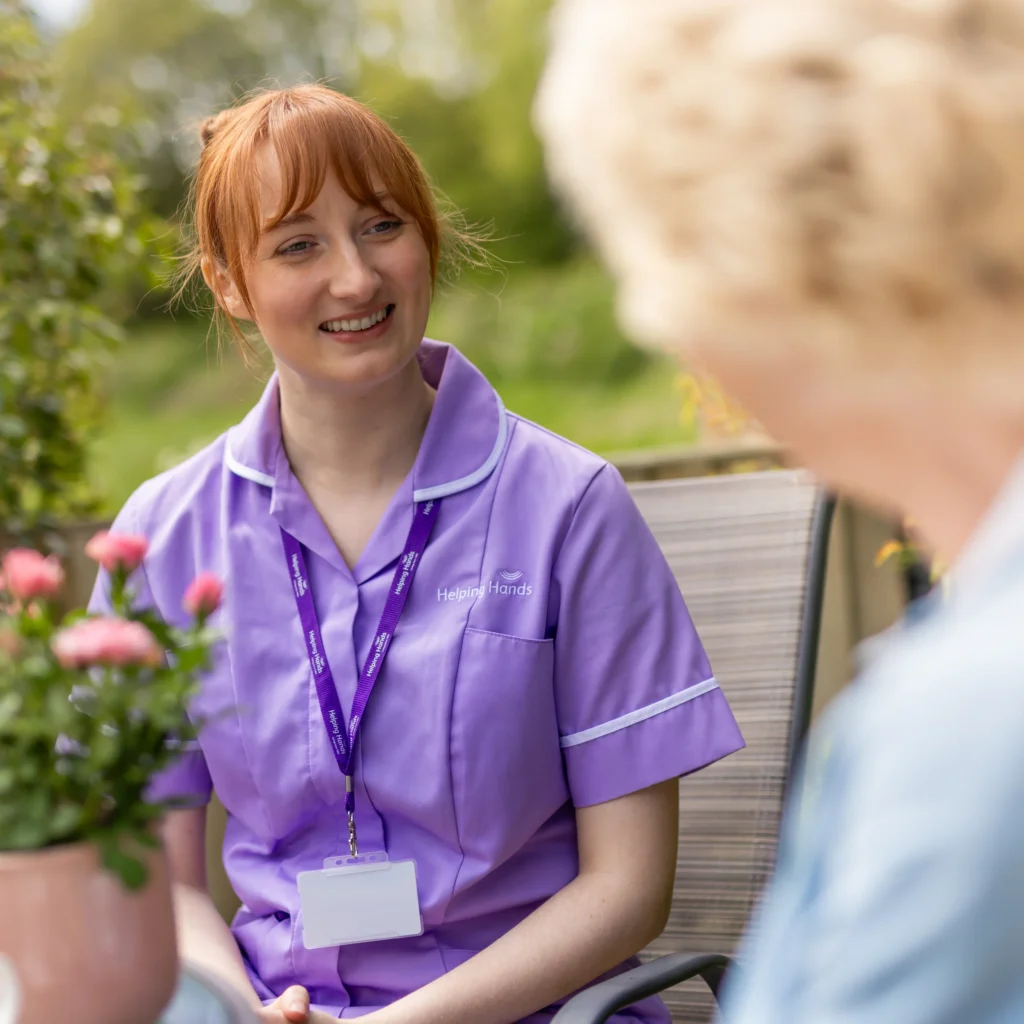
Our modules include:
Manual handling
Manual handling training includes how to use roll sheets, hoists and mobility aids to help our customers move safely in the home
Medication
Carers receive training in using MAR sheets and administering certain types of medication correctly
Personal care
Washing someone in bed and using washing aids, supporting toileting needs, helping with a catheter and stoma, and more
Dementia
Our dementia care module equips our carers to understand the different types of dementia and how to care for those affected
Equality and diversity
Our carers are trained to have an increased awareness of a customer’s wishes and identifying individual needs
First aid
All of our carers are trained first aiders, and receive dedicated health and safety training to ensure you’re always kept safe
We take care of your carer
It takes a special combination of patience, empathy and compassion to be a Helping Hands carer.
That’s why we’re extremely proud of our exceptional people and why we’re trusted by so many families to provide care and companionship to those who need support, across the country.
We make sure we continue to support our people after the join us, so they can deliver at their best for you, the customer. In 2024, we were recognised by the Financial Times as a Top 500 employer.
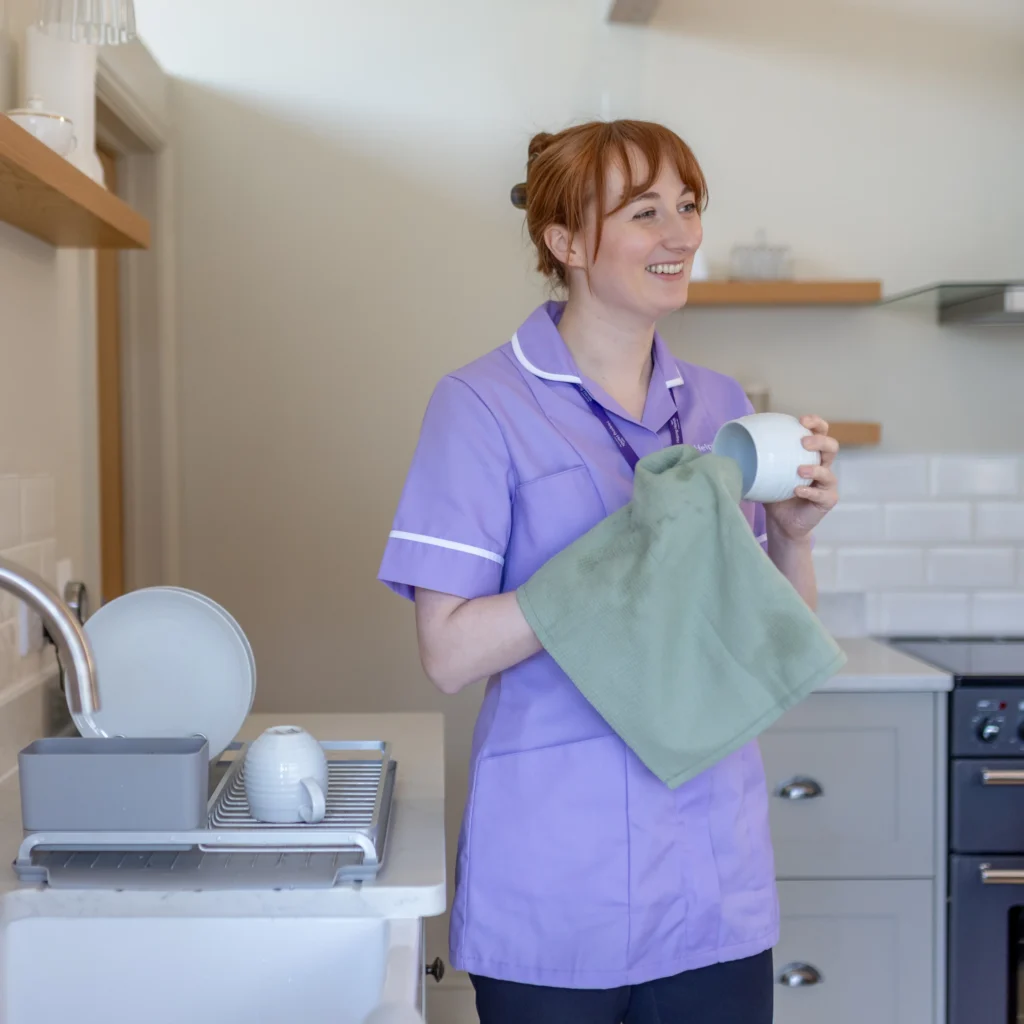
We directly employ all our carers
Every Helping Hands carer is directly employed by us, meaning everyone receives holiday pay, annual leave and pension contributions.
A supportive culture
We ensure our carers have access to dedicated managers and the help and support they need to carry out their role.
Comprehensive training and ongoing development
Our comprehensive training ensures our carers are fully ready to provide a wide range of support to customers from day one while our professional development programme ensure our carers can continue to develop their skills and access opportunities.
Reward and recognition
Our carer Reward and Recognition Programme – Moments of Kindness – celebrates the impact of small gestures and the actions of carers who go the extra mile to create joy, raise a smile, or offer reassurance or a sense of calm. Winners receive shopping vouchers and are featured in our magazine, Voices.
Page reviewed by Carole Kerton-Church, Regional Clinical Lead, on July 25, 2024.
How we wrote this page
This page has been produced referencing key insights and data from external experts, trusted medical sources and our team of in-house specialists. We have worked hard to ensure that all information is as accurate as possible and reflects current consensus at the time of writing and reviewing.