


Types of palliative care

The options for palliative care
There are several types of palliative care, so it’s important to know your available options.
At Helping Hands, we train our carers to provide dedicated palliative care for people with a wide range of conditions and needs. We take a holistic approach to all forms of palliative care, which means you will receive pain and symptom management as well as emotional support.
There are four main types of palliative care; we believe that care at home is the best option, as it promotes independence and allows you to live your life in the comfort of your own home.
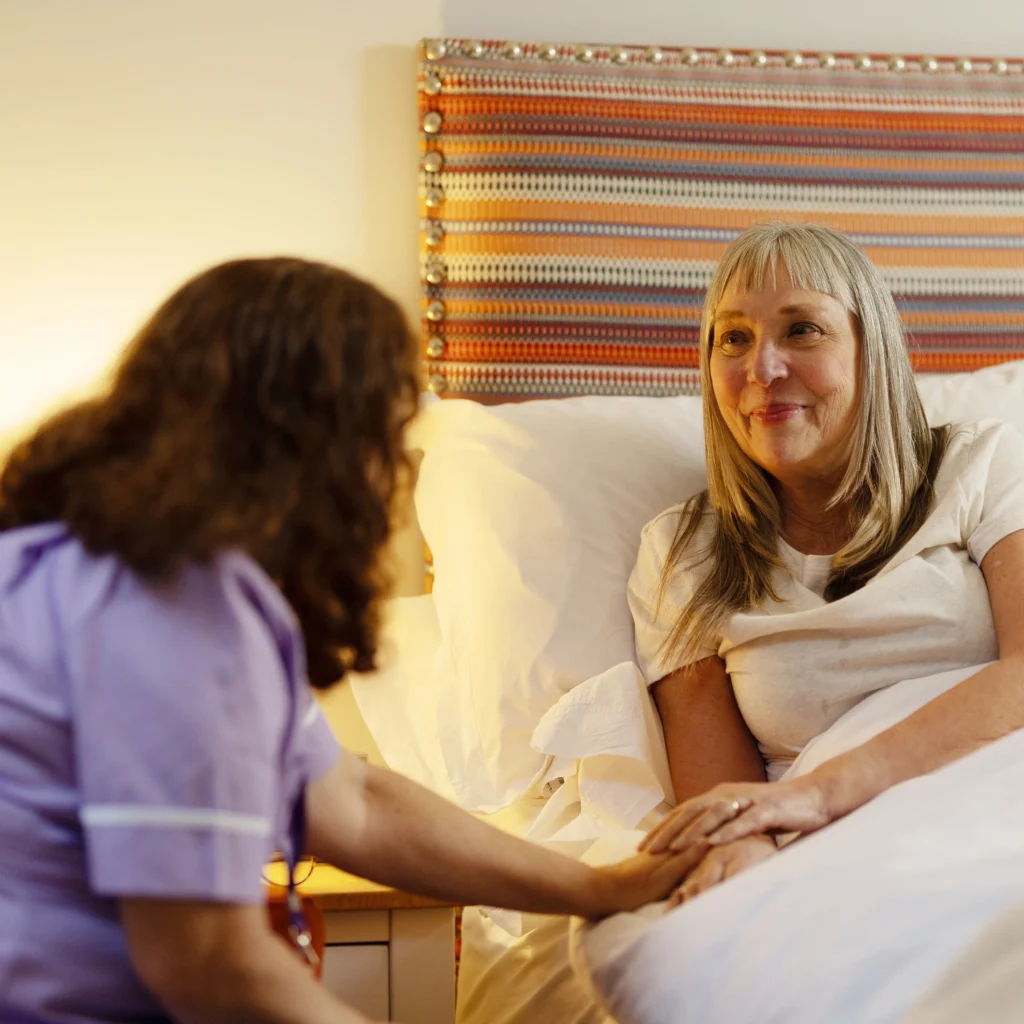
Palliative care at home
Palliative home care enables people to remain in their own homes to receive end-of-life care.
Carers, trained in nursing care, will move into the home of the person they’re responsible for looking after to provide round-the-clock support. It’s also referred to as hospice at home.
A trained palliative carer can also pay home visits at arranged times of the day and even overnight. Home care visits can be used to provide breaks for family members or other carers, or to assist with personal care or continence care, for example.
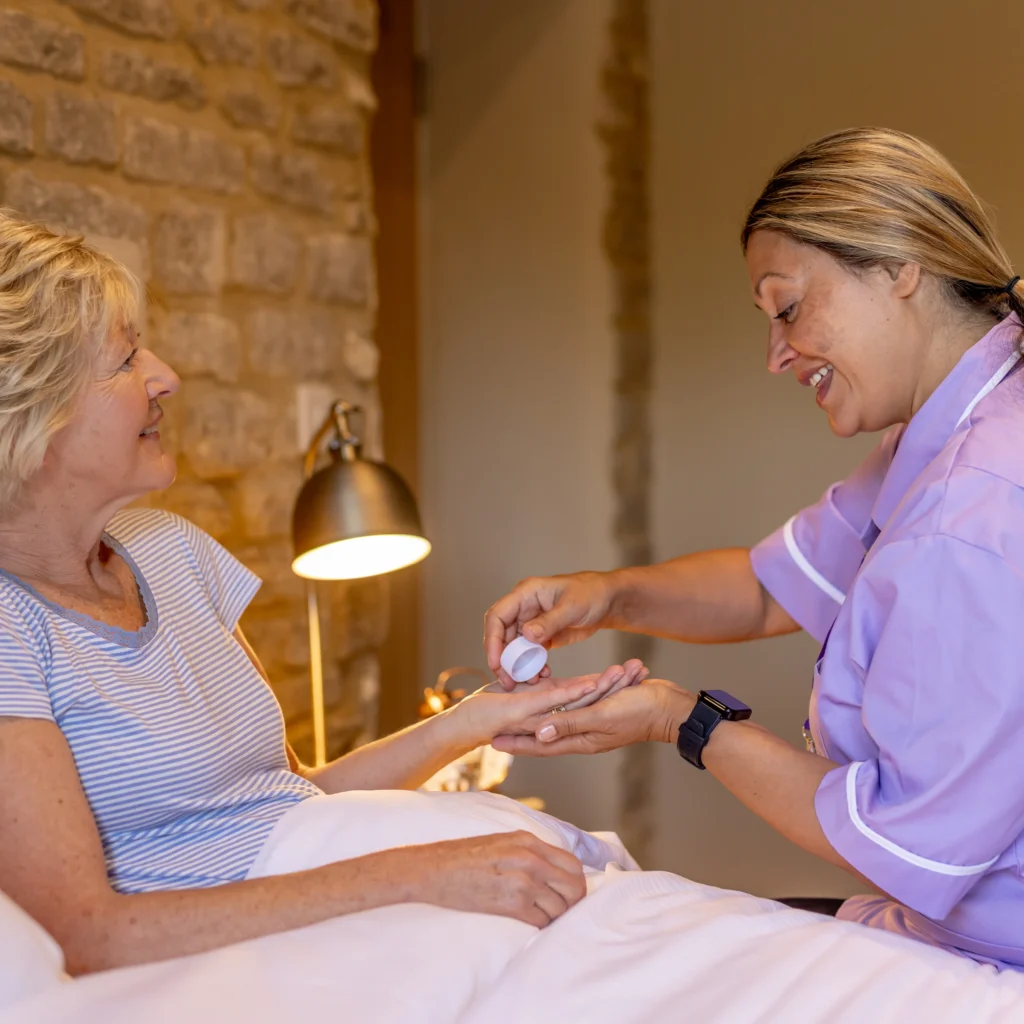
Some of the benefits of palliative care at home are:
Remain in your own home
Palliative care at home allows you to spend your last months or weeks in the comfortable, familiar surroundings of your own much-loved home
Receive one-to-one support
Personal one-to-one support from a dedicated, compassionate carer who will be completely familiar with your condition and circumstances
Cared for by specialists
All Helping Hands palliative carers receive palliative care training to deliver exceptional, compassionate support for people with a range of conditions
Remain closer to loved ones
Staying at home means you’ll be able to set your own schedules, and spend more time seeing friends and family on your own terms
Personalised symptom relief
You’ll be provided with a palliative care plan that focuses specifically on your condition – whether that’s a type of dementia, cancer, or anything else
Peace of mind for the family
Palliative care provides peace of mind both for you and for your loved ones, which is something you simply can’t put a price on
I’m so grateful for the help and support given to both my Aunt and myself over the last 16 months. I know that she would not have survived as long as she did without your care.
Janet

Palliative care in a care home
Some care homes will be able to provide you with palliative care if they have the right staff.
For those who already live in a care home, remaining there to receive end of life care is a more comfortable option than having to move to a hospital ward. It’s widely considered to be a calmer environment in which to receive the medical support required. Not all residential care homes can provide palliative care, though – only those with specially trained staff.

Day care at a hospice
Hospices give you the option to have day care at the times when you need extra support.
Hospices are similar to residential care homes in some ways. They deliver palliative nursing and rehabilitation, but people don’t have to reside there permanently – they can attend for the day then return home. You may be required to schedule your visits in advance, depending on the particular hospice’s policy.
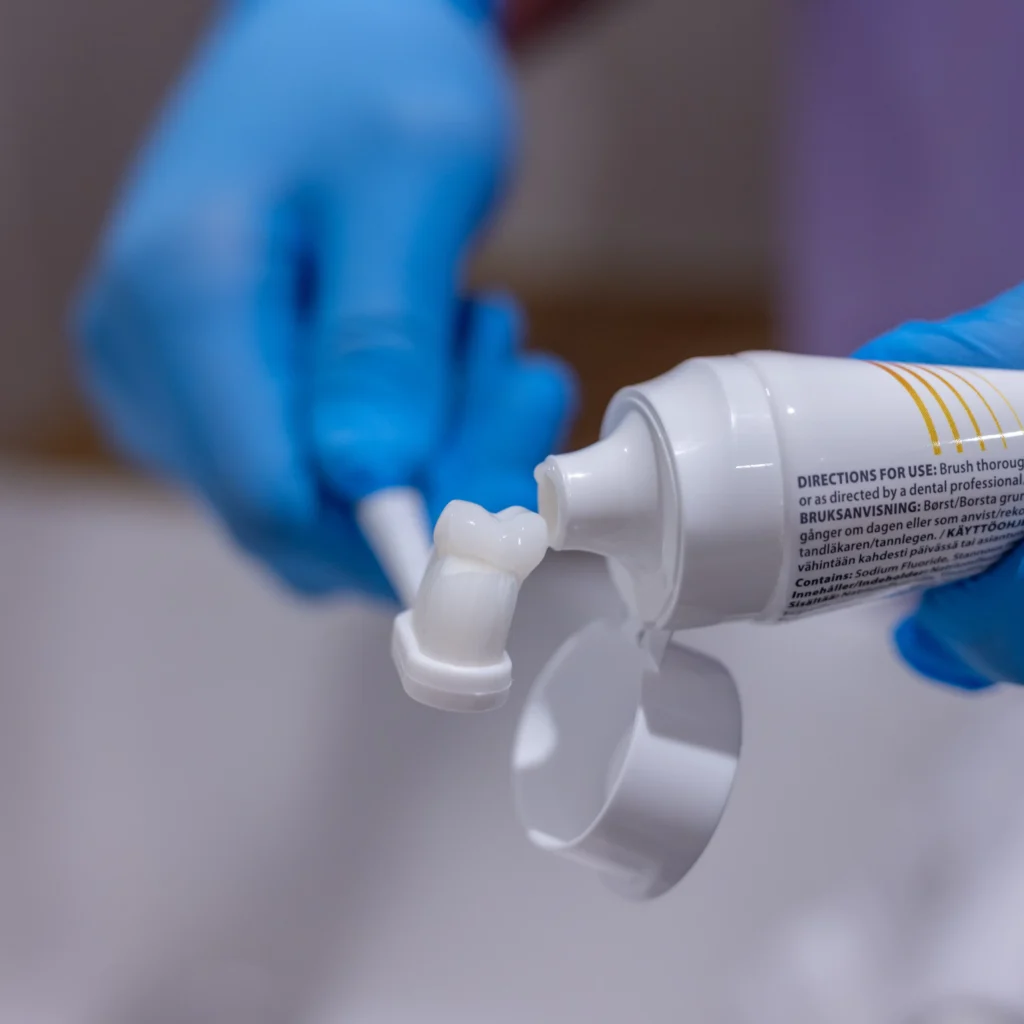
Palliative care in hospitals
Hospitals provide short-term palliative care until a discharge plan is in place.
Palliative care in hospitals is often delivered over a short-term period. Depending on your condition and your needs, your support will either be overseen by specialist teams or a single nurse.
Palliative care teams in hospitals will monitor discharge plans and arrange for individuals to be transferred to receive palliative care in hospices, care homes or in their own home.
His carers were determined to maintain his dignity and privacy, were highly confidential and concerned that his needs were met in a kind and gracious way.
The Thompson family, Customer

How to arrange palliative care
We know that arranging care can be a daunting process, which is why we focus on making it incredibly straightforward to organise support with us. Call our team today to begin your journey.
Speak to our team
Our friendly, knowledgeable team can answer your questions and talk you through your options. We are available 7 days a week.
Book a free care assessment
Your local Helping Hands care manager will visit you to understand your needs and preferences and discuss how we can help. We can visit you at home, in hospital or even a care home to carry out the care assessment.
Confirm your care package
We create a tailored care plan for you to review. Once you’ve agreed the plan, we can organise care in as little as 24 hours.
Page reviewed by Kathryn Mahon, Regional Clinical Lead, on July 25, 2024.
How we wrote this page
This page has been produced referencing key insights and data from external experts, trusted medical sources and our team of in-house specialists. We have worked hard to ensure that all information is as accurate as possible and reflects current consensus at the time of writing and reviewing.