How everyday care supports mental health at home

The importance of mental wellbeing at home
Mental wellbeing at home is just as important as physical health, particularly as we grow older or manage long-term conditions.
We know how important good mental wellbeing is to overall health, and feeling safe, supported, and emotionally balanced in familiar surroundings can significantly reduce stress and anxiety while improving overall happiness and quality of life. A stable home environment means it’s much easier to stick to a healthy routine which can include daily habits, all of which contribute to stronger mental resilience.

The NHS highlights the importance of looking after emotional wellbeing through practical daily actions such as staying connected, keeping active, and maintaining structure. Taking small but consistent self-care habits at home can positively impact mood and reduce feelings of loneliness and isolation. By prioritising mental wellbeing within everyday home care, our customers are better supported to feel secure and confident in their daily lives.
The connection between everyday care and mental health
Everyday care plays a vital role in supporting and improving mental health at home.
Our carers can support you with simple daily actions such as preparing nutritious meals, encouraging regular movement, maintaining personal hygiene, and creating a structured care plan that will aim to provide emotional stability and a greater sense of purpose. Consistency in our care approach will help to reduce any uncertainty and anxiety, particularly for those managing long-term health conditions or memory changes (such as living with dementia). The NHS emphasises that regular physical activity and daily structure can significantly improve mood and reduce stress. We do all we can to reassure our customers that their mental wellbeing is at the forefront of our concern while receiving care at home.

How daily support creates stability and emotional balance
Our expert support can help with forming daily routines and peace of mind at home.
Our consistent assistance with everyday tasks like meal preparation, medication reminders, personal care, and companionship, helps to establish a reassuring structure to the day. We aim to create a sense of predictability that reduces stress and uncertainty, allowing our customers to feel more in control of their environment and routines.
Our reliable support will offer trust and security, which are essential for maintaining confidence and peace of mind. Over time, our steady presence not only strengthens emotional resilience but also promotes a calmer, more positive outlook on daily life. At Helping Hands, we care deeply about making a positive difference in your life at home, whether that’s through full-time live-in care to scheduled visiting care.
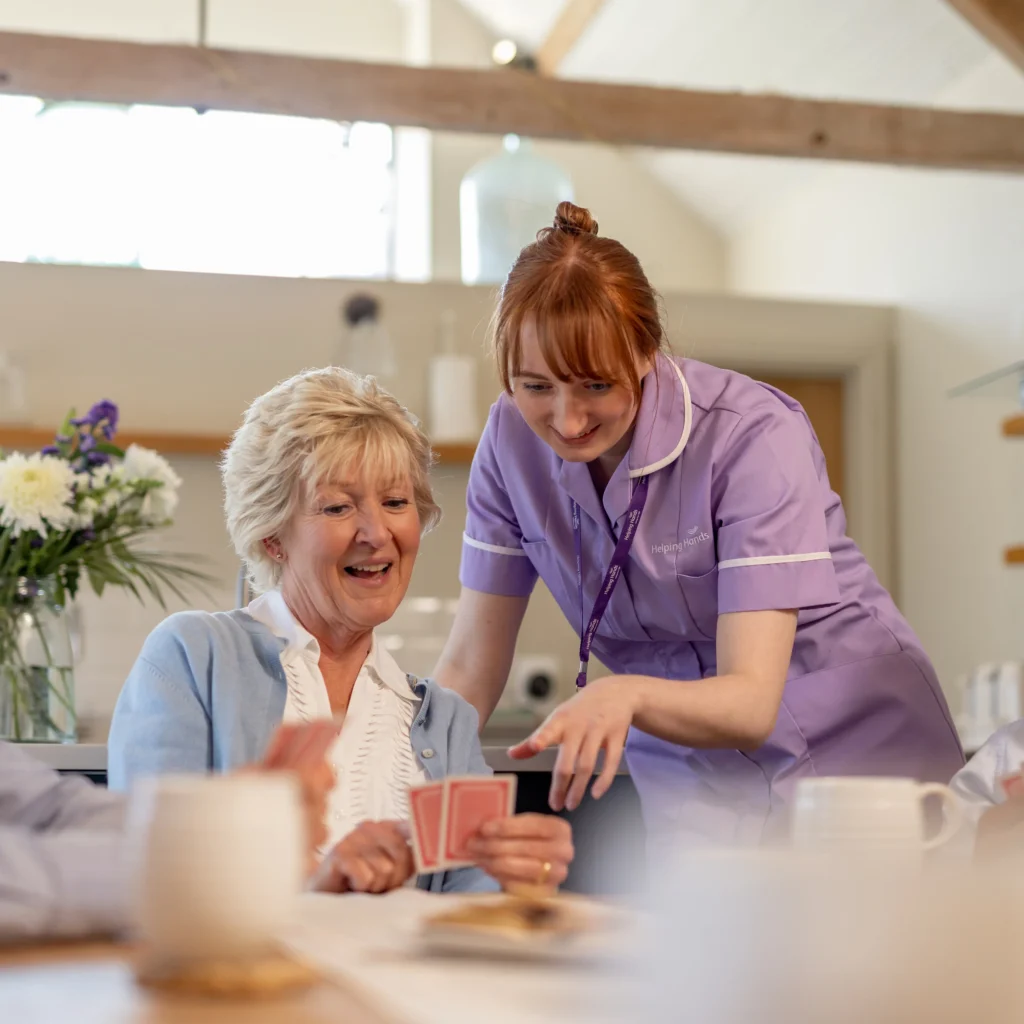
Key elements of everyday care that support mental health
Consistent sleep
A consistent sleep routine is vital for overall wellbeing. Going to bed and waking up at the same time each day helps balance the body’s natural rhythm, supporting mood, memory, and general health. A restful night’s sleep offers a valuable reset, providing the mind and body with important time to recharge and recover.
Time for socialising and companionship
Frequent contact with family, friends, or a carer can ease feelings of loneliness and isolation while strengthening emotional wellbeing. Engaging conversations and shared experiences help lift mood and foster a reassuring sense of connection and community.
Structured meal times
Eating at regular times each day helps aid digestion, balance blood sugar levels, and sustain steady energy throughout the day. Consistent meals also ensure older adults receive balanced nutrition which is vital for maintaining strength, supporting cognitive function, and promoting overall wellbeing.
Relaxation
Taking time each day for quiet activities such as reading, listening to music, or gentle breathing exercises can ease stress and support a more positive outlook. Building small moments of intentional self-care into the routine helps create a calm, comfortable, and uplifting atmosphere at home.
Scheduled physical activities
Scheduling regular periods for gentle exercise, such as walking, stretching, or light movement, can benefit heart health, improve mobility, and boost overall energy. Making physical activity a consistent habit helps form a balanced and sustainable daily routine.
Personal care
Maintaining a regular personal care routine, including washing, grooming, and dressing, plays an important role in supporting dignity, comfort, and self-confidence. Consistent personal care not only promotes physical health and hygiene but also helps customers feel refreshed, respected, and ready to face the day with a positive mindset.
The benefits of everyday home care
Here's how Helping Hands can support you:

Practical tips for strengthening mental wellbeing at home
Encourage small daily achievements
Focusing on small daily achievements can have a big impact on mental wellbeing at home. Completing simple tasks, such as making the bed, preparing a healthy meal, or going for a short walk, provides a sense of accomplishment and purpose. Celebrating these little wins boosts confidence, motivates consistency, and helps create a positive, empowering routine that supports emotional balance and overall happiness.
Maintain open communication
Keeping lines of communication open with family, friends, or caregivers is essential for mental wellbeing at home. Sharing thoughts, feelings, and concerns helps reduce stress, prevent misunderstandings, and foster trust. Regular conversations also provide emotional support, strengthen relationships, and create a sense of connection and reassurance in daily life.
Create a comfortable environment
A comfortable and familiar home environment can greatly support mental wellbeing. Organising spaces to be safe, clutter-free, and welcoming helps reduce stress and promotes a sense of calm. Personal touches, natural light, and quiet areas for relaxation can make daily life more enjoyable and encourage a positive, peaceful mindset.
Build a flexible routine
Creating a flexible daily routine helps provide structure while allowing room for spontaneity and personal preferences. A balanced routine supports healthy habits, reduces stress, and encourages consistency without feeling restrictive. Flexibility ensures that changes in energy, mood, or unexpected events can be managed smoothly, helping maintain emotional wellbeing at home.
What everyday care services does Helping Hands offer?
Personal care
Visiting care can provide you with dignified and discreet support for personal routines such as bathing, toileting and getting dressed.
Meal preparation
Your carer can prepare tasty and nutritious meals, snacks and drinks at the times that suit you, as well as doing the washing up afterwards.
Help with the housework
If you’re struggling to stay on op of the housework, this is something your visiting carer can help with – from doing the laundry to vacuuming the stairs.
Medication assistance
All of our carers are trained to provide dedicated medication support, including helping you to organise and adminster it.
Running errands
A visiting carer can run errands on your behalf, such as doing the weekly shop, sorting your mail or collecting your prescription.
Mobility support
From helping you get out of bed to accompanying you on day trips, our carers are all fully trained to support you in making the most of life.
Exploring everyday home care with Helping Hands
At Helping Hands, we pride ourselves on our ability to be adaptable to your needs. We can offer expert home care on a live-in, visiting or respite basis.

Visiting care

Live-in care
A fully regulated home care provider
Here at Helping Hands, our service is regulated by the Care Quality Commission (CQC) and the Care Inspectorate Wales (CIW)
This means we need to consistently meet high standards and are monitored by our regulators.