Care plans for the visually impaired

What is an impaired visibility care plan?
Impaired visibility means any kind of vision loss, whether its partial or total blindness.
The NHS states that more than 2 million people are living with sight loss in the UK, whether they are registered as blind or are partially sighted. A care plan for visual impairment is designed specifically around sight loss and the reasonable adjustment of your way of life. We can provide mobility support if you need assistance getting around due to your vision loss, and help make your home more sight loss-friendly. We will help with visual aids like text-to-speech tools, magnifiers and braille if needed.

Why should I have a care plan?
Our care plans can help with adjusting to life with sight loss and its difficulties.
The RNIB says that there will be a period of adjustment and loss from the life you used to have to the life you have now. A vision loss care plan can help make the process easier by providing support for glaucoma symptoms, support after eye surgery, and help adjust to life with limited vision. We can encourage your independence, provide emotional support for you and your loved ones, and provide practical assistance in your day-to-day life. If you have a guide dog, we can provide pet care to help care for them.
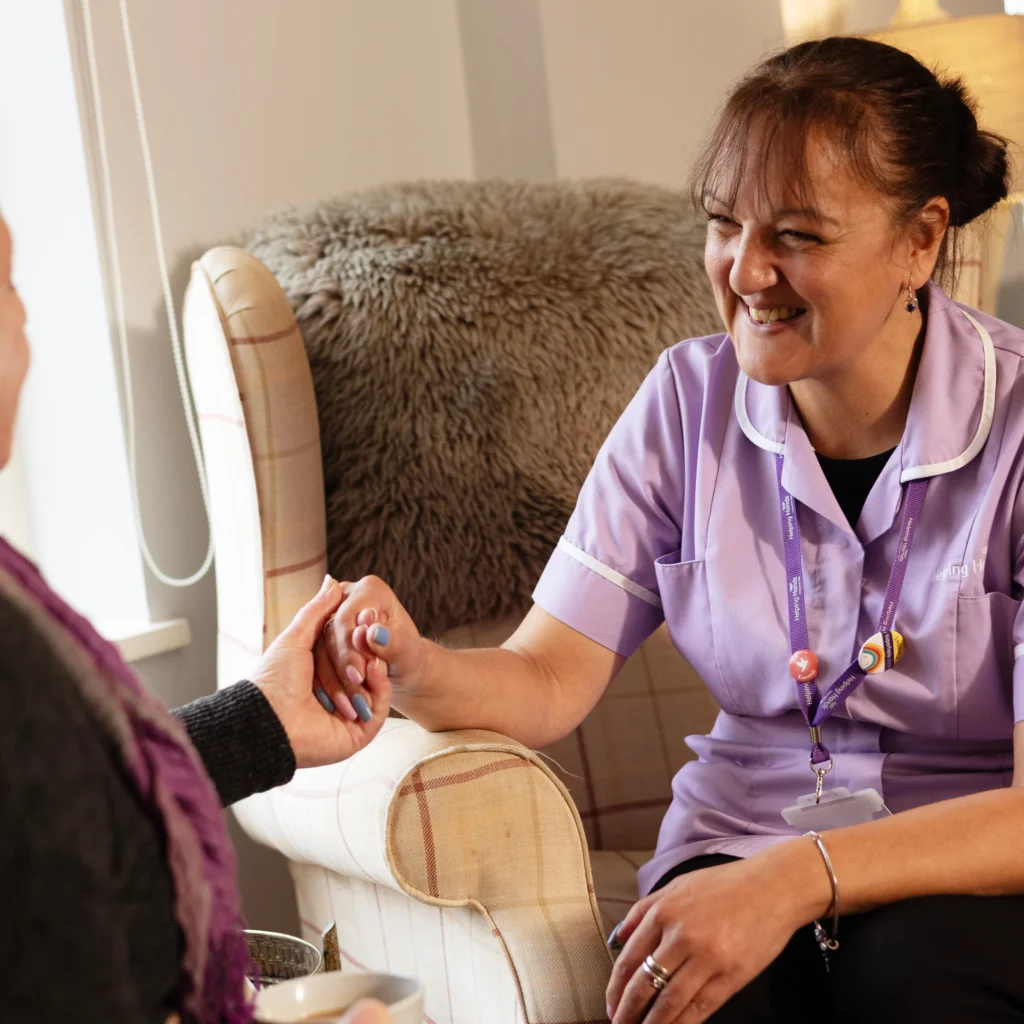
What does an effective care plan for a visually impaired customer include?
Here is what can be included in your impaired visibility care plan:
Nursing care
Our nursing care plan for blindness can provide clinical attention to any symptoms of glaucoma or eye surgery. Trained by registered nurses, our carers can support you if you have more medically demanding needs.
Housekeeping
Housekeeping includes keeping your home clean, tidy and safe while running any necessary errands. Our carers can prepare healthy meals for you whilst keeping an eye on the day-to-day of home-based tasks.
Companionship
Our carers are wonderful, friendly people who have a passion for helping others. We handpick our carers to match your personality and interests so you gain a trusted carer and companionship in your home.
Guide dog support
If you have a guide dog, we can help you to look after them, take them on walks and make sure they’re well looked after. While we don’t offer pet care on its own, we can assist you and your furry companion.
Home adaptations
A blind nursing care plan can assist with implementing adaptations within your home. These could be stairlifts, walking aids, braille, labels with large prints and contrasting colours for decoration.
Care at home
We can bring a nursing care plan for legally blind people right to your doorstep. We have over 150 branches across the UK and endeavour to be accessible to everyone so you can get the care you need while staying at home.
Visiting to live-in care
Respite care can vary on how often you see your carer. We offer visiting care which can be on a regular basis for as little as 30 minutes a week to longer. Our live-in care offers 24/7 support at all times.
Emotional support
Adjusting to life with impaired visibility can be a difficult time with many changes in your day-to-day. We’re here to provide emotional support and comfort and work together to make the transition easier for you.
How can I create my own care plan?
We can tailor a care plan for impaired visibility to suit you! We offer live-in care, visiting care and respite personal care to fit around your schedule. From general housekeeping and stepping in for your primary caregiver to helping you rehabilitate with a medically trained eye, our carers are superbly qualified to handle your unique needs at home. With our visually impaired care, you can be assured that our care plans can fit around you and your schedule so you can enjoy a hassle-free approach to your healthcare.


3 simple steps…
Here are the steps to take to receive care for impaired visibility:
Speak to our team
Our friendly, knowledgeable team can answer your questions and talk you through your options. We are available 7 days a week.
Book a free care assessment
Your local Helping Hands care manager will visit you to understand your needs and preferences and discuss how we can help. We can visit you at home, in hospital or even a care home to carry out the care assessment.
Confirm your care package
We create a tailored care plan for you to review. Once you’ve agreed the plan, we can organise care in as little as 24 hours.
We have been with Helping Hands for 3 years and we find the carers to be very kind to Mum. She is blind so the carers explain what exactly they are doing which helps her understand. We would recommend Helping Hands to anyone.
Viv, Trustpilot review
How Helping Hands can help
At Helping Hands, we pride ourselves on our ability to be adaptable to your needs. We can offer care as a live-in, visiting or respite basis.

Visiting care

Live-in care
A fully regulated home care provider
Here at Helping Hands, our service is regulated by the Care Quality Commission (CQC) and the Care Inspectorate Wales (CIW)
This means we need to consistently meet high standards and are monitored by our regulators.