


Asperger’s syndrome and Autism support

What is Asperger’s syndrome?
Asperger’s is a form of autism which affects how people experience the world around them.
It’s estimated that autism affects around 700,000 people in the UK, with all at different levels on the spectrum. It was previously thought that Asperger’s was separate to autism, but the condition was recategorised in 2013 in line with a diagnosis of autism.
Because Asperger’s can present itself in various ways, it can be hard to know what the best support option is for a loved one, which is where our expert team of carers can help out.
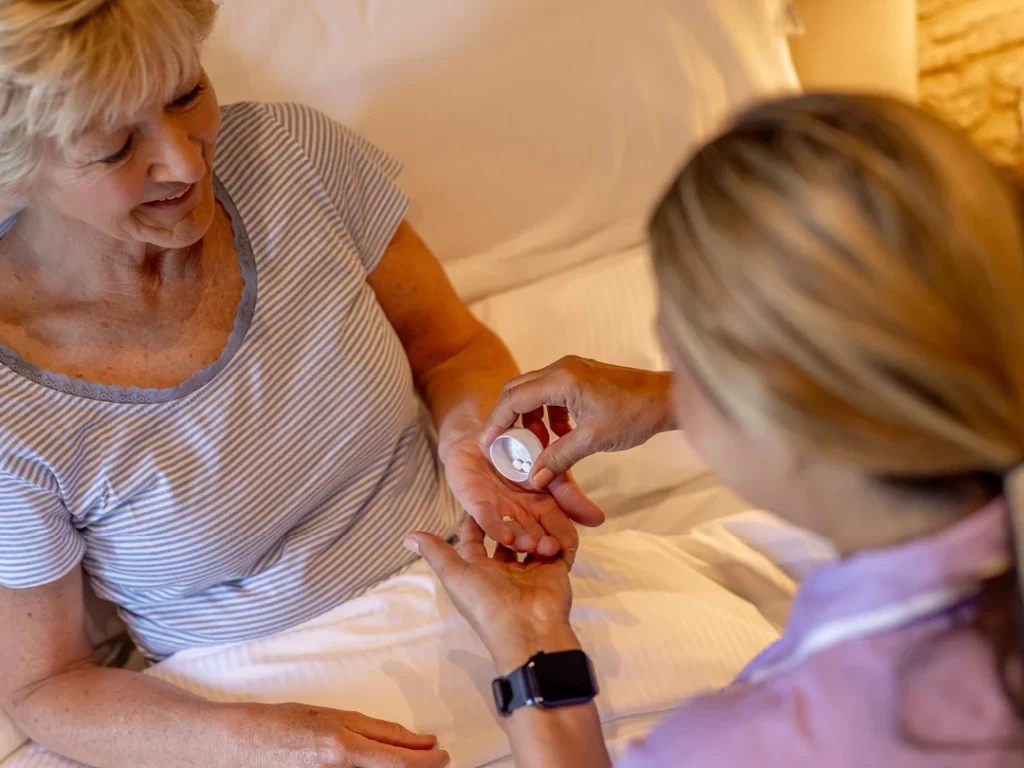
Helping a loved one to live with Asperger’s
My son, who has learning disabilities and autism, looks forward to spending time with his Helping Hands support worker and I can have a couple of hours to myself knowing he is with someone he likes and that I trust.
Karen

We can support your loved one to live with Asperger’s through:
One-to-one support
Your loved one will receive one-to-one care in the comfortable, familiar surroundings of their own home
Expert-led care
All of our carers are expertly trained to provide dedicated, compassionate Asperger’s and autism support
A fully managed service
Your local care manager will oversee your loved one’s care plan to ensure they’re always being fully supported
Person-centred support
Your loved one’s wishes and needs will be at the heart of their care, so they can live life on their own terms
The symptoms of Asperger’s
Peoples’ experiences of Asperger’s vary, but there are some very notable symptoms.
Typically, the symptoms of Asperger’s become apparent during early childhood, although sometimes the condition isn’t formally diagnosed until adulthood. Gaining a diagnosis as early as possible ensures that a person and their family can get the right support for everyone, both emotionally and practically.
Difficulty forming friendships
Forming friendships can be difficult, and many people with Asperger’s find it hard to maintain eye contact with the person they’re talking to
Sensory issues
It’s common for people with Asperger’s to experience problems coping with loud noises or bright lights, especially when unexpected
Physical difficulties
People with Asperger’s often find it challenging to understand non-verbal means of communication, such as body language or gestures
Difficulty at work and in education
Students with Asperger’s might find it hard to organise themselves in the workplace, or remember lesson times and where they need to be
Anxiety at disruption
People with Asperger’s feel comfortable when they have set routines; not following these routines can cause sensations of anxiety or being overwhelmed
Difficulty processing feelings
Asperger’s can make it hard to process thoughts and feelings, which may result in a person feeling isolated or unable to engage with other people’s emotions
The difference Asperger’s care can make
Living on a farm in Hampshire means Oscar is always looking after a variety of animals, including a family of lively pigs. His Asperger’s meant that this could be very stressful for him.
However, with visiting carer Sadie on hand to talk to him and help him when needed, Oscar is able to complete his duties and enjoy having a friend in Sadie who enjoys being around the animals as much as he does. He’s now able to manage his emotions and channel his strength productively.
Take a look at what a typical day looks like for Oscar and Sadie.

Gaining a diagnosis of Asperger’s and autism
An Asperger’s or autism diagnosis can be complex as they affect each person differently.
Some people feel uncomfortable with seeking a diagnosis, and deciding whether you want to yourself is entirely your choice. However, should you wish to seek a diagnosis, your first point of call will be your GP, who will then refer you to a psychiatrist. They will then carry out a series of tests to determine the level of Asperger’s or whether it is prevalent in the first instance.
Following a diagnosis of Asperger’s or otherwise, your next step will be to assess your care and support needs.

Our Asperger’s care services
At Helping Hands, we believe that care should be person-centred and fully tailored to each individual’s needs and wishes. We offer support and companionship on a visiting and live-in basis, and whichever you opt for, you can be confident your care plan will be personalised to your condition.

Visiting care

Live-in care
Living an independent life with Asperger’s
There are several steps you can take to help a loved one live independently with Asperger’s.
If your loved one is living with Asperger’s or autism, it’s only natural that you want them to live as independent and fulfilling a life as possible – both at home, and when they’re out and about.
While there is no cure for Asperger’s or autism, there are a number of steps you and those close to your loved one can take to minimise the distresses which can be caused by Asperger’s:

Can we help your loved one with Asperger’s?
We try to make arranging care simple and stress-free so that we can focus on what really matters: your loved one’s care needs. Speak to our team today to begin the care journey.
Fully regulated by the CQC / CIW
A fully regulated home care provider
Here at Helping Hands, our service is regulated by the Care Quality Commission (CQC) and the Care Inspectorate Wales (CIW)
This means we need to consistently meet high standards and are monitored by our regulators.


Why is regulation important?
What does regulation mean?
Our service is independently monitored and regulated by the CQC and Care Inspectorate Wales
Why is our service regulated?
We want every customer to have full peace of mind that their care will surpass the expected standards
How does regulation affect my care?
Our regulation means a guarantee that we’ll provide you with high quality care, no matter what