


Down’s syndrome care
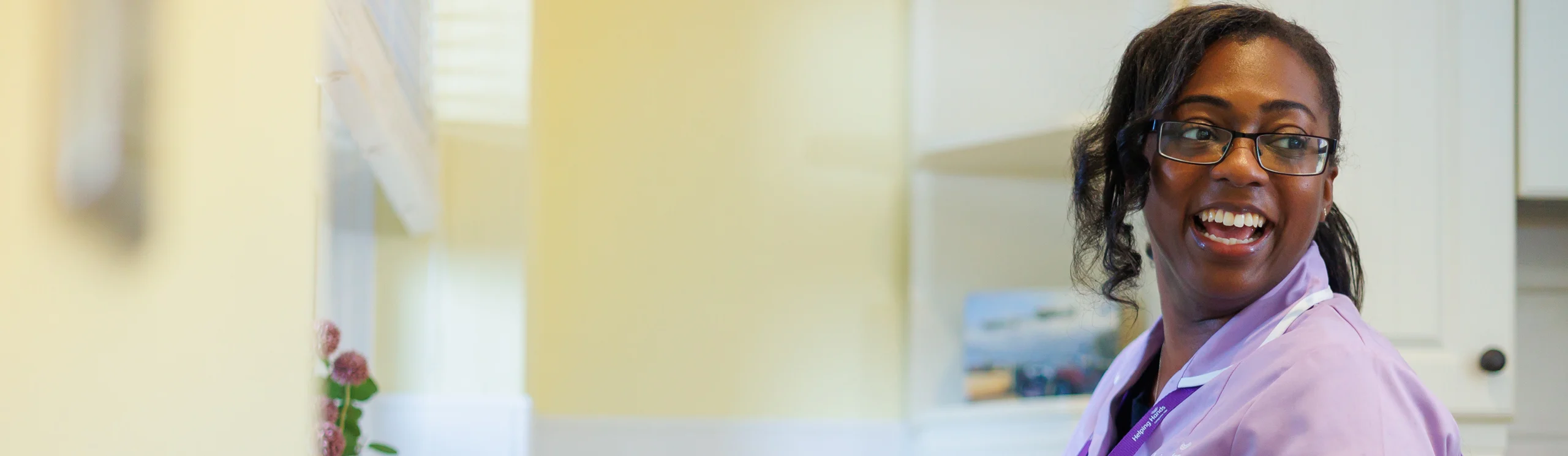
Expert Down’s syndrome care for extra reassurance
We provide person-centred home care that supports you to live independently.
People with Down’s syndrome are able to live a life full of joy and contentment with either a little or a lot of extra support, and with care from Helping Hands, we can ensure that you get exactly the right level of care you need to feel completely fulfilled.
Whether you need live-in care or regular visits from our local home care teams, we have the skills and expertise to develop a personalised care plan that fits your needs, routines and wishes.
We will work with you and your family to find out exactly what you need assistance with so that everything is tailor-made for you.

Here are some of the many ways a carer can support you:
Maintaining your health
People with Down’s syndrome can be more susceptible to certain health conditions. If you have regular medical appointments, we can fully support you and accompany you to them if you require.
Assisting with therapy
Our carers will also work closely with Speech and Language Therapists or Occupational Therapists who are involved in maintaining your care, so that your health and well-being are always prioritised
Going to work
For some people living with Down’s syndrome, going to work is an important part of their routine. A carer can help you commute, as well as ensuring you’re ready for work each day.
Forming relationships
Forming and maintaining relationships is important for anyone, but this can be a vital part of a person’s life if they live with Down’s syndrome. Your carer can help you host friends and visit loved ones.
Emotional support
Your carer will get to know you and your habits, enabling them to learn how to support you appropriately with different triggers or emotional responses
Attending school or college
With the support of a carer, you can make the most of your time at school or college by ensuring you receive all the support you need to focus on your studies and personal development
What is Down’s syndrome?
Down’s syndrome occurs when a person has 47 chromosomes in their cells instead of 46.
Down’s syndrome is a genetic condition where people are born with an extra chromosome, or one chromosome may have an extra part. This occurs with chromosome 21 specifically. In most cases, Down’s syndrome is not inherited and happens as a result of a genetic change in the sperm or egg at conception. However, there is a link between the occurrence of the condition as a woman’s age increases. This condition affects all ages, races and backgrounds and there are approximately 40,000 people currently living with Down’s syndrome in the UK.

Care that puts your needs at the centre
Care isn’t just practical; it’s about ensuring you are supported in mind, body and spirit.
Our compassionate and friendly carers will make sure that they are sensitive to your emotional needs and help you to maintain your circle of friends.
We know how important routine and consistency is to someone with Down’s syndrome. That’s why we’ll ensure you have the same carers who dedicate their time to you, so that you can build up a rapport with them. Whether you need support at home, getting to work or going to the shops, they will always be there for you.

Independent supported living with Down’s syndrome
Our home care services focus on supporting your independence in the home that they love.
Down’s syndrome affects each individual entirely differently. Some people may need very little support, whereas others may need someone to pop in regularly throughout the day or even require a live-in carer.
Whatever your care needs are, we will meet with you and your family to decide exactly what you need and when. And if your needs change, we can alter your care plan at any time to reflect your new care routine.

A carer can support your independence through:
Personal care
Your home carer can provide discreet help with personal care such as toileting and getting dressed
Housekeeping
Your carer can help around your home with chores such as cleaning, doing the laundry and tidying up
Mobility support at home
All of our carers are trained to provide mobility support, so can help you to move around your home
Light medical support
Your carer can assist with collecting medication, as well as helping to organise and administer it
Ongoing companionship
A carer can pop round for a cup of tea or spend an evening with you watching your favourite film
Help getting out the home
Whether you want to head out into your community, go shopping or visit loved ones, a carer can go with you
Preparing meals
Your carer can prepare nutritious meals and snacks and drinks at the times that best suit you
Running errands
From picking up your prescription for you to helping with the bills, your carer can provide errand support
Why choose Helping Hands for home care?
With over 30 years of experience and expertise, it’s safe to say we’re the UK home care experts.
At Helping Hands, our compassionate home care has supported tens of thousands of people to remain independent and secure in the comfortable, familiar surroundings of their own homes. Here are some of the reasons our customers turn to us in their hour of need:
Every carer employed by us
As a private care provider rather than an agency, we employ, train and look after all our carers and can guarantee they’re fully background checked
Industry-leading carer training
Every new Helping Hands carer is enrolled on our industry-renowned training programme, equipping them to provide visiting care to people of all needs
Family values
We were founded as a family-run business, and a strong family focus remains at the heart of our identity as a care provider in all that we do
A fully regulated service
We’re fully regulated and accredited by the CQC and CIW, and we’re also members of the Dementia Action Alliance, giving you total peace of mind
Local to you
We’ve got over 155 branches across England and Wales and we’re still growing, which means your local Helping Hands team is never too far away
Kind, compassionate carers
We believe that it takes a special type of person to be a truly exceptional carer, which is why we only hire the most empathetic, dedicated candidates
A fully regulated home care provider
Here at Helping Hands, our service is regulated by the Care Quality Commission (CQC) and the Care Inspectorate Wales (CIW)
This means we need to consistently meet high standards and are monitored by our regulators.

Why is being a regulated care provider important?
Independent inspections of our service, giving you peace of mind
Fully vetted, high-quality carers
Guaranteed training and development for our staff
How to arrange Down’s syndrome care
At Helping Hands, we’re committed to making every step of the care journey as straightforward and stress-free as possible. Talk to our team today to begin your journey.
Speak to our team
Our friendly, knowledgeable team can answer your questions and talk you through your options. We are available 7 days a week.
Book a free care assessment
Your local Helping Hands care manager will visit you to understand your needs and preferences and discuss how we can help. We can visit you at home, in hospital or even a care home to carry out the care assessment.
Confirm your care package
We create a tailored care plan for you to review. Once you’ve agreed the plan, we can organise care in as little as 24 hours.
Page reviewed by Kathryn Mahon, Regional Clinical Lead, on July 25, 2024.
How we wrote this page
This page has been produced referencing key insights and data from external experts, trusted medical sources and our team of in-house specialists. We have worked hard to ensure that all information is as accurate as possible and reflects current consensus at the time of writing and reviewing.