


What is domiciliary care?

What does domiciliary care mean?
Domiciliary care, often referred to as dom care, involves professional caregivers providing support and assistance within the comfort of your own home. This service includes help with daily activities such as personal hygiene, household chores, and meal preparation, ensuring you or your loved one can maintain independence and quality of life.
Domiciliary care is a subcategory of care that involves providing care to those in need within their own home. Regular visits from your carer enable you to enjoy your quality of life while receiving essential support. This is different to live-in care where you receive ongoing support.
It even covers overnight support if you need some extra assistance with nightly toilet trips or taking medication. You can arrange what is called a ‘sitting service’ for the whole of the night so if there is ever a problem, someone is on hand to help. You can schedule care from a weekly housekeeping visit through to several visits a day to help with personal care, getting around the home or preparing meals, for example.

Who is domiciliary care for?
Domiciliary care is for anyone requiring care who wants to remain independent at home.
Those who wish to stay within their own homes may be very interested in the idea of regular visits from a qualified carer. It may be that they need a little extra support after having an operation or have a long-term condition such as dementia, Parkinson’s or multiple sclerosis.
As a regulated care provider with over 35 years’ experience of supporting people in their own homes, our carers can help in all kinds of ways, with their priority being the comfort and wellbeing of the person in their care.

You might consider domiciliary care if you’re:
Living with a condition
If you have a long-term condition such as dementia or Parkinson’s, domiciliary care offers vital support
Elderly or frail
If you’re experiencing frailty and are susceptible to falls, a carer can support your mobility and well-being
Recovering from surgery
After an operation, you may benefit from a bit of extra help around the home until you make a full recovery
Short on time or energy
If you don’t have the time or energy to maintain your home the way you like it, your carer can help you out
What do domiciliary care workers do?
Domiciliary care workers offer support that lets you continue living in your own home.
Defined as a range of services which are put in place to ensure that an individual can stay at home, domiciliary carers offer support in a variety of areas but always focus on helping the person they’re supporting to follow the lifestyle and routines that they have become familiar with.

Here are some of the many ways in which your domiciliary carer can support you at home:
Personal care
Personal care covers a range of areas. The support you need will depend on a number of factors, but domiciliary carers can always help with routines such as bathing, dressing, continence, tending to hair and nails, shaving, foot care and preventing pressure sores.
Companionship and hobbies
Loneliness affects many UK adults of all ages, and this is why companionship is such an important aspect of domiciliary care. It’s also a way of helping people to carry on doing the activities that matter most to them, such as a particular hobby.
Housekeeping and meal preparation
There’s no place like home. However, for those needing additional care support to keep their home the way they like it, a little housekeeping assistance can go a long way. Your domiciliary carer can also provide tasty, nutritious meals at the times that suit you.
Mobility support at home
All of our carers are trained to provide safe, secure mobility support, so they can help with getting in and out of bed, safely accessing the areas of your home that you need to get to, and more complex routines such as bathing, toileting and getting dressed
Light medical assistance
Our fully trained carers can provide a wide range of medical support services and light nursing care, including catheter care, urinary sheath and PEG feeding. They can also collect a prescription on your behalf, as well as helping you to organise and administer it.
Getting out and about
Whether you want to visit family, pop to the shops or go away on holiday, a carer can help you plan your travel and accompany you when you go. Having a carer accompany you gives both you and your loved ones invaluable peace of mind about your well-being.
Amazing carers, delivering quality care in your home

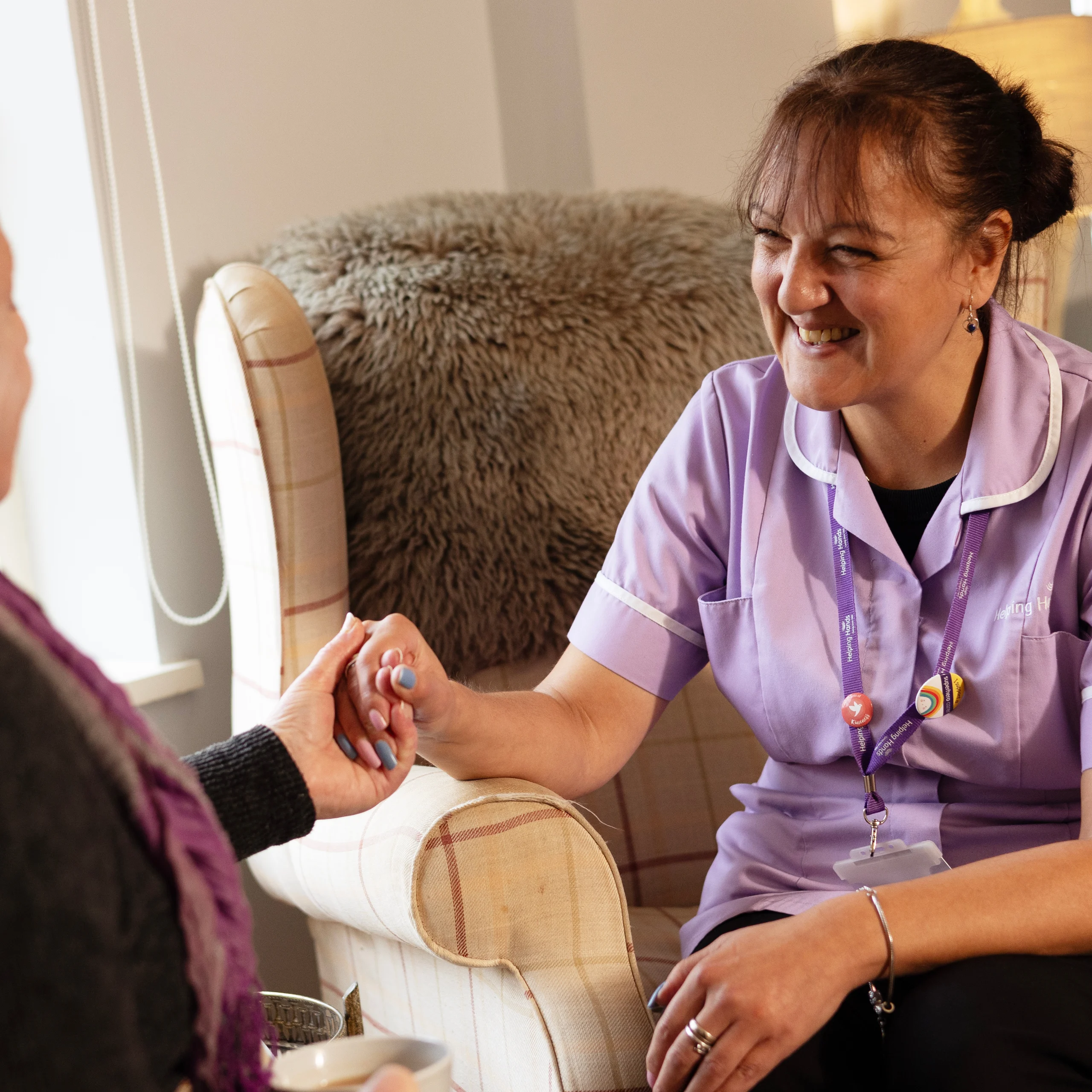
Domiciliary care vs care homes
Moving to a care home can be very disruptive for someone who is used to their own space. They could lose their routine, or find it hard to interact with the other residents.
Domiciliary care is ideal for ensuring a person can maintain their routines, with friends or family members helping alongside a trained carer who can offer support at particular times or with specific activities. Below, we’ve highlighted why we believe domiciliary care to be a better option than a care home.
You can remain in the comfort of your own home
You have full control over your meal times and preferences
One-to-one, 24-hour care from your own dedicated carer
You can continue with your preferred lifestyle and routines
Your friends and family can visit as much as they like
A fully regulated home care provider
Here at Helping Hands, our service is regulated by the Care Quality Commission (CQC) and the Care Inspectorate Wales (CIW)
This means we need to consistently meet high standards and are monitored by our regulators.


Why is being a regulated care provider important?
Independent inspections of our service, giving you peace of mind
Fully vetted, high-quality carers
Guaranteed training and development for our staff
How to arrange domiciliary care
We aim to make it easy to arrange the support you want so that we can focus on what really matters: your care needs. Speak to our team today to begin your journey.
Speak to our team
Our friendly, knowledgeable team can answer your questions and talk you through your options. We are available 7 days a week.
Book a free care assessment
Your local Helping Hands care manager will visit you to understand your needs and preferences and discuss how we can help. We can visit you at home, in hospital or even a care home to carry out the care assessment.
Confirm your care package
We create a tailored care plan for you to review. Once you’ve agreed the plan, we can organise care in as little as 24 hours.