


Huntington’s: meet Sue
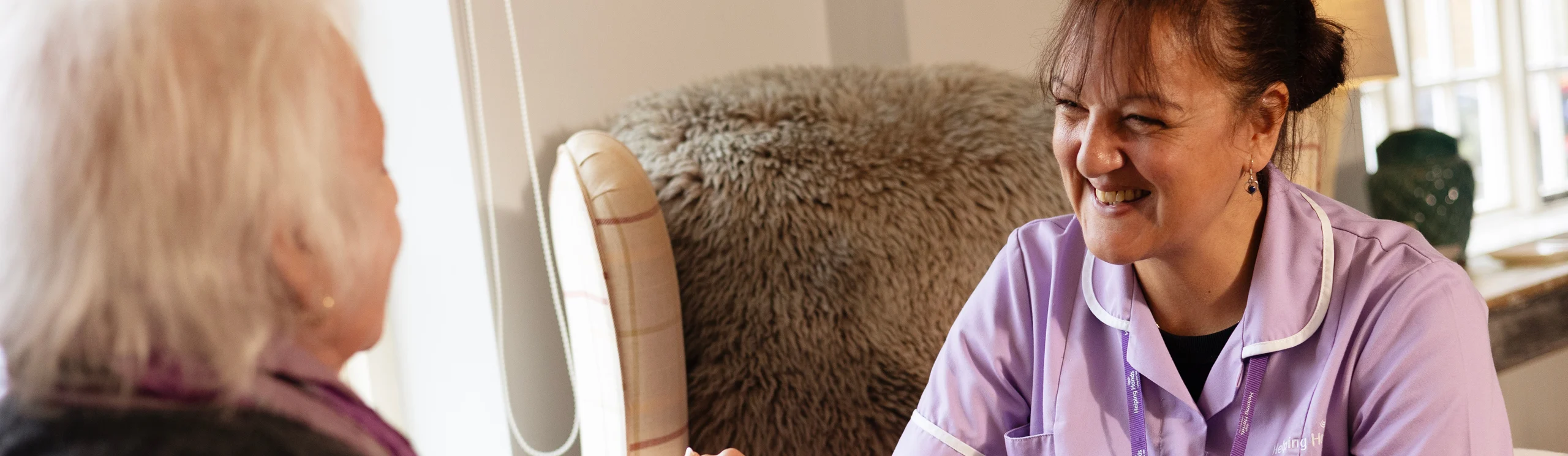
How we're supporting Sue with outcome-based care at home
Sue is from Abingdon in Oxfordshire and is living with Huntington’s disease and diverticulitis. Oxfordshire Clinical Commissioning Group (CCG) contacted us back in 2013 to see if we could support Sue to continue living at home. We’ve been supporting her with both live-in and domiciliary care ever since.
Before coming to Helping Hands, it was becoming apparent that Sue’s existing care plan was not sufficient to cope with the demands that were being presented. Given our history of supporting and enabling those with complex neurological conditions to remain in their preferred home environment, Oxfordshire CCG contacted us to manage Sue’s care plan.
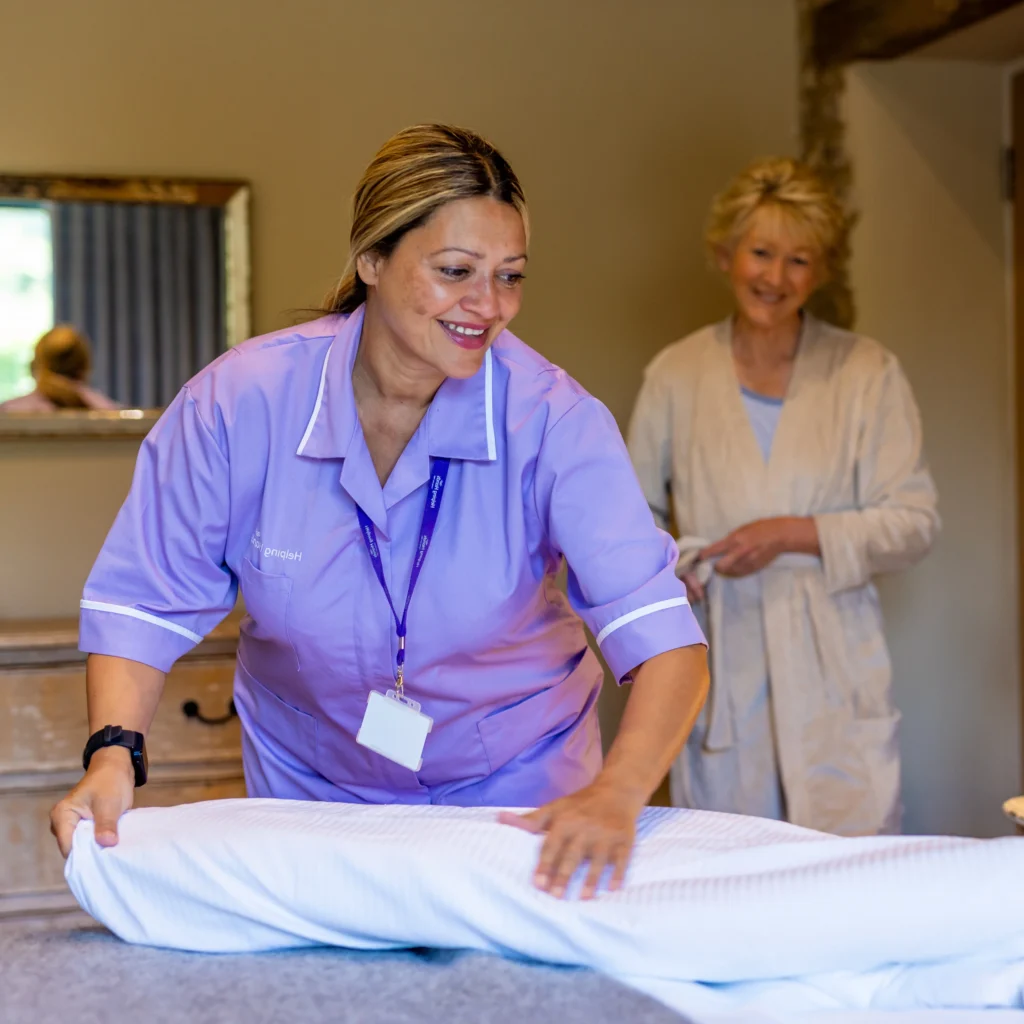
Flexible solutions for Huntington's care at home
Our initial solution was to start with a single live-in carer. However, we quickly transitioned to two live-in carers in response to Sue’s progressive decline and in order to take the pressure off her family.
Today, one of Sue’s original carers is still working alongside an exceptional rotation of permanent carers who provide Sue with the support she needs as her condition has declined.
Delivering outcome-based care to Sue and her family relies on her carers recognising and managing her changing physical, emotional and cognitive needs.
Although her ability to transfer independently was initially good, the extent of her choreic movements meant there was a heightened risk of falls. Coupled with a deterioration of her condition, this has led to a regular review of Sue’s mobility and she is now transferred using full equipment that is required for safe transfers.

Extra equipment and adaptations
We liaise directly with Sue’s occupational therapist to ensure we have the correct equipment and processes in place. Sue has so far been issued with a supportive symmetrikit chair and shower chair.
Sue’s choreic movement affects her ability to swallow. Therefore we have followed the recommendations of her speech and language therapist and work with Sue to plan a diet with the correct foods accompanied with thickened fluids and some supplement drinks. Her complex medication is administered through yoghurt.

The importance of continuing to stay at home
By continuing to stay at home for as long as is physically possible, Sue is able to interact with her extended family. A regular routine is helping to alleviate her anxiety. This includes full personal care with a key focus on Sue’s hair, make-up and nails, and interacting with her favourite TV programmes.
We continue to directly manage Sue’s care. Our Regional Clinical team regularly reassesses her needs and the care plan in place, working closely with the health care manager from the commissioning continuing healthcare (CHC) team.
Other people are interested in…
We’re here seven days a week to talk through your home care needs and find the best option for you. Call 0333 060 5358 or request a callback and we will call you.

Live in care older version
Quality live in care at home, across England and Wales

Dementia care
Familiarity and a friendly face with dementia care

Our carers
What makes our carers and support workers so special