


Stroke care

Stroke care, completely tailored to you
Person-centred stroke aftercare from the home care experts.
A stroke, or transient ischaemic attack (TIA), can have a life-changing impact on a person. By providing care at home, we’re helping families across the country to receive the support they need in the place where they feel the most comfortable, confident and independent.
Our stroke aftercare is tailored around the effects on your stroke, and focuses on helping you and your family get back on your feet.
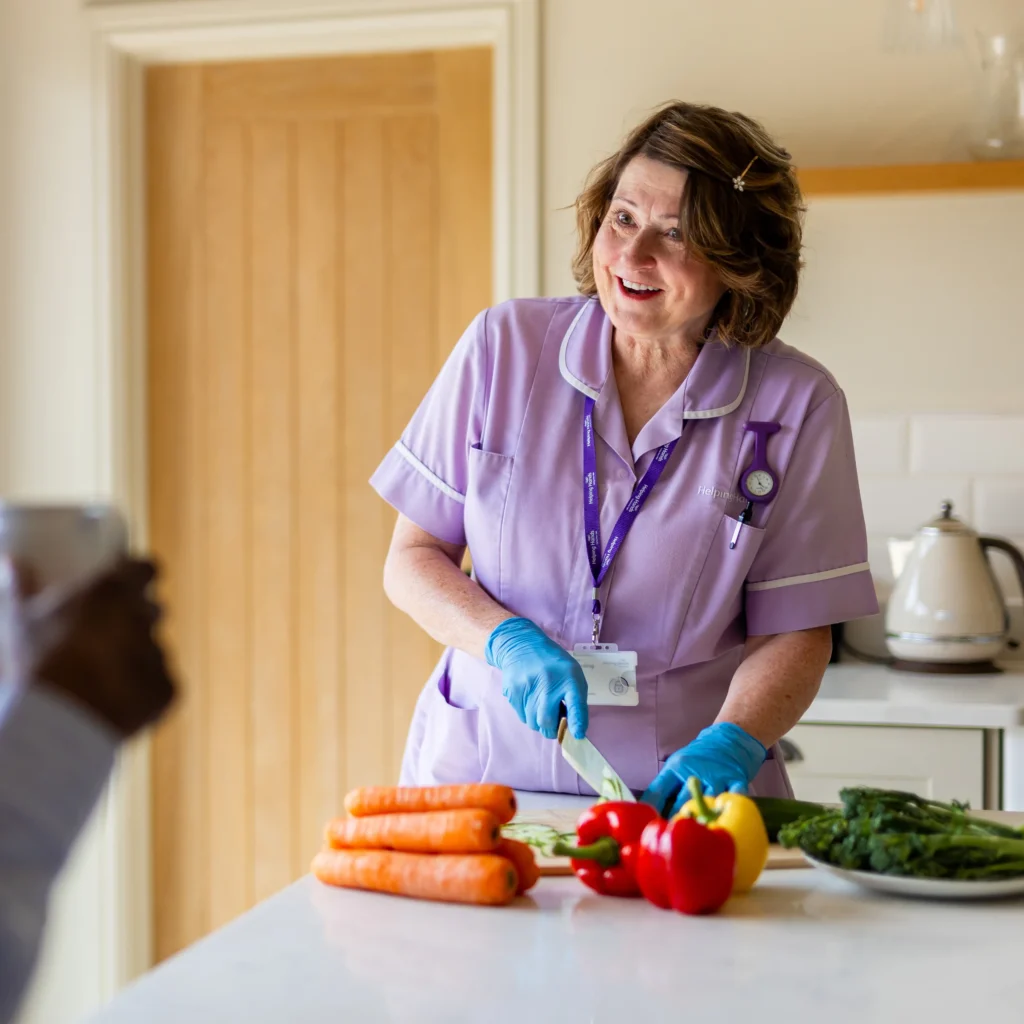
There are many benefits of stroke aftercare at home, such as:
Recover more quickly
The home is a good place for relearning skills and adapting to physical limitations, which can make the recuperation process quicker after a stroke
Maintain your routines
With the support of your own personal carer, you’ll be able to continue with your regular routines, activities and chores to whatever extent you wish
A friendly, familiar environment
Receive all the additional care you require without having to leave the familiar sights, comforts and surroundings of your own home
Personalised care
Whether you opt for visiting care or live-in care, being supported at home means your care plan will be fully tailored to your personal support needs
One-to-one support
Opting for stroke aftercare at home from Helping Hands gives you the opportunity to receive dedicated one-to-one care from your own carer
Avoid the stress of moving
The alternative to care at home is usually to move to a residential care home, which involves having to go through the stress and strain of moving your life
Expert stroke aftercare overseen by nurses
Our nurse-led stroke aftercare supports you and your needs in the place you love the most.
The beauty of choosing home care with Helping Hands is that your local care specialist will work closely with you, your family, district nurse, hospital, GP and other healthcare organisations to develop a stroke care plan that suits your needs.
Our number one priority is making sure you have an aftercare plan in place that that’s entirely focused around your needs, your routines and your lifestyle. You’ll even get the chance to choose a carer with similar interests and hobbies to you.
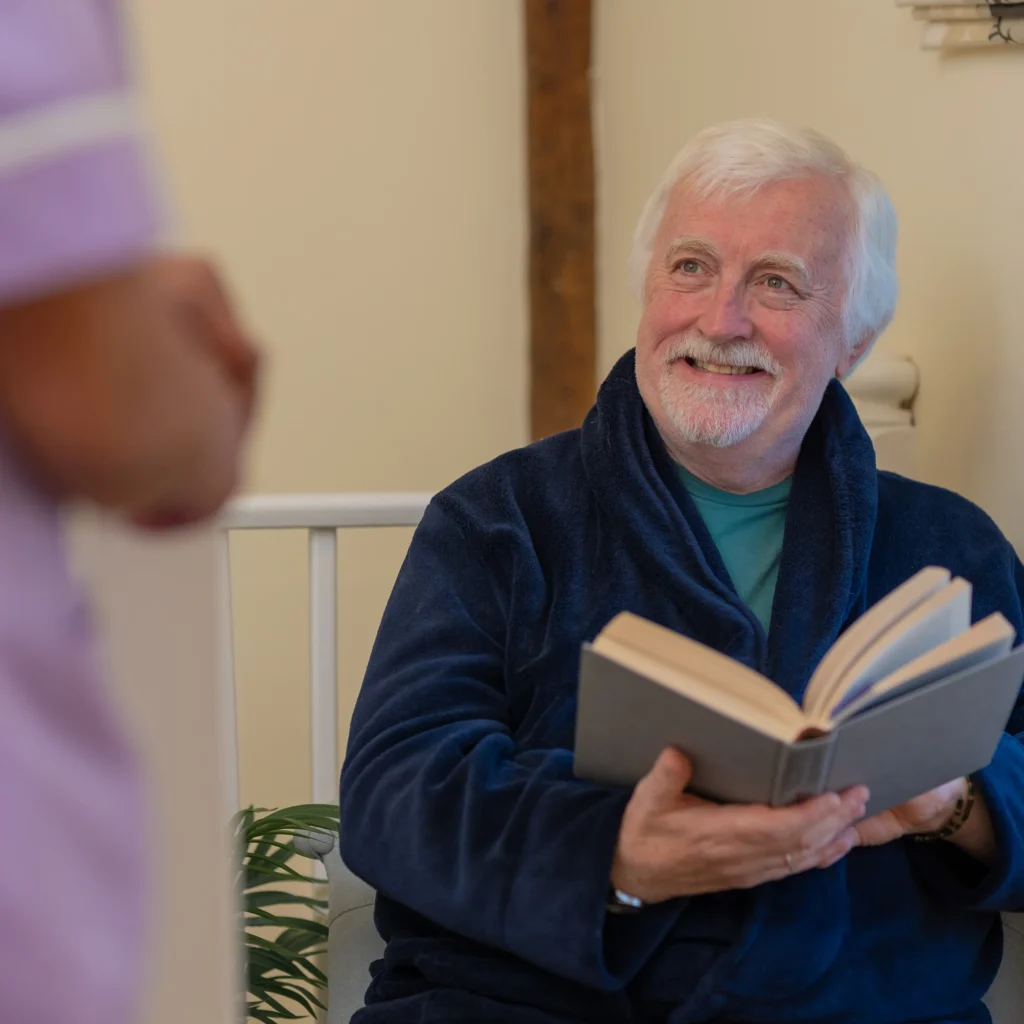
Verbal exercises
If you’re struggling with speech, your carer can help with verbal exercises as recommended by a Speech and Language Therapist
Physiotherapy
Our carers are trained to assist with physiotherapy exercises that can help with your mobility and physical rehabilitation
Household chores
From tidying the sitting room to cleaning the bathroom and hoovering the stairs, your carer can help with just about any chore
Personal care
From toileting and bathing, to dressing and continence care, our carers can provide discreet, dignified personal care
Mobility support
Every Helping Hands carer is fully trained in mobility support, so they can help you move around your home and get out and about
Meal preparation and feeding
Your carer can prepare and help you eat your favourite meals and snacks, as well as ensuring you get all the nutrients you need
Home care has changed my life. Before, I had no hope and had given up on life; now I wake up with a purpose, full of plans for the day ahead.
Richard, Customer
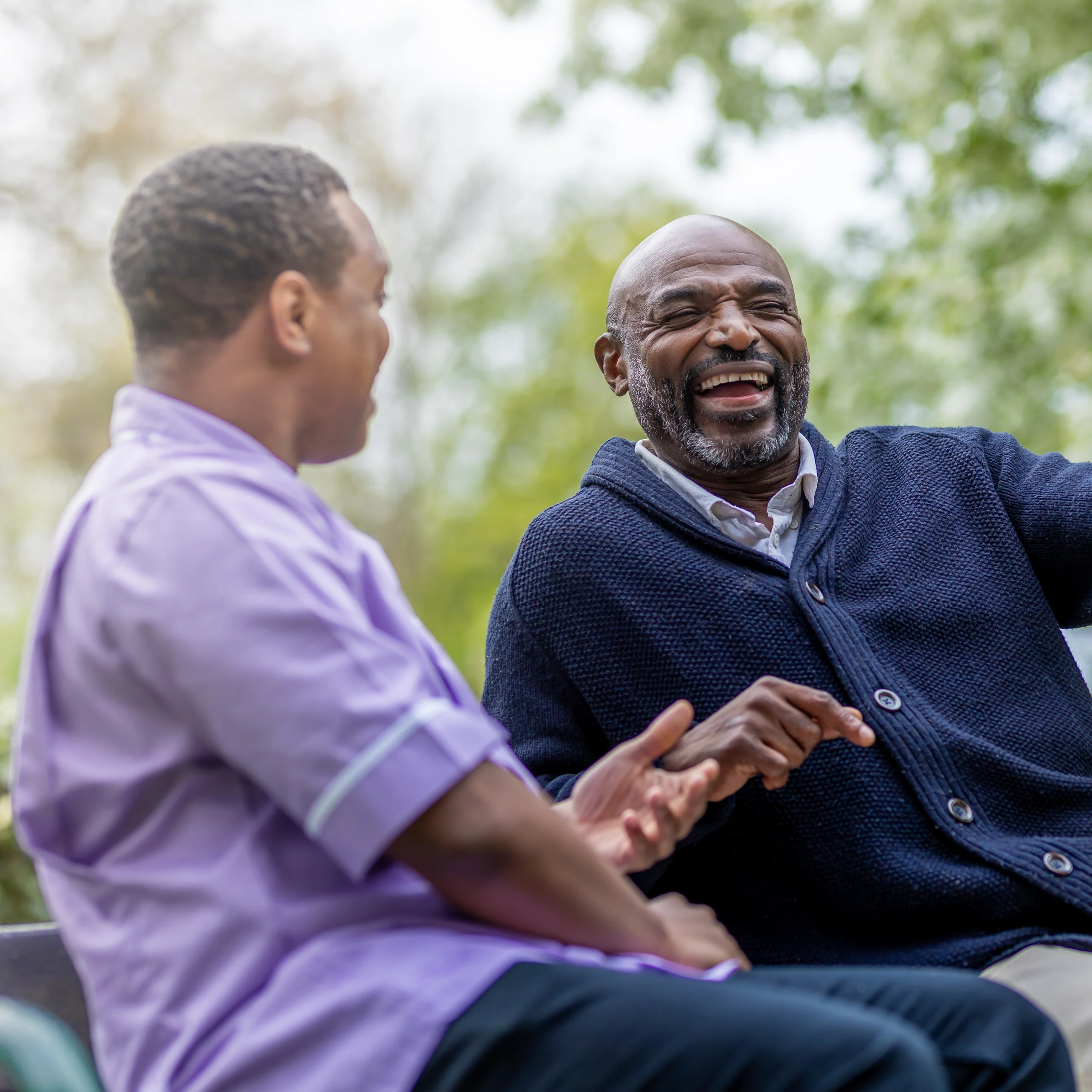
Specialist carers for stroke support
Our fully-trained carers are standing by to provide expert, transformative stroke care.
At Helping Hands, we’re extremely proud of our wonderful carers. They truly are exceptional at what they do, and that’s because we only hire the most compassionate and dedicated carers to our care teams up and down the country.
Every Helping Hands carer receives comprehensive, industry-leading training that equips them to offer high quality, empathetic stroke care to people with different types and levels of support needs.
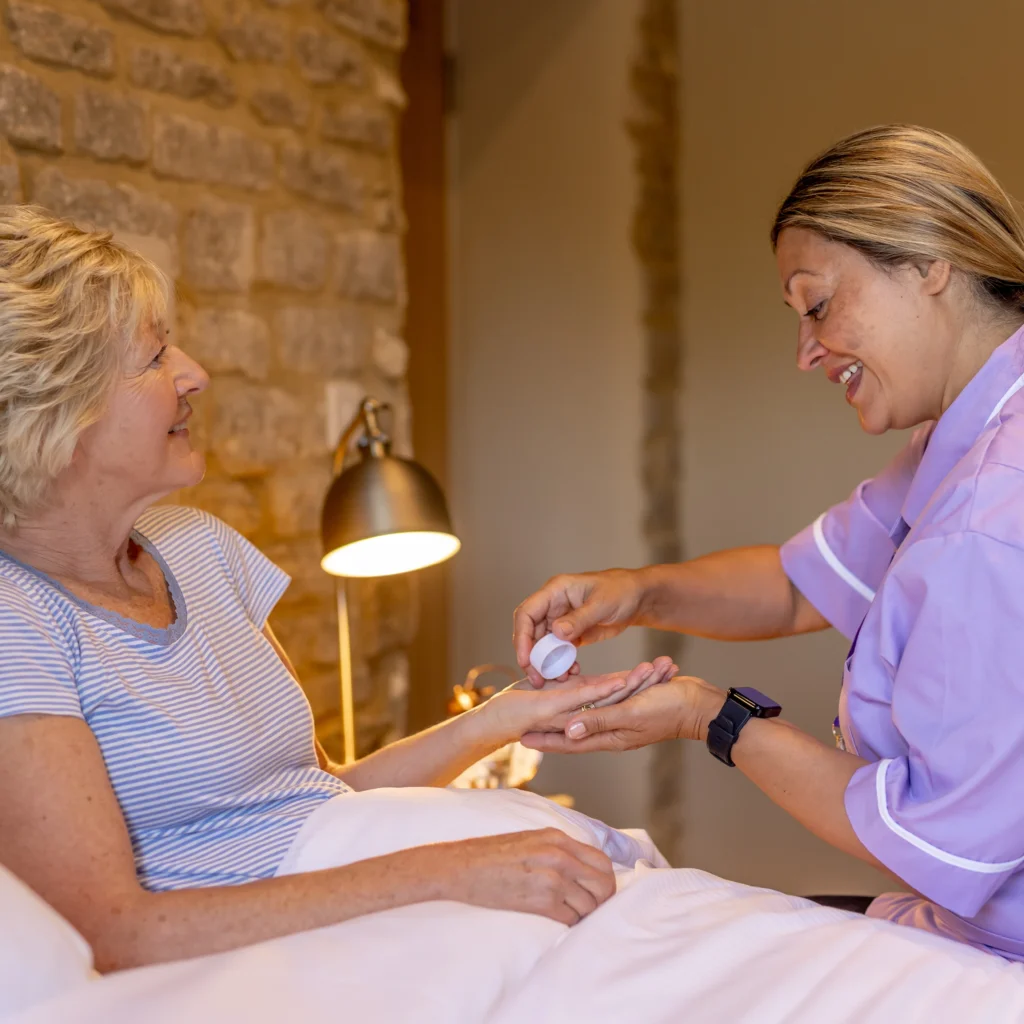
What stroke aftercare options are available?
At Helping Hands, we offer stroke aftercare on both a visiting and live-in care basis. Below, we’ve outlined some of the main features of each type of care.
We offer both visiting care and live-in care services to suit your needs
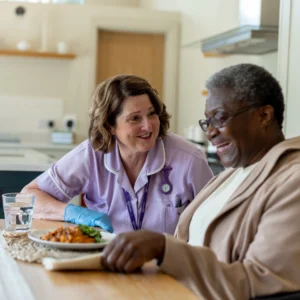
Visiting care
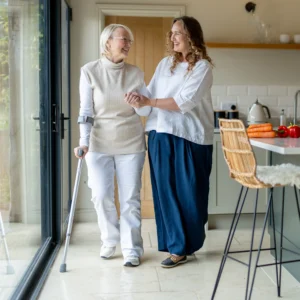
Live-in care
The emotional impact of a stroke on loved ones
The stressful aftermath of a stroke can often affect family and friends emotionally, leading to them also requiring support. This is particularly true for anyone who finds themselves in the position of caregiver, or for those living with a stroke patient.
In these instances, it’s important to ensure a suitable arrangement is in place to provide emotional support to anyone who may need it. That’s why we embrace a holistic, flexible approach to our stroke care that allows us to support the whole family.
Stroke care at home versus residential care
At Helping Hands, we firmly believe that there’s no better place to receive support than your own home. Our holistic, person-centred approach to care offers massive benefits that you simply can’t get in a residential care home.
You can remain in the comfort of your own home
You have full control over your meal times and preferences
One-to-one, 24-hour care from your own dedicated carer
You can continue with your preferred lifestyle and routines
Your friends and family can visit as much as they like
How to care for stroke patients at home
Caring for a stroke patient at home is all about patience, perseverance and encouragement.
Looking after a loved one after a stroke can be a steep learning curve. Every stroke patient has their own unique care needs, but ultimately the main focus will always be on working towards a higher recovery for your loved one. Here are a few things you can do to ensure you can sustain the right level of care for your loved one:
How to arrange stroke aftercare
Speak to our team
Our friendly, knowledgeable team can answer your questions and talk you through your options. We are available 7 days a week.
Book a free care assessment
Your local Helping Hands care manager will visit you to understand your needs and preferences and discuss how we can help. We can visit you at home, in hospital or even a care home to carry out the care assessment.
Confirm your care package
We create a tailored care plan for you to review. Once you’ve agreed the plan, we can organise care in as little as 24 hours.
A fully regulated home care provider
Here at Helping Hands, our service is regulated by the Care Quality Commission (CQC) and the Care Inspectorate Wales (CIW)
This means we need to consistently meet high standards and are monitored by our regulators.

Why is being a regulated care provider important?
Independent inspections of our service, giving you peace of mind
Fully vetted, high-quality carers
Guaranteed training and development for our staff
Stroke care FAQs
After they’ve been discharged from hospital, stroke patients can be cared for in the comfort of their own homes just as comprehensively and lovingly as anywhere else.
Caring for a stroke survivor can be hard work, but by doing things such as encouraging daily rehabilitation exercises, working alongside social workers and occupational therapists, making home modifications and supporting with medication, it is possible to look after a loved one after a stroke.
Page reviewed by Ali Pipe, Regional Clinical Lead, on March 18, 2026.
How we wrote this page
This page has been produced referencing key insights and data from external experts, trusted medical sources and our team of in-house specialists. We have worked hard to ensure that all information is as accurate as possible and reflects current consensus at the time of writing and reviewing.