


Christmas dinner for someone with swallowing difficulties: a family guide

Following the right food and drink textures
This guide is designed to help everyone in the family enjoy Christmas day
When you’re celebrating a family meal you want everyone to be able to enjoy their dinner, including people who may not be able to swallow their food as well as others. There are measures that can be taken to ensure that food is prepared in a suitable way though, such as blending, pureeing, or adding thickener.
At Helping Hands we’ve been supporting people with dysphagia for decades, helping them to continue living as independently as possible in the home they love. Our local care teams across England and Wales will work tirelessly to ensure you get to eat suitably prepared meals, and don’t have to miss out on festive enjoyment.

Adapting the Christmas dinner
If you’re having starters then smooth foods such as pâtés may be the best choice, as well as mashed vegetable dips or cream-based soups. The NHS has a useful Christmas meal plan for someone living with dysphagia, mapped to The International Dysphagia Diet Standardisation Initiative (IDDSI).
Meat, vegetables and potatoes
Any meat offered should be chopped or ground into manageable pieces and to avoid it being too dry, gravy or sauces can be served with it.
Gravy, stuffing and trimmings
To ensure side dishes are suitable, stuffing and vegetables should be cooked until soft, then pureed or mashed to the right consistency.
Christmas foods to take extra care with
Even though it’s important to make the person living with dysphagia feel included, there are certain foods that other people may be eating which they should take extra care with, or even avoid.
Nuts, dried fruit and Christmas pudding
“It is generally advised to avoid nuts and Christmas pudding for someone with swallowing difficulties” say Nutricia. “Nuts can be difficult to chew and swallow, and Christmas pudding may contain hard or crunchy elements that could pose a choking risk.” Nutricia have a dysphagia-friendly Christmas pudding recipe here.
Mince pies, cake and drinks
Mixed consistency foods should be avoided when you have dysphagia advises Wiltshire Farm Foods, including “minced meat with a gravy or bread that has been dipped in soup…crunchy and crumbly items such as toast, biscuits, crackers, crisps and pie crusts” and “hard foods such as “sweets, tough meat, nuts and seeds.”
Making mealtimes safe and enjoyable
It’s not just the meal that contributes to a safe and enjoyable experience, but the mealtime environment too. If the environment isn’t conducive to a safe eating experience, then the person with dysphagia is less likely to want to eat. This then risks inadequate nutrition and hydration. It’s important to keep distractions to a minimum when the person is eating, too. “Minimise the number of people walking around the meal area,” say Nutricia, “turn off or turn down the volume on the TV or radio, (and) avoid loud noises such as microwave or oven timers going off.” Appearance is also important, as appealing smells and presentation can help someone feel more like eating.
Signs of choking to look out for
“Dysphagia is where you have problems swallowing,” says the NHS. “It’s usually caused by certain medicines or another condition, such as acid reflux or a stroke.” Signs of choking they recommend you look out for include:

Mealtime support from Helping Hands this Christmas
If you’re concerned about supporting a loved one with dysphagia correctly you should speak to their wider healthcare team, such as their Speech and Language Therapist (SLT), dietitian, or community nurse.
Preparing meals to the right texture
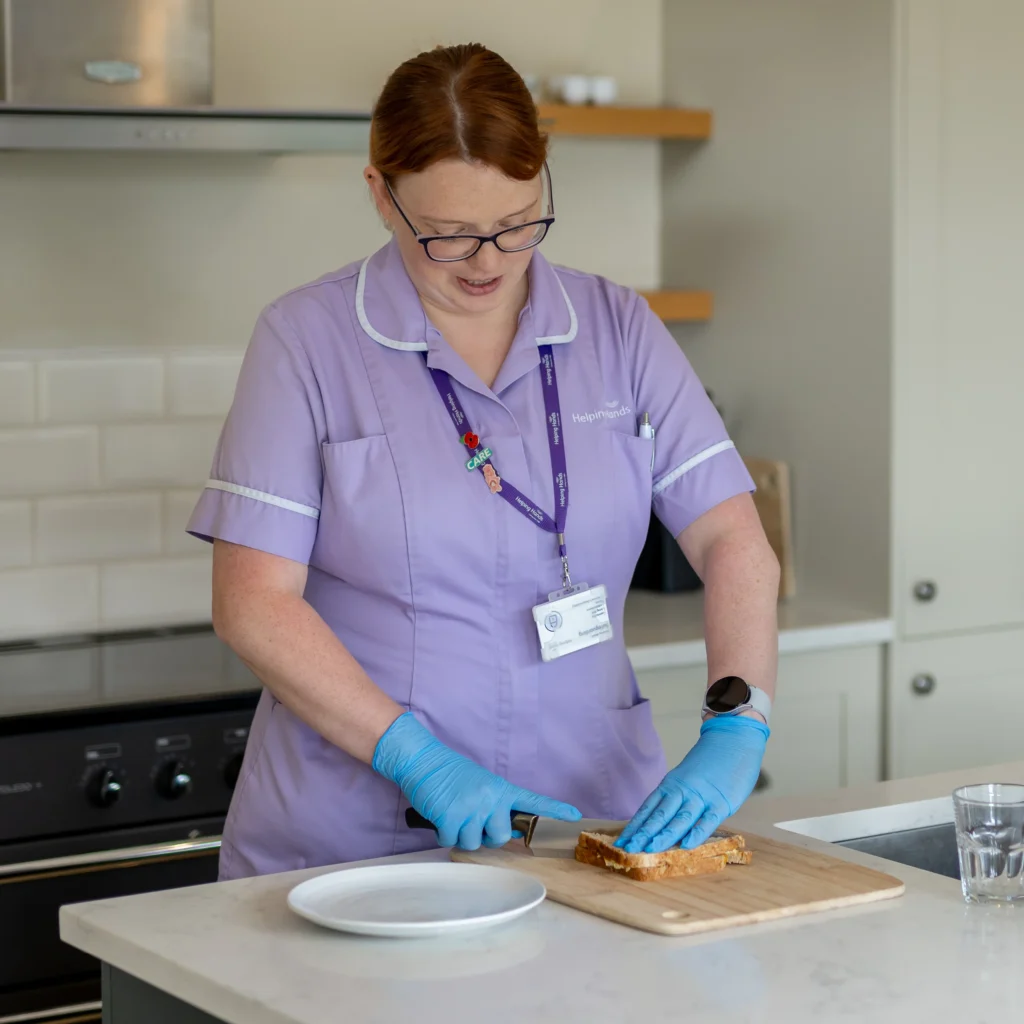
We understand how important it is to prepare meals to the right texture when you’re living with dysphagia. At Helping Hands, we have our own clinical nursing team who train our carers for more complex situations. They will ensure that your carer understands the intricacies of your support plan and carries them out expertly.
Supervising and supporting at mealtimes
Our carers are available on a visiting care, live-in care, and respite care basis. That means that we can deliver care to you at whatever times of the day or night you require it. This includes mealtimes, where they can support you to eat and drink specially prepared food and drink, meaning you are at less risk of malnutrition or dehydration.
Frequently Asked Questions
Christmas pudding can pose a risk for people living with dysphagia as they are generally prepared using nuts and fruits of differing consistency. Dysphagia-friendly Christmas pudding recipes should be researched and discussed with the person’s SLT or dietitian.
UK providers of texture-modified Christmas meals include Wiltshire Farm Foods who have a special Christmas menu of softer foods. These include puréed options like pork in apple gravy, turkey with stuffing, and pastry topped steak pie. They also offer level 5 (minced & moist), and level 6 (soft & bite-sized) options.
Oakhouse Foods deliver IDDSI-compliant, frozen, shape-moulded or portioned texture-modified meals covering Level 4 (Puréed), Level 5 (Minced & Moist), and Level 6 (Soft & Bite-Sized).
Helping Hands can make Christmas day better in so many ways. This includes having a carer there on the day to support preparation of special meals and help with feeding, meaning family can concentrate on celebrating the special day. They can also be there if family members wish to spend Christmas away from home for once, without worrying that they won’t be properly supported. We also offer respite care on both a visiting and live-in basis, so that loved ones can relax while away, returning refreshed and renewed from their break.