


Living with MND: A Practical Guide for Families and Loved Ones
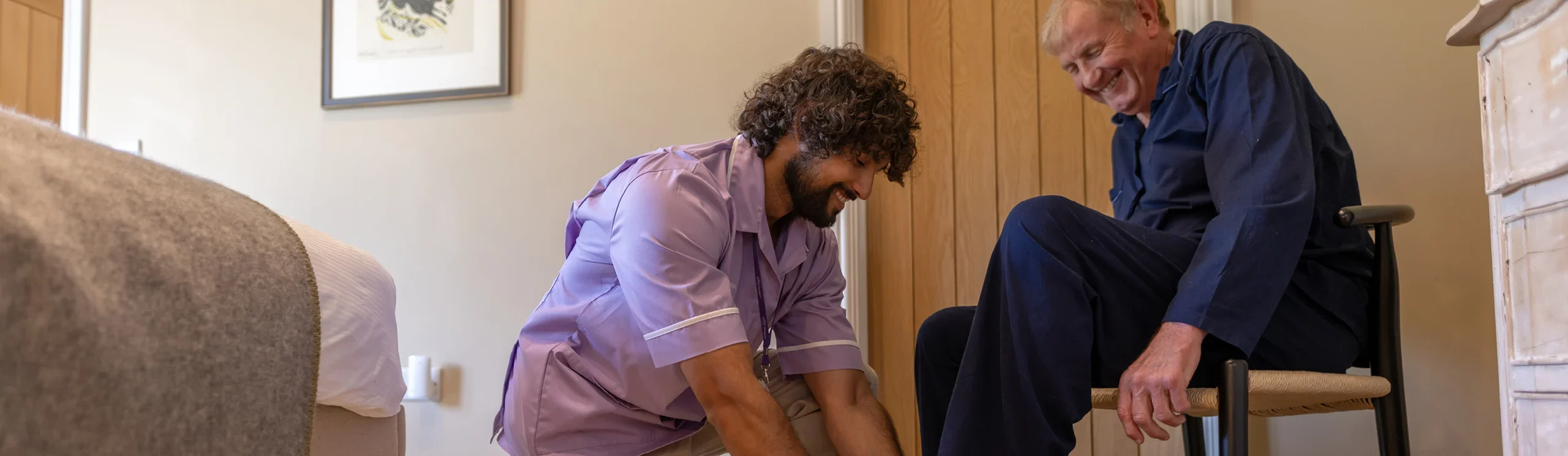
Understanding MND and how it affects daily life
Motor Neurone Disease (MND) affects daily life in many ways, such as causing “muscle weakness that gets worse over a few months or years” according to the NHS. MND usually affects people over 50, although it can affect adults of any age, and while it’s life-shortening with currently no cure, the symptoms can be helped with treatment.
Helping Hands have been established since 1989, and in that time, we’ve supported many people living with MND. We provide visiting and live-in care that’s designed around our customers, to perfectly fit their needs and promote their independence.
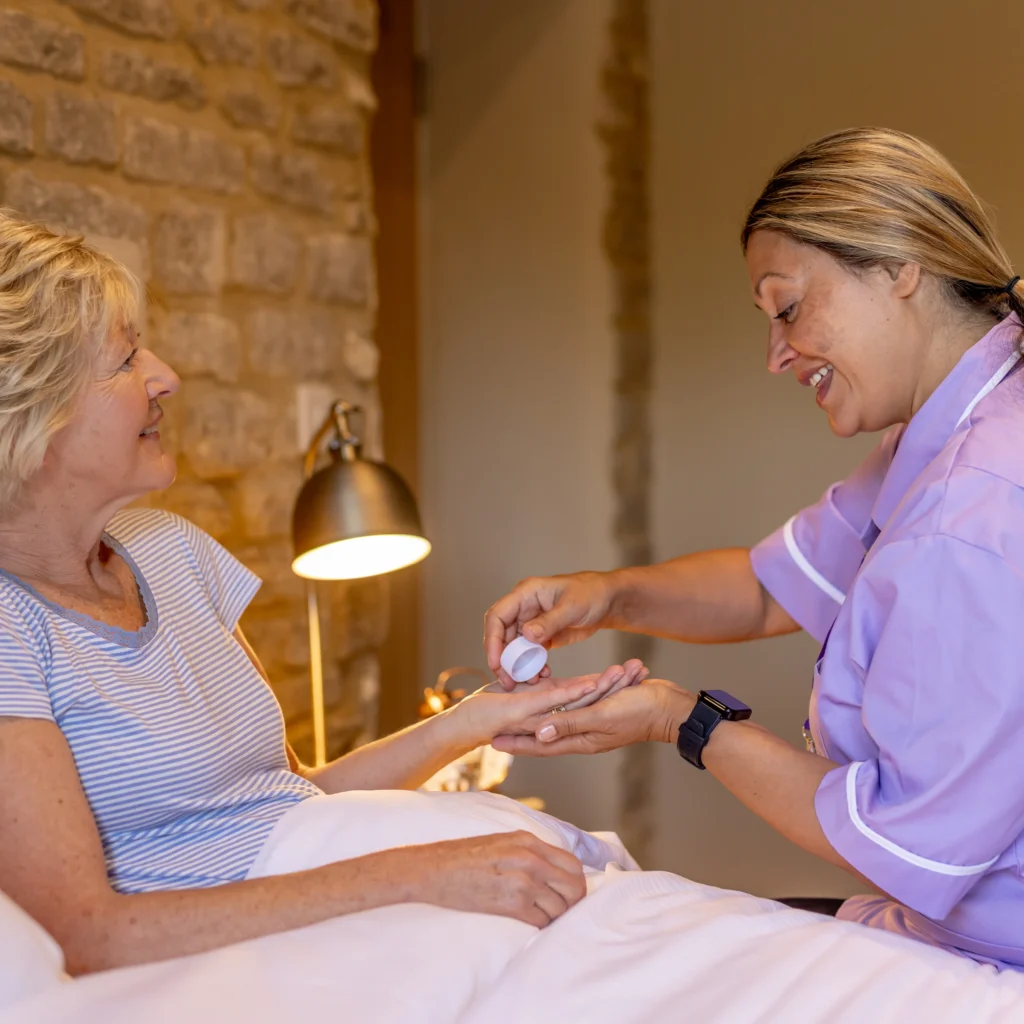
Getting support after an MND diagnosis
It’s understandable that an MND diagnosis will make you feel that your life has permanently changed, and while this is true, it doesn’t mean you can’t have quality of life. By accepting caregiving as your abilities change and investigating sources of support, you will retain control of your daily life, with help as and when you need it. Organisations such as the Motor Neurone Disease Association (MNDA) and the Brain and Spine Foundation can provide advice and support after diagnosis.
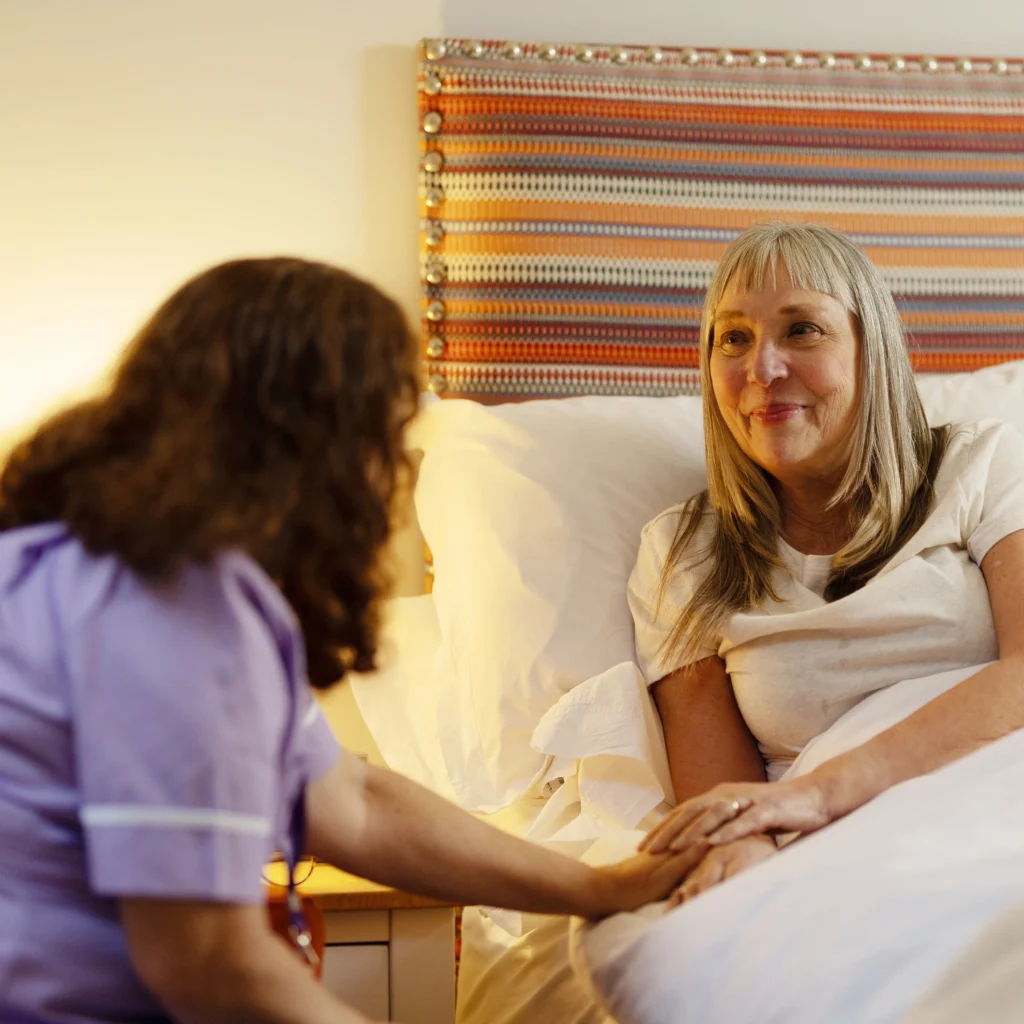
Common symptoms of MND
MND can cause many different symptoms, and while it usually affects adults over 50, it can occur at any age.
Muscle weakness, stiffness and changes
Hands, legs and feet may become stiff or weak.
Speech and communication changes
Caused by weakness in the tongue, lips, vocal cords, and chest.
Swallowing and eating difficulties
Leading to weight loss and potential use of a feeding tube.
Breathing changes
As the muscles weaken it can cause fatigue and breathlessness.
Fatigue, pain and sleep
Discomfort, stiffness, or breathing problems may affect sleep.
Mobility difficulties
Muscle weakness may mean that mobility needs to be supported.
Managing daily life with MND
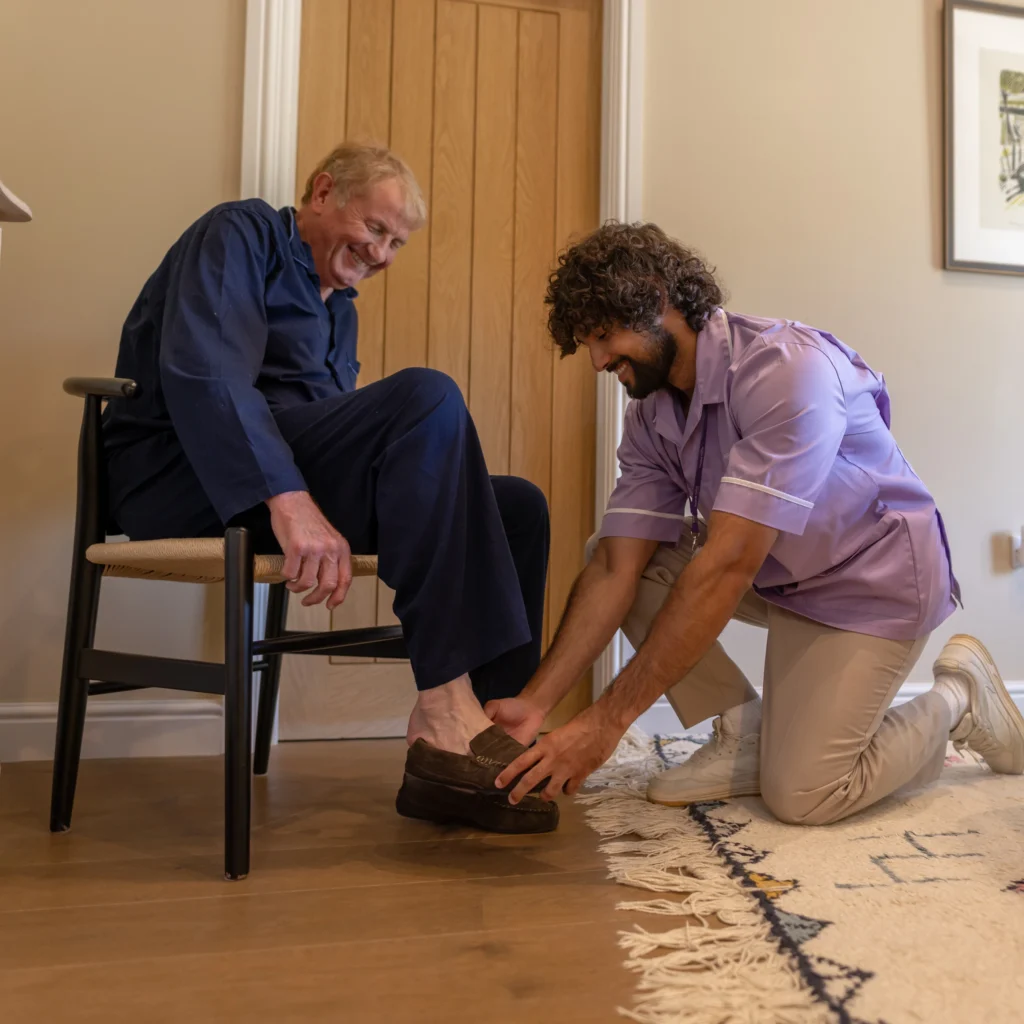
Managing daily life with MND may be as straightforward as some extra equipment at home in the early stages, to live-in care as your symptoms progress. While you may only need occasional support in the beginning, as your needs increase you may wish to have carers coming into your home every day, or perhaps even living in. Because our carers are highly trained, experienced professionals, they can support every aspect of your daily life, such as personal care, mobility support, medication administration, and housework help.
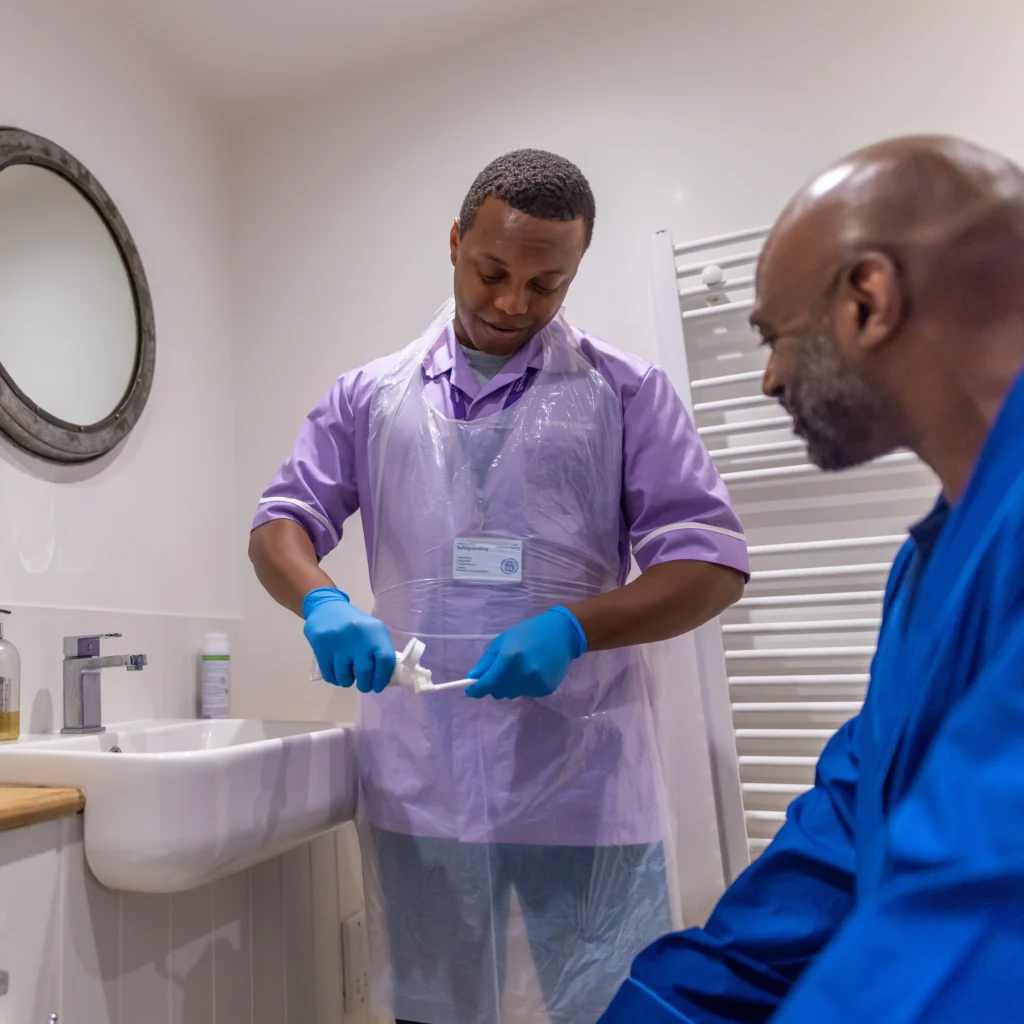
Equipment and home adaptations
It can be daunting to think that your home will need lots of equipment installed, but it can make your life easier to manage and assist your carers to carry out your support safely. You may need something as straightforward as a gripper to help you open lids and cans, a stairlift to help you get up and down stairs or need hoisting equipment to get you from your bed to chair. Your wider healthcare team can advise you on available equipment and our own clinical team of nurses will ensure that your carer receives all the specialist training to support you. This includes breathing equipment such as mechanical cough assist machines and non-invasive ventilators, which many of our customers with MND use.

Eating, drinking and nutrition
If you or a family member are living with MND, and your speech is becoming affected, you may require a little extra support with PEG/RIG tubes and non-invasive ventilation care. If your wider healthcare team recommends such treatment to alleviate your symptoms, we can provide exceptional carers to support you at home. Our carers will undertake practical and emotional support, including preparing suitable food, or supporting you with a feeding tube. They’ll also ensure that you remain hydrated. Some of our customers also have issues with excess oral secretions and treatments include medications or botox injections in the salivary glands. Oral suction could also be required which our nursing team can train carers on.

Communication support
Not being able to communicate in a traditional way can be distressing and frustrating. It can make you feel as if conversations are passing you by and that you’re not able to join in with what family and friends are talking about. The MND Association suggests requesting a referral from your GP to a speech and language therapist before spending money on equipment. “Many communication aids are expensive, and your needs can change with MND.” Speech and Language therapists can advise on communication aids that can help and advise on affective voice techniques.
Emotional wellbeing and mental health
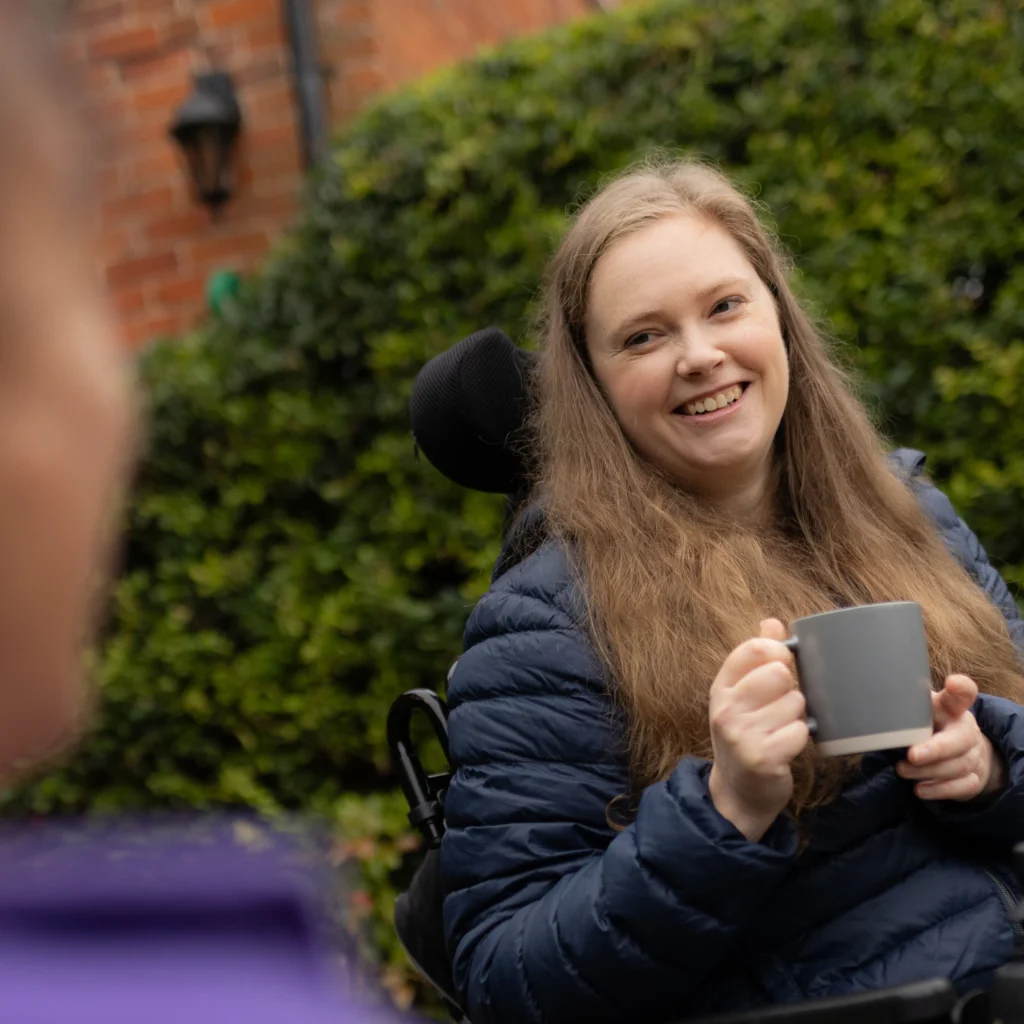
Being diagnosed with MND will bring up many different emotions; worry about how you’re going to manage at home, who will provide your support, and how you will remain in control of your own life. Looking after your mental health is just as important as making sure your physical needs are covered, and this is where having a Helping Hands carer can also be invaluable. Our carers will ensure you get to enjoy your community as you wish, by accompanying you to appointments, errands and activities in the local area.

Support for family members and carers
When MND is diagnosed, it’s not just the person who will need support. Family and caregivers will also need to be assisted appropriately, to ensure they don’t become exhausted. Family members will need time to adjust, whether they’re carrying out caring responsibilities or not, and if they are providing care, they should seek support from local carers’ groups and charities. Talking together about what the future may hold will ensure everything is out in the open, and everyone’s voice gets heard.

Work, money and benefits
The MND Association (MNDA) offer a benefits helpline that supports people living with MND to discover what benefits may be available, and how to claim them. Advice is available by phone and email in England, Wales and Northern Ireland, as well as via web chat in England and Wales. Wanting to continue working while your symptoms are manageable may help you to feel in control of your life and talking with your employer about how they can adapt the working environment is a good place to start, along with exploring the government’s Access to Work scheme.

Planning ahead with MND
Planning ahead with MND can include ensuring financial stability, sourcing equipment and making sure that loved ones are aware of how the condition may progress. Sourcing care for your changing needs is also sensible and exploring what MND home care can provide for you in your area will give you all peace of mind. Having a chat with our friendly customer advisors can help you to understand what home care can do for you and your loved ones, and our support is fully regulated by the Care Quality Commission and Care Inspectorate Wales for added peace of mind.
When to get medical help
Symptoms of MND affect everyone differently, and not everyone will experience the same symptoms, however it’s important to seek medical help if you notice things that you haven’t before. The NHS recommends you see a GP if you have difficulty gripping or holding objects, your legs or feet feel weak, or you have “twitches or muscle cramps that keep happening, last a long time or do not go away.” Your GP will arrange tests and explain what will happen if they come back as positive for MND.

MND support with Helping Hands
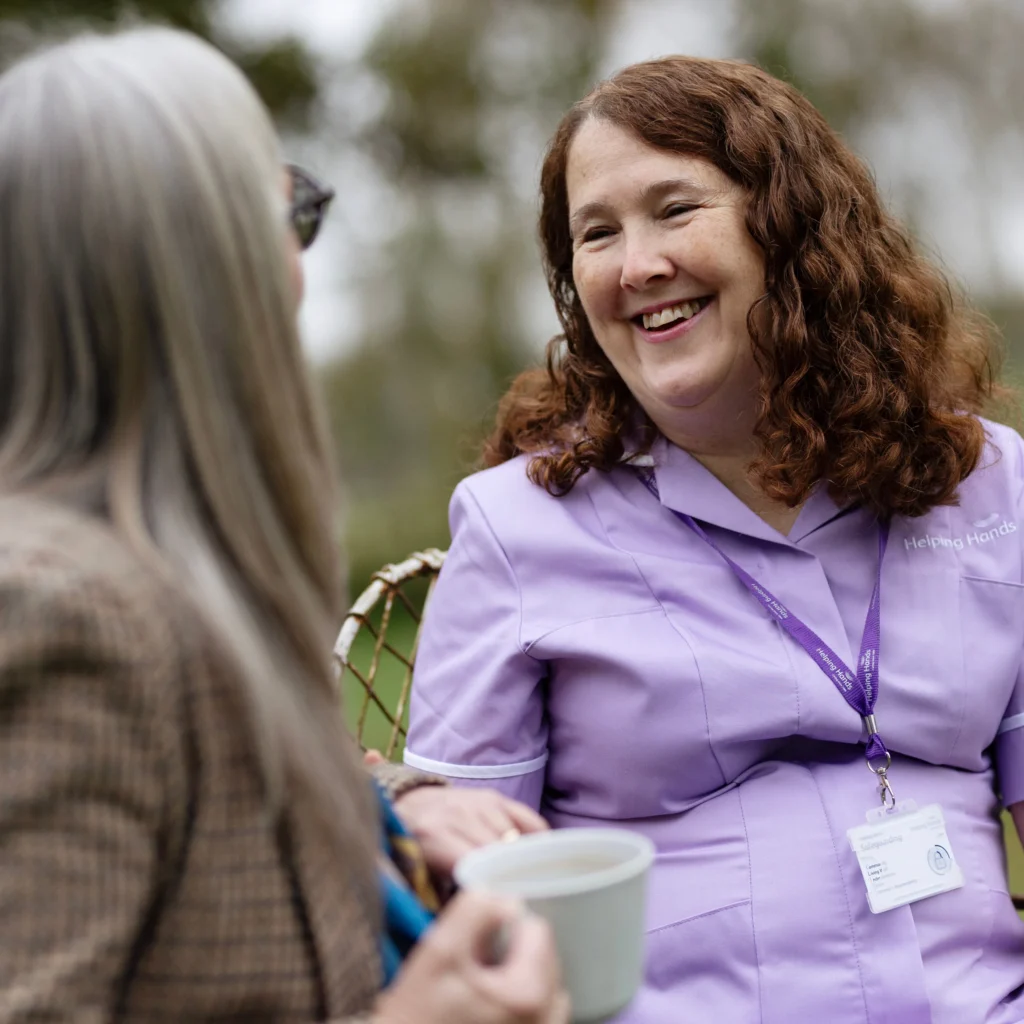
We’ve been supporting people across England and Wales to live as independently as possible in their own homes since 1989. Because we have 37 years of experience helping people to continue living in the home they love, we are the home care company to trust. We’ve supported many people with MND to live as well as possible in their own home, enabling them to remain amongst family and pets in comforting surroundings. We understand the physical and emotional toll that MND can take on you and people around you, which is why we’ll be by your side for as long as you need us.
FAQs about living with MND
Motor Neurone Disease (MND) affects daily life in many ways. It can affect mobility, communication, the ability to care for oneself, and every other aspect of a daily routine.
MND usually affects people over 50, although it can affect adults of any age.
MND is life-shortening with currently no cure, however the symptoms can be helped with treatment.
Because we’ve been supporting people across England and Wales since 1989, we’re considered the home care experts. We have 155 branches, run by our own local care teams and owned by us – we don’t sell franchises. This matters because it enables us to ensure the highest standards of service delivery, unmatched by franchised home care providers.
Page reviewed by Bexx Bennett, Regional Clinical Lead, on July 22 2026.
How we wrote this page
This page has been produced referencing key insights and data from external experts, trusted medical sources and our team of in-house specialists. We have worked hard to ensure that all information is as accurate as possible and reflects current consensus at the time of writing and reviewing.