

A Guide to Parkinson’s Awareness Week 2026
March 25, 2026

Alzheimer’s disease is the world’s most prevalent form of dementia, and affects an estimated 47 million people worldwide – that’s 520,000 Brits, according to the Alzheimer’s Society. With the global figure predicted to almost double every 20 years, vast scientific and financial resources are being poured into developing promising cures and treatments.
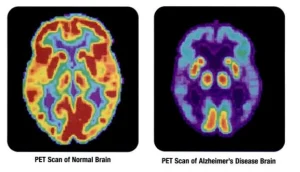
Just one of these potential treatments is an experimental gene therapy. It works by reducing the rate at which the brain cells of Alzheimer’s patients degenerate, according to new results from a small clinical trial published in the journal JAMA Neurology.
In the trial, the Nerve Growth Factor (NGF) gene was introduced into specific areas of patients’ brains, rescuing deteriorated local cells and promoting their growth. Discovered in the 1940s by Rita Levi-Montalcini, NGF has also been demonstrated to encourage the survival of particular sensory neurons during the nervous system’s development.
The results come from the first human trials testing the potential benefits and safety of this kind of gene therapy. In fact, the trials showed that none of the patients experienced long-term undesirable effects, whilst – incredibly – some patients showed the beneficial effects persisting as long as 10 years after the initial treatment.
There are currently ongoing trials testing the efficacy of the treatment, but preliminary findings suggest that the therapy did decrease the rate at which the patients’ mental function declined – easing the symptoms of Alzheimer’s disease.
Results like this highlight gene therapy as a promising route for dementia researchers to follow, signalling potential breakthroughs in the treatment of Alzheimer’s and other neurodegenerative diseases – and some respite for the 670,000 people in the UK who care for someone with dementia.
With over 25 years of experience providing support for customers with dementia and a dedicated team of dementia specialists, over half of our elderly customers have chosen Helping Hands for their Alzheimer’s and dementia care.
For more information about dementia care provided by Helping Hands, click here.
Hannah joined Helping Hands in February 2024 as a Content Writer where she enjoys writing blogs, care advice pages and campaign work. She has a degree in Archaeology and Ancient History and previously worked as a professional archaeologist. Hannah hopes to one day become a published author and enjoys solo travel, film and TV, history, fitness and writing.