


A guide to funding live-in care
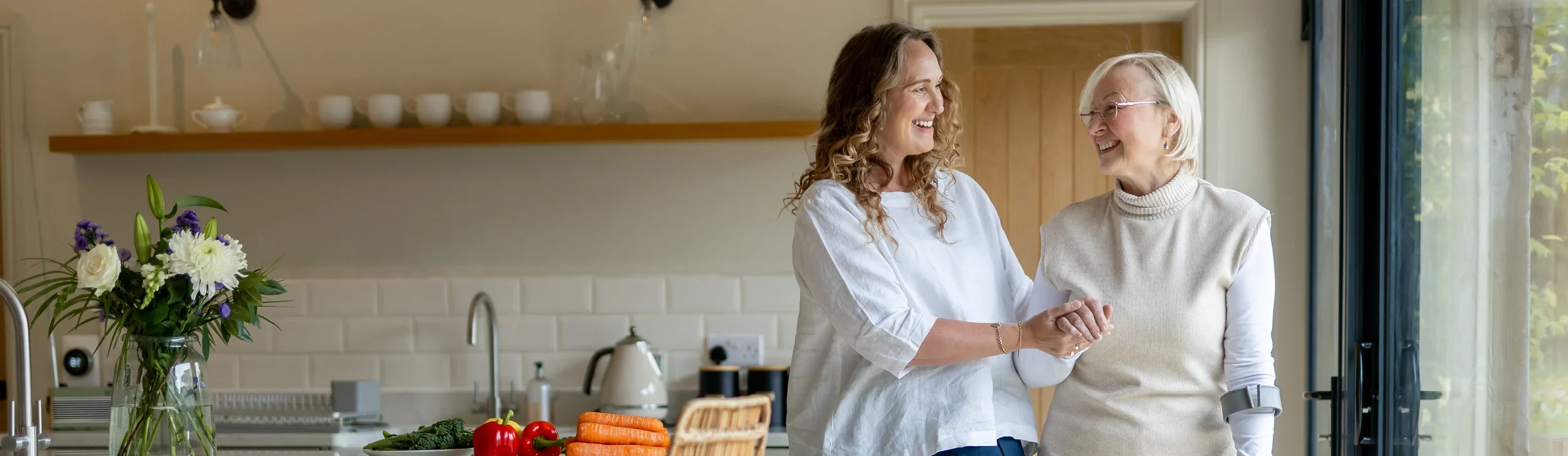
About this guide
This guide has been put together so that you and your loved ones can have a clear overview of the costs of live-in care. Live-in care is a viable alternative to a care home, often more affordable, and most importantly, enables you to continue living in the place you love. There’s no need to feel you have to choose between staying at home and receiving exceptional quality care, as with Helping Hands you can have both.
We only deliver care in our customers’ homes, so it’s no surprise we’re the UK’s favourite home care provider. Since 1989 we’ve been delivering personalised care across England and Wales, all of it fully regulated by the Care Quality Commission and Care Inspectorate Wales.

How much does live-in care cost?
Live-in care costs vary, depending on the level of care required, the complexity of the condition you’re living with, and where in the UK you live. It’s also important to remember that being able to continue living in the home you love has benefits that money can’t measure, such as looking out over familiar views, continuing to be close to beloved family and precious pets, and being able to play an ongoing role in your community.
As a rough idea to our live-in care costs though, live-in care for an individual begins at £1,675 per week, and for a couple begins at £2,125. On a respite basis, live-in care begins at a daily cost of £345.

Who pays for live-in care
The question of who pays for live-in care is individual to each person. For instance, many of our customers pay for their care through private means, while others receive NHS or local authority funding for complex conditions.
NHS Continuing Healthcare funding
NHS continuing healthcare funding (CHC) is granted to those who have ongoing health conditions or care needs that require complex support or palliative care. Fully funded by the NHS, it is a package of continuing care at home for a set period or on an ongoing basis.
Local authority funding and the financial assessment
A financial assessment can be carried out by your local authority to discover if you’re eligible for care funding, you just have to request it. The funding is means tested, meaning you may have to contribute to – or pay for all – the costs associated with your social care.
Attendance Allowance and other benefits
“Attendance Allowance helps with extra costs if you have a disability or health condition severe enough that you need someone to help look after you” says gov.uk. It can be used towards personal support if you’re state pension age or older and you have a disability or health condition.
Self-funding and making your money last
Receiving live-in care at home is very cost-effective and we’ll help you devise a payment plan that suits your circumstances. Speaking to a financial advisor who specialises in care planning is a good idea to make sure that your money goes as far as it can for as long as possible.
Funding live-in care for couples
Having live-in care at home for a couple can be much more cost effective than a care home, plus you get to continue living in the home you both love. If you’re paying for care yourselves you may pay less than in a residential care home, plus you stay together and with your pets.
Getting a care needs assessment
Getting a care needs assessment from your local authority is the first step to discovering whether you’ll pay for your own care, or how much will be funded for you. They can also advise you on next steps and make sure you understand just what you’re entitled to.
How Helping Hands helps you plan the cost of care
Helping Hands are the UK’s home care experts, supporting thousands of people to continue living in the home they love since 1989. Our live-in care is personalised to each individual, something you just can’t receive in a care home. But we also understand the wider impact on the whole family of someone needing live-in care, and that’s where our compassionate carers also excel. They offer emotional support as well as help with physical tasks, making sure their customer is never lovely or at risk of social isolation. We’ll also plan your package of care around your individual needs and keep our care costs transparent, so you know exactly how much you’ll be paying.
Talk to our friendly customer care team or your local care managers to discover how we could be helping you to live your best life possible at home.

How to arrange live in care
We try to make arranging care simple and stress-free so that we can focus on what really matters: your care needs. Speak to our team today to begin your journey.
Speak to our team
Our friendly, knowledgeable team can answer your questions and talk you through your options. We are available 7 days a week.
Book a free care assessment
Your local Helping Hands care manager will visit you to understand your needs and preferences and discuss how we can help. We can visit you at home, in hospital or even a care home to carry out the care assessment.
Confirm your care package
We create a tailored care plan for you to review. Once you’ve agreed the plan, we can organise care in as little as 24 hours.
Funding live-in care FAQs
You may be eligible for local authority funding, benefits or NHS Continuing Healthcare funding, depending on your financial circumstances and care needs. Our care advisors will discuss your circumstances with you and signpost you to further help if necessary.
It depends, but live-in care offers better value for money when you consider non-monetary factors too. These include being in familiar surroundings, having loved ones closed by and precious pets with you. You also get to look out at beloved views and remain in a comforting environment.
Mainly, costs are affected by how long you need care for, whereabouts you’re located, the complexity of your care, and whether it’s for just you, or you and another person.
Live-in care at Helping Hands starts from £1,675 per week for one person and £2,125 per week for a couple. Costs vary depending on the amount of care you require, the complexity of your needs, and where in England and Wales you live.
Having live-in care for a couple at home can often work out significantly cheaper than two places in a care home. You also get to stay together in the home you both love, while receiving exceptional care from your own personal carer.