


Maintaining Good Oral Health in Older People

Why oral health matters more in later life
Oral health is a lifelong journey; the lessons we learn in childhood should help us look after our teeth into old age. As we age, good oral health doesn’t just mean we’ll keep our own teeth, it can also have a knock-on effect for wider wellbeing. The NHS says that “There is strong evidence for a bilateral link between a person’s general health and oral health.” This is because if the person’s ability to eat and drink is affected by poor oral health, they may not receive adequate nutrition and hydration, which are essential for maintaining general health.

Common mouth and dental problems in older people
The Oral Health Foundation tells us that “Later in life, oral health continues to play a critical role in maintaining independence and quality of life.” This doesn’t just mean nutritionally but ensuring you remain confident with your appearance too.
Dry mouth
Medication side effects and certain health conditions can prevent you from producing enough saliva, which means bacteria may not be washed away effectively. This can then lead to tooth decay and bad breath.
Gum disease
If plaque builds up along your gumline they can become infected and inflamed. It can be hard to diagnose until it’s in the advanced stages. Teeth may then start to become loose and fall out as time goes on.
Tooth decay
If your gums have receded as you’ve got older you can be more susceptible to tooth decay. This is when the bacteria in your mouth cause acids to wear away the tooth enamel and cause a hole to form.
Denture problems
Ill-fitting dentures can cause problems as food can become trapped and infections can occur. This can also affect confidence and lead to bad breath and discomfort, as well as risk a lack of nutrition and hydration.
A simple daily oral care routine
Following a simple oral care routine every day can ensure you avoid health problems associated with poor oral health.
Caring for natural teeth
Brushing twice daily for two minutes, with a soft-bristled toothbrush and fluoride toothpaste, flossing or using interdental brushes, rinsing with alcohol-free mouthwash, and staying hydrated can all help to keep the mouth in good condition. Visiting a dentist for regular checkups too will help.
Caring for dentures
Rinsing dentures under lukewarm (not hot) water after eating, brushing with a non-abrasive denture cleaner, soaking dentures overnight, and rinsing before wearing, can all support good denture health. If they no longer fit well due to bone shrinkage they should be examined and changed.
Supporting someone who finds brushing difficult
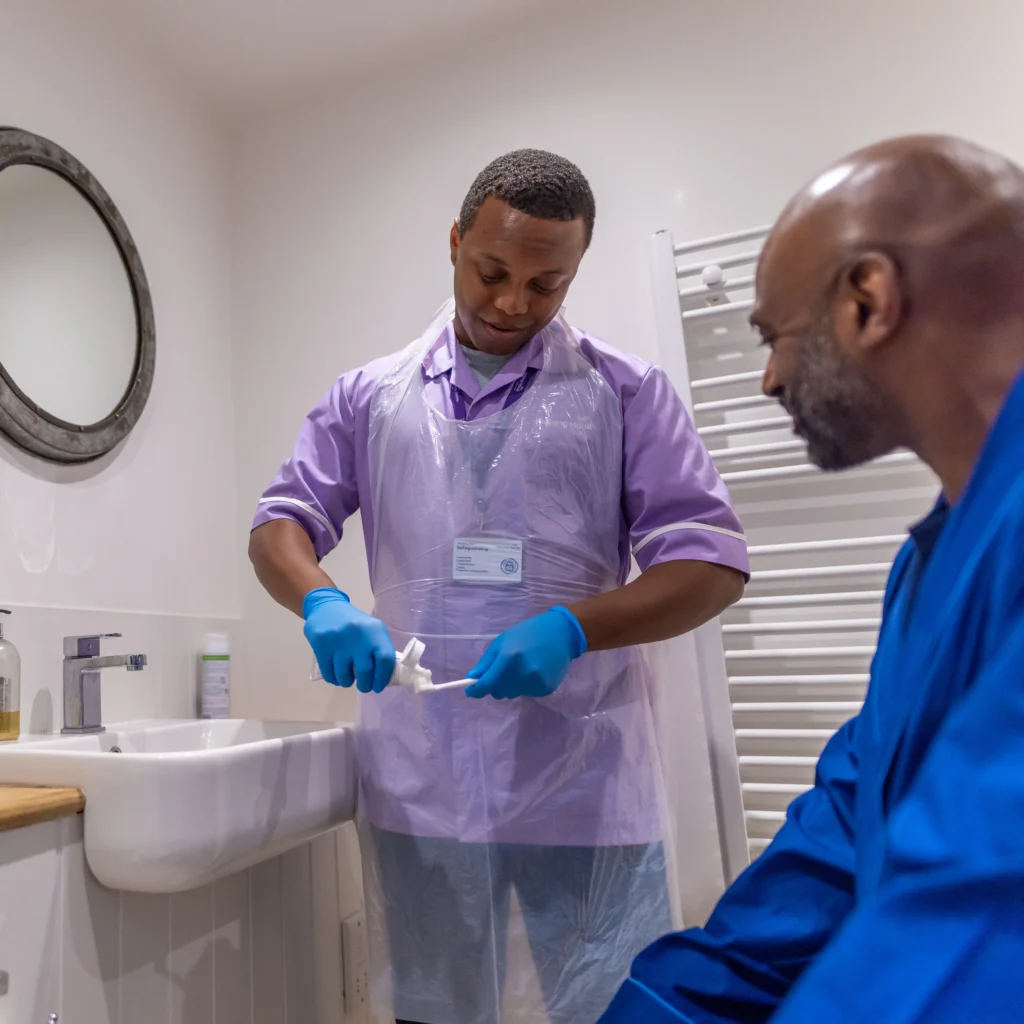
If you are helping someone with their oral health, it’s important to make sure everything is done to keep their physical and emotional wellbeing supported. This includes receiving adequate nutrition and hydration. Helping with brushing will ensure the teeth or dentures remain clean and that the mouth stays as fresh as possible.
When to see a dentist
Most health professionals recommend twice yearly dental appointments to ensure that oral health remains as good as possible. However, if there are any problems that arise between appointments, a dentist’s opinion should be sought to rule out underlying problems. Gum disease or advanced periodontal issues will require more frequent appointments, as will poorly fitting dentures. Advanced tooth decay will also require regular treatment, to prevent issues getting worse. Smoking can also make oral health treatment more urgent, due to the risk of mouth cancer and recurring infections.

How Helping Hands carers help with daily oral care
Helping Hands can support your oral hygiene because our carers are dedicated to your every physical and emotional care need. Whether you have a complex condition or you’d prefer less intense help at home, we can support you in every aspect of your daily oral care. We offer care on both a visiting or live-in care basis, so whether you’d like your carer to be there around the clock or just at key times of the day, they can help you to care for your teeth or dentures. They will also be there to accompany you to dental appointments if necessary and will ensure your nutrition and hydration are supported. All of our care is fully regulated by the Care Quality Commission and Care Inspectorate Wales, and as we have our own team of clinical nurses you and your loved ones can be reassured you’re in the very best hands.

Page reviewed by Rebecca Bennett, Regional Clinical Lead, on September 21st 2026.
How we wrote this page
This page has been produced referencing key insights and data from external experts, trusted medical sources and our team of in-house specialists. We have worked hard to ensure that all information is as accurate as possible and reflects current consensus at the time of writing and reviewing.