Living with dementia: a practical guide for families and loved ones

Understanding what life with dementia really looks like
At Helping Hands, we know that dementia is different for everyone, and symptoms can be more or less severe depending on the person.
Dementia UK states that many people can easily become isolated and overwhelmed when adjusting to life with dementia, but it’s also an opportunity to meet fellow people and experience new things with dementia. A Helping Hands carer can help with understanding your diagnosis and help you navigate life with dementia symptoms. Our dementia home care gets to know you and how the disease affects you specifically, so we can create a care plan that adapts around you. We can make your home dementia-friendly, getting you involved with dementia-focused events, or simply be there to help you remember the things you’ve forgotten.

Different types of dementia
Alzheimer's disease
This is the most common cause of dementia within the UK, and common symptoms can include challenges with memory, langauge, perception and thinking.
Vascular dementia
Vascular dementia is the second most common, and early signs can include experiencing short periods of confusion and trouble with planning and concentrating.
Dementia with Lewy bodies
Lewy bodies can cause symptoms such as having problems focusing, issues with movement and sleep, and it may also cause delusions.
Frontotemporal dementia
This is a less common type of dementia that can be called ‘Pick’s disease’. Early symptoms include changes to personality, behaviour and language.
Young-onset dementia
This is defined by dementia symptoms appearing before the age of 65, and is less mememory focused, but affects behaviour, language and personality.
Mixed dementia
The most common variation is Alzhiemer’s with vascular dementia. Others are also possible, such as Alzhiemer’s with dementia with Lewy bodies.
The early days after a dementia diagnosis
The early days after a dementia diagnosis can bring a mix of emotions, from relief at finally having answers to fear, sadness or uncertainty about the future.
In the beginning, many people may notice symptoms such as memory loss, confusion with everyday tasks, difficulty finding words, changes in mood, or becoming withdrawn from social situations. These early changes can feel frustrating or upsetting, both for the person living with dementia and those close to them. Gentle reassurance, familiar routines and open conversations can help ease anxiety and create a sense of stability. Seeking support early can also make a real difference, whether through healthcare professionals, local dementia services or specialist charities such as Alzheimer’s Society and Dementia UK, which offer practical advice and emotional support for families across the UK. The NHS dementia guide also provides information on symptoms, diagnosis and living well with dementia.

Making the home dementia-friendly
Here are some handy ways that you or your Helping Hands carer can adapt your home to be dementia friendly:
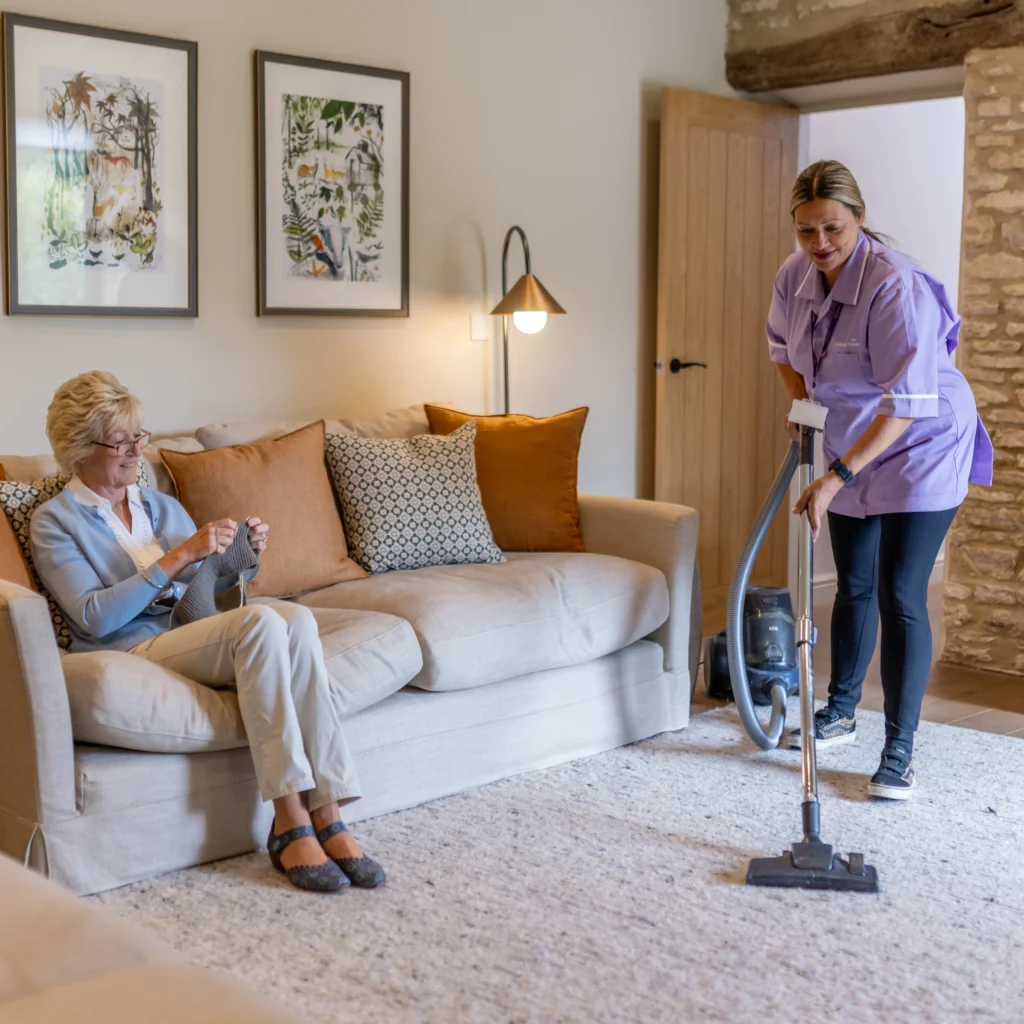
Building a daily routine that works
Creating a consistent daily routine can help people living with dementia feel calmer, more confident, and less anxious. Regular times for waking up, meals, activities, medication, and rest provide structure and familiarity throughout the day. Keeping routines simple and flexible, while including enjoyable activities and quiet breaks, can support both physical wellbeing and emotional comfort.
When to consider professional care at home
There may come a time when caring for your family member with dementia becomes more challenging, especially as symptoms progress and everyday tasks become harder to manage alone. Signs that professional care at home could help include increased confusion, difficulties with personal care, changes in mobility, safety concerns, or when family carers begin to feel overwhelmed. Home care can provide valuable support while allowing someone to remain in familiar surroundings and maintain their usual routines. At Helping Hands, specialist carers can offer flexible, compassionate support tailored to each person’s needs, helping families feel reassured and supported every step of the way.

Understanding the stages of dementia
Early stage dementia
In the early stage, symptoms are often mild and may include forgetfulness, difficulty finding the right words, losing track of time, or struggling with planning and organisation. Many people are still able to live independently and continue daily activities with some support. Early diagnosis can help families access treatment, support services, and future care planning.
Middle stage dementia
As dementia progresses, symptoms become more noticeable and daily tasks become more challenging. A person may need help with every day tasks, and confusion, mood changes, wandering, and communication difficulties are common too. This stage is often the longest when living with dementia and can bring certain challenges to everyday life.
Late stage dementia
In the later stage, people usually require full-time care and support with most aspects of daily living. Memory and communication may become very limited, and physical difficulties such as reduced mobility, swallowing problems, or incontinence are common. Although communication changes, emotional connection, reassurance, and familiar voices can still provide comfort and support.
Advanced and end-of-life care
In advanced dementia, care focuses on comfort, dignity, and quality of life. Individuals may spend more time in bed, lose the ability to communicate verbally, and become increasingly dependent on others for personal care. Families often work closely with healthcare professionals to manage symptoms and ensure comfort during end-of-life care.
Staying active and engaged
The following are helpful ways to make your life with dementia easier:

Looking after yourself as a family carer
Looking after a loved one with dementia can be incredibly rewarding, but it can also be physically and emotionally exhausting at times.
Many family carers find themselves putting their own needs aside while supporting someone else day-to-day, which can lead to stress, burnout and feelings of isolation. Taking regular breaks, asking for support and making time for your own wellbeing is not selfish, but essential. Respite care can give family carers the chance to rest, attend appointments, spend time with friends or simply recharge, while knowing their family member is in safe and compassionate hands. At Helping Hands, professional carers can step in to take the reins with flexible respite care tailored to your family’s needs, offering reassurance, companionship and continuity of care when you need it most.

Common challenges and how to handle them
Memory loss and repeated questions
One of the most common challenges is short-term memory loss, which can lead to repeated questions, forgotten appointments, or confusion about daily routines. While this can feel frustrating for family members, it is important to respond calmly and patiently rather than correcting or arguing. Simple routines, written reminders, labelled cupboards, and visual calendars can help reduce anxiety and support independence. Reassurance and a familiar environment often make a significant difference.
Changes in mood and behaviour
People living with dementia may experience mood swings, anxiety, agitation, or withdrawal. These changes are often linked to confusion, fear, overstimulation, or difficulty expressing needs. Families can help by maintaining a calm atmosphere, speaking clearly, and paying attention to possible triggers such as noise, fatigue, or hunger. Gentle reassurance, meaningful activities, and regular social connection can help improve emotional wellbeing and reduce distress.
Everyday safety and independence
As dementia progresses, everyday tasks such as cooking, taking medication, managing finances, or moving around safely can become more difficult. Supporting independence while ensuring safety is a delicate balance for many families. Breaking tasks into smaller steps, using medication organisers, improving lighting, and removing trip hazards can help create a safer home environment. Encouraging the person to do what they can for themselves also helps preserve confidence and dignity.
Further support and resources
At Helping Hands, we take pride in our ability to adapt to your needs. We can offer expert home care on a live-in, visiting or respite basis.

Visiting care

Live-in care
A fully regulated home care provider
Here at Helping Hands, our service is regulated by the Care Quality Commission (CQC) and the Care Inspectorate Wales (CIW).
This means we need to consistently meet high standards and are monitored by our regulators.