




What is domiciliary care?
Domiciliary care is a range of services put in place to support someone in their own home.
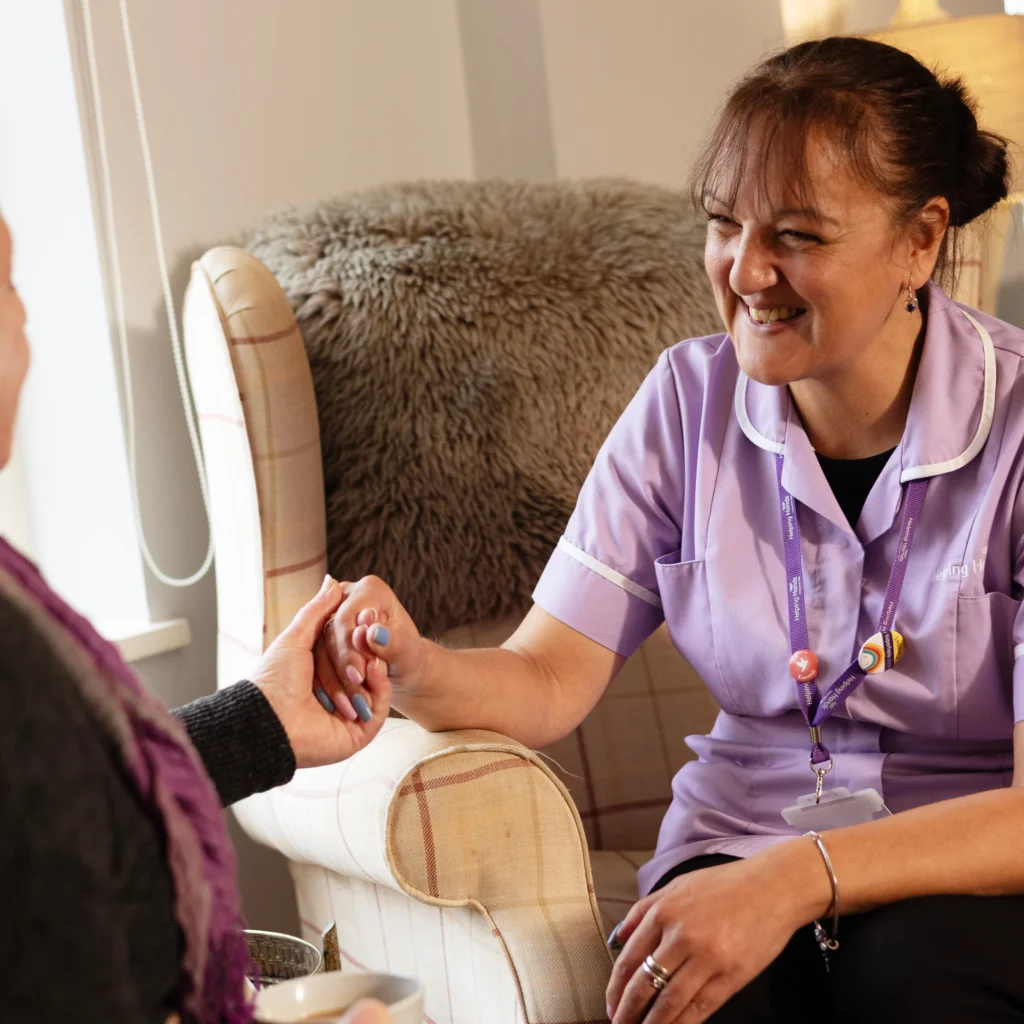
Domiciliary care is support provided in your own home, helping you remain independent while continuing to live in the place where you feel most comfortable. Our domiciliary care plans range from a single 30-minute visit a week to full-time live-in care. Our wonderful carers can assist around the home in many ways, including providing personal care, medication, preparing your favourite meals, housekeeping, and providing friendly companionship.
We believe staying at home is better than moving into a care home because it allows you to maintain your existing routine and lifestyle. Whatever type and level of care you need, it can be adapted to suit your circumstances and provide you with the reassurance of professional support while remaining in the place you call home.
It is available to those who need another pair of hands to help with day to day household tasks, personal care or any other activity that allows them to maintain their quality of life and independent living.

What does domiciliary care include?
Domiciliary care can be tailored to your individual needs and may include:
- Personal care – Discreet support with washing, dressing, toileting and other daily routines
- Medication support – Helping you take medication safely and at the correct times
- Meals and nutrition – Preparing your favourite meals, snacks and drinks to your schedule
- Housekeeping – Assistance around your home with laundry, cleaning and tidying
- Companionship – Whether it’s visiting family or enjoying a cuppa together in front of the tv
- Mobility support – Help moving around your home safely and reducing the risk of falls
Every care plan is personalised, so the support you receive will reflect your lifestyle, preferences and care requirements.

What support can domiciliary care provide?
The simple answer is: most aspects of everyday life. Whether you choose regular care visits or around-the-clock support, your carer can help you manage your daily routine while remaining as independent as possible.
Personal Care: Support with washing, bathing, dressing, mobility, and getting in or out of bed.
Medication Support: Help with medication reminders, collecting prescriptions, and administering medication where required.
Housekeeping & Meals: Assistance with preparing nutritious meals, laundry, light cleaning, shopping, and keeping your home tidy and comfortable.
Companionship: Friendly support inside and outside the home, whether that means enjoying a chat, going shopping, attending appointments, meeting friends, or joining social activities.
Your carer is there to help you make the most of each day, supporting you with the things that matter most to your comfort, wellbeing, and independence.

How much does domiciliary care cost?
Domiciliary care is usually charged by the hour. Across the UK, visiting care typically costs between £26 to £38 per hour, although prices vary depending on the provider, location, timing of visits and level of support required.
The exact cost of domiciliary care with us will depend on a few things, such as how many visits you need each week and where you’re based geographically, but our prices start from £32.40 per hour
Visiting care costs
Visiting care costs begin at £32.40 per hour plus a callout charge of £4.50 per visit. Prices are also dependent on your location and the complexity of care you require.
Live in care costs
Live-in care costs begin at £1,675 per week for an individual or £2,125 per week for a couple, making it even more cost-effective for two people who both need support.
Funding and council support
Contacting your local authority is the first step in getting your care needs funded. If your local council decide you’re eligible, they may fund some, or all of your care.
How to arrange domiciliary care
Arranging domiciliary care is usually a straightforward process.
Arranging domiciliary care is usually a straightforward process.
- Request a care needs assessment
Get in touch with our friendly team today to chat through your circumstances, and we’ll schedule a free care needs assessment in your home at a time that suits you.
- Arrange a financial assessment
If you think you may need or be eligible for financial support for care, your local authority will carry out a means test to determine whether you qualify for funding.
- Agree your care plan
Once your needs have been assessed, your local team will work with you to develop a care plan that’s designed entirely around your needs and wishes.
How to get started with domiciliary care
Request a care needs assessment
Requesting a care needs assessment from your local authority will get the care process started. Someone will come to your home and assess how much help you need on a daily basis.
Arrange a financial assessment
Your local authority will also assess your finances to see how much, if any, support you’re eligible for. If you are allocated funding it will be in the form of a personal budget for you to spend.
Choose your home care provider
You need a care provider you can trust, with a long history of exceptional care. Helping Hands have been established since 1989 and are considered the UK’s most trusted provider.
We provide consistency of care
Personalised support
Domiciliary care allows you to enjoy a personalised care plan that ensures you’re always getting the right support for your needs and wishes
A holistic approach
Our holistic approach means no stone is left unturned in your care plan, so you’ll get the emotional, practical and physical support you need
Stay in a familiar environment
Many people relish the chance to remain in the comfortable, secure surroundings of home whilst receiving the additional support they need
Spend more time with loved ones
You’ll be able to choose when your family and friends visit, and your carer can assist with hosting duties – including getting your home spick and span
One-to-one care
Care at home gives you the opportunity to receive personal one-to-one support from your own carer, meaning you’ll always have their full attention
Maintain your routines and hobbies
Domiciliary care allows you to continue living life on your own terms, which includes keeping up all your favourite hobbies, routines and activities
Quality care in your home from Helping Hands
We provide ongoing support that’s completely built around your needs and routines.
Our bespoke care plans are one of the many reasons why we’re the nation’s favourite for home care.
With one-to-one personal attention, from 30 minutes a week and up to several visits a day or overnight support, our visiting care plans are completely built around you. You can even opt to have a live-in carer living with you at home to provide 24-hour care.

They are a very professional and efficient care team. They have very high standards and compassion, not only for the client but for everyone else in the home.
Christina, Trustpilot review

Who is domiciliary care for?
Domiciliary care is for anyone who wants to stay at home to receive the support they need.
Domiciliary care from Helping Hands is for adults of all ages who may need extra help to manage from day to day.
We provide the following types of personalised support:
At Helping Hands, our carers are expertly trained to provide a wide range of bespoke care services to people with varying levels of needs – no matter how straightforward or complex they may be.

Why choose Helping Hands
We’ve had the privilege of looking after people across the UK since 1989 through compassionate, person-centred home care.
- Fully regulated care – Our services are independently regulated by the CQC and CIW, providing total reassurance that every aspect of our care meets industry standards
- Directly employed carers – We recruit, train and support our carers directly, giving you total confidence that you will receive consistently good quality care
- Nurse-led clinical support – Our care teams are supported by experienced, highly-trained carers who are able to care for people with a wide range of needs
- Trusted by families nationwide – With an “Excellent” Trustpilot rating and more than 35 years’ experience to our name, we’re proud to have supported tens of thousands of families across England and Wales
Domiciliary care near you
We can offer domiciliary care across England and Wales through our 150+ branches dotted across the country.
You can use our branch finder to locate your nearest team, learn more about the available domiciliary care services in your area and arrange a free chat and assessment.
Fully regulated Visiting and Live-in Care
Visiting and Live in Care
We are a fully regulated home care provider, closely monitored by the Care Quality Commission

Independent inspections
Regular inspections, including unannounced visits, give you peace of mind that we are committed to doing what we say we will do.
Fully vetted carers
We have a robust recruitment processes in place and ensure all necessary checks are carried out before we employ someone to work at Helping Hands. We take the time to make sure we only employ the right people.
Consistently meet high standards of care
We must consistently show that we meet the highest standards of care and provide safe, effective, caring, responsive and well-led services.
Guaranteed training and development
All our employers are trained to nationally-recognised standards before they work unsupervised with our customers. We provide ongoing professional development and support so our carers remain competent and safe to carry out their role.
Our domiciliary care services
We offer domiciliary care on both a visiting care and live-in care basis to suit your personal needs and preferences.

Visiting care

Live-in care
How can our domiciliary carers support you?
Our wonderful carers are fully trained to provide person-centred home care services.
Our fully-trained carers can help to keep you living independently in your own home through daily visits or live-in care. Their role is fully focused on you and your needs, helping you to maintain quality of life and independence through the following:

Personal care
Your domiciliary carer can provide discreet and dignified personal care with routines such as bathing, toileting and getting dressed
Household tasks
Your carer can help around your home with housekeeping tasks such as cleaning and vacuuming, doing the laundry, and doing the bins
Mobility support at home
Every Helping Hands carer is trained in mobility support, so they can help with things like getting in and out of bed and moving around the home
Light medical support
Our fully trained carers can provide medical support including catheter care, PEG feeding and suppositories, to name just a few
Friendly companionship
All of our carers have been handpicked for their kind, compassionate personalities, which means they also provide wonderful companionship
Getting out and about
Whether you want to visit family, pop to the shops or go away on holiday, a carer can help you plan your travel and accompany you along the way
The staff are keen to do whatever is required to make your life easier. They are friendly and chatty whilst getting on with the task in hand so that you have full benefit. Highly recommended.
Helen, Trustpilot review

Why choose domiciliary care over a care home?
At Helping Hands, the reason we’re home care specialists is because we passionately believe that home is the best place in which to receive care. There are numerous advantages to care at home over residential care, such as:
You can remain in the comfort of your own home
You have full control over your meal times and preferences
One-to-one, 24-hour care from your own dedicated carer
You can continue with your preferred lifestyle and routines
Your friends and family can visit as much as they like
Domiciliary care for the elderly
Domiciliary care is perfect for elderly people not wishing to avoid the stress of moving.
If you or an elderly loved one are reaching the stage of life where you’d benefit from a bit of extra support but you don’t wish to sacrifice your independence and your home comforts, domiciliary care could be perfect for you. Our carers can help you to live with age-related frailties and provide fully tailored elderly support around the home, allowing you to continue living your best life.
A fully regulated home care provider
Here at Helping Hands, our service is regulated by the Care Quality Commission (CQC) and the Care Inspectorate Wales (CIW).
This means we need to consistently meet high standards and are monitored by our regulators.


Why is being a regulated care provider important?
Independent inspections of our service, giving you peace of mind
Fully vetted, high-quality carers
Guaranteed training and development for our staff
Arrange domiciliary care today
Whether you’re exploring care options for yourself or a loved one, our friendly team are here to guide you through our offerings and help you understand how your care journey may look. Give us a call today or make an online enquiry to arrange a free care assessment.
Domiciliary care FAQs
Domiciliary care is care provided in your own home rather than in a residential setting. It can include personal care, medication support, household help and companionship.
Domiciliary care is usually charged hourly. Typical UK costs range from £15 to £30 per hour, although prices vary depending on care needs and location.
Care may be funded privately, through local authority support following a financial assessment, through direct payments or, in some circumstances, through NHS funding.
Yes. The terms domiciliary care and home care are generally used interchangeably and both refer to care delivered in a person’s own home.
Domiciliary care allows you to remain in your own home while receiving support. A care home involves moving into a residential setting where care is provided on-site.
This depends on care needs and local availability. In some cases, care can begin within a few days, while urgent support may be arranged more quickly.
Page reviewed by Rebecca Bennett, Regional Clinical Lead, on April 22, 2026.
How we wrote this page
This page has been produced referencing key insights and data from external experts, trusted medical sources and our team of in-house specialists. We have worked hard to ensure that all information is as accurate as possible and reflects current consensus at the time of writing and review in